In case you’re looking for a thrill and you are torn between a theme park roller coaster or renting a sports car for a drive along a windy road, science suggests the sports car is the better investment, according to a study funded by Castrol.
“Crucially, we identified that you don’t need a supercar to experience driving thrill; you can experience almost the same sense of immersive control without high speeds, from a visit to a local karting track or a drive along one of your favourite roads. This study examines how that sense of thrill can be found in every driver,” said Vincent Panel, Castrol’s head of product & communications for Europe.
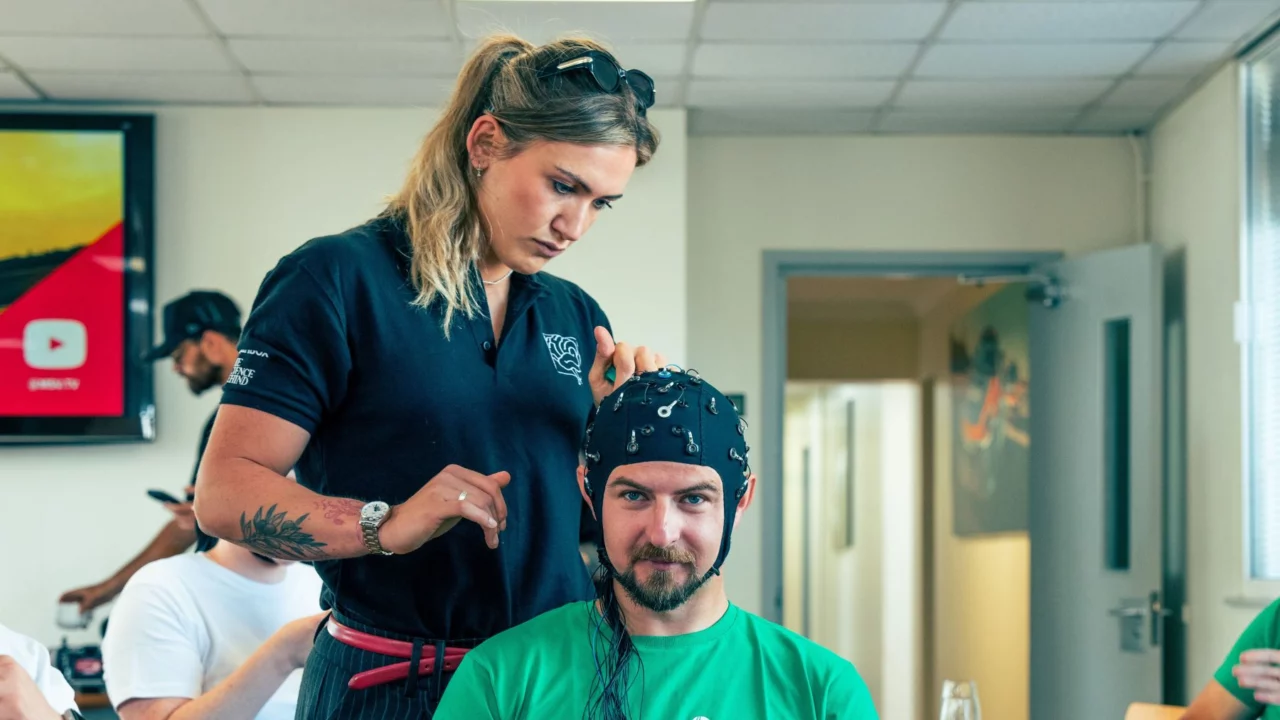 Image courtesy of Castrol
Finding the “sweet spot” between speed and control is the key to getting the most thrill. The study calls it “controlled immersion.” If I had to guess when the most thrill comes while driving, it would be when the gas pedal and the floor meet, but apparently, science disagrees.
To arrive at this conclusion, Castrol had participants wear brain, eye, heart, and skin monitoring equipment during five tests. To monitor the brain, they wore an electroencephalography (or EEG) device that measured brain waves when participants were exposed to different stimuli.
The five tests were as follows:
- Drive a Land Rover Defender at slow speeds on a specially designed off-road course that featured sharp climbs and drops, wading, and precision steering obstacles.
- Take a single-seat kart on a “tight and twisty” course.
- Spend time behind the wheel of a race-prepared McLaren Artura GT4 on a closed circuit with no competition.
- Test-drive an open-wheel Le Mans-style car around a track.
- Take in the same car on the same track as #4 but as the passenger with a professional driver behind the wheel.
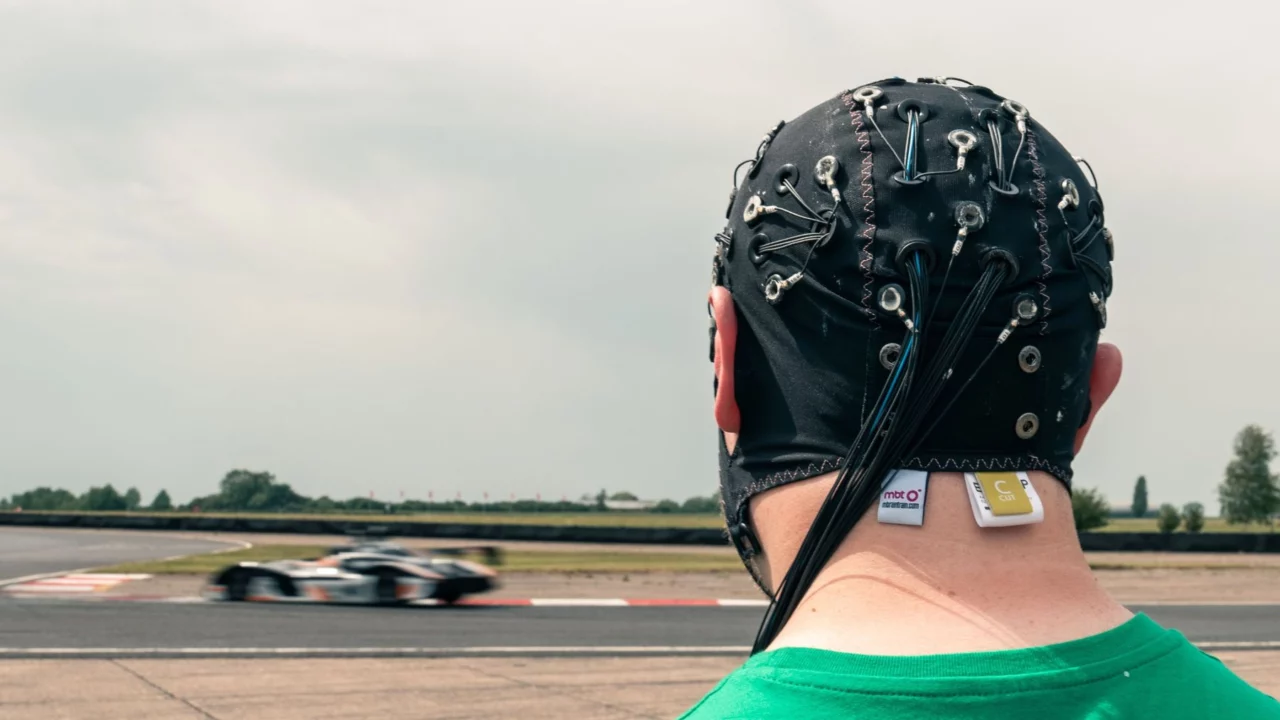 Image courtesy of Castrol
All tests were conducted under strict conditions at the PalmerSport facility in Bedfordshire, England, with professionals on site — a good idea, considering the PalmerSport McLaren Artura GT4 goes 0-60 mph in 2.9 seconds.
“No single measurement defines thrill, rather it is where they are heightened and converge: the individual is experiencing a state of elevated neurophysiological arousal, they perceive that they are fully in control of the vehicle, and they are immersed in the experience both cognitively and emotionally,” commented Dan Phillips, co-founder & director at Brainbox Ltd. “Thrill isn’t about speed; it’s about focus. The data shows real thrill as the moment a driver locks in completely, and it can be seen across the brain, heart and eyes.”
Four separate conclusions were drawn. The first was “Thrill peaks when drivers enter a ‘flow state.’” Shocker — out of all the tests performed, the one that stood out as the most thrilling was when participants drove the McLaren. Their focus was at its deepest, their body arousal was at its highest, and cognitive immersion and physical control were strong. It was in this test that the subjects demonstrated a flow state where their bodies were operating at peak performance.
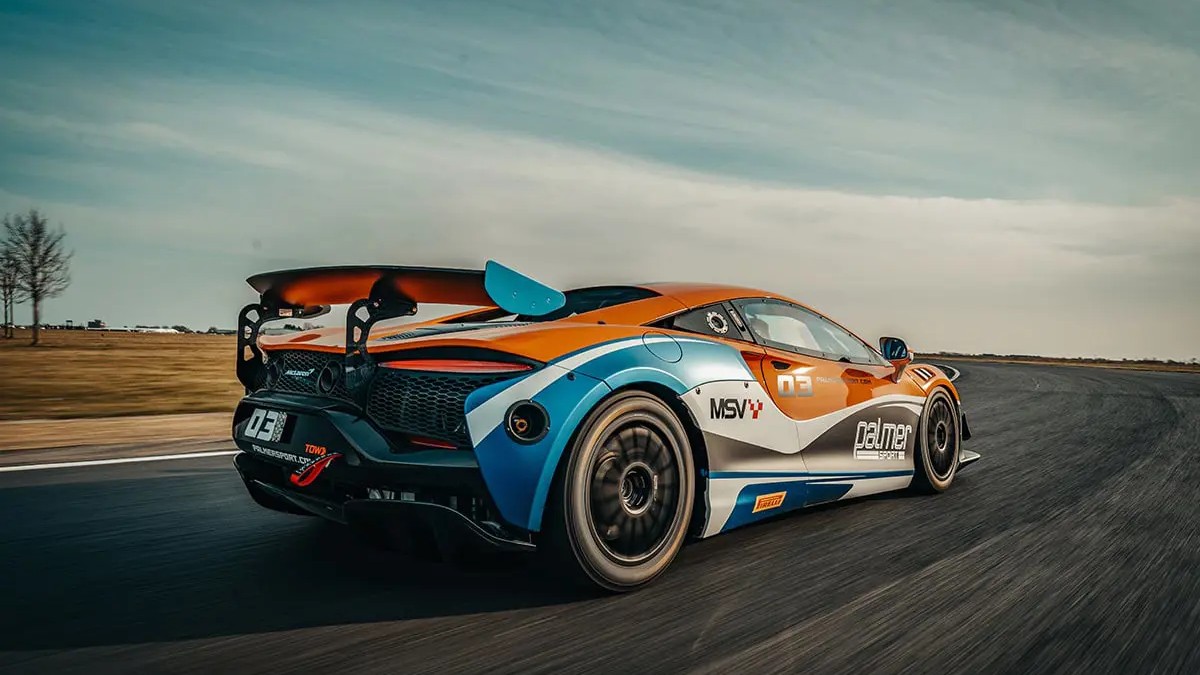 Image courtesy of PalmerSport
Second was “Thrill doesn’t happen to you.” The brain responds differently to excitement and fear. During the test in which participants were passengers with a professional driver, participants’ brains showed more fast-moving waves normally linked to stress and anxiety than excitement. This suggests they were more overwhelmed than engaged, meaning they felt more fear than thrill.
Thirdly, “Speed is not a determining factor for driving thrill.” The study concluded that creating the ultimate driving thrill must include focus and control more than just speed. Though participants had the highest brain response to the high-speed passenger ride, the readings showed they were not excited, but rather, afraid. In other words, it was not necessarily about the speed of the car — peak thrill was found during the the greatest bond between speed and control.
Lastly, “An increased heart rate does not always mean driving thrill.” Across all tests, Castrol uncovered that intensity and enjoyment were not the same thing. Intensity is more about degree of strength, force, or effort, while enjoyment is about degree of happiness. When it comes to driving thrill, your heart rate while driving is relatively controlled. On the flip side, when you are dealing with fearful or intense situations, the body enters a fight-or-flight state due to an extremely high heart rate.
So, the next time you feel the need to get that rush of adrenaline, taking a back road or finding that windy mountain pass with beautiful views will result in a bigger thrill.