What happens when you combine American muscle and Japanese sports-car agility? Apparently, some innovative folks have already found out. One of the cars on display at a Kyusha Club meet in Phoenix was an RX-7 with a turbocharged GM small-block V-8 under the hood … well, technically there was no hood because it probably wouldn’t fit over the engine.
The early 1990s were indisputably a high point for Japanese sports cars. Think about the Acura NSX, Mitsubishi 3000GT, Nissan 300ZX, and Toyota Supra — each excelled at delivering driving enjoyment and high reliability at the same time, albeit in different ways.
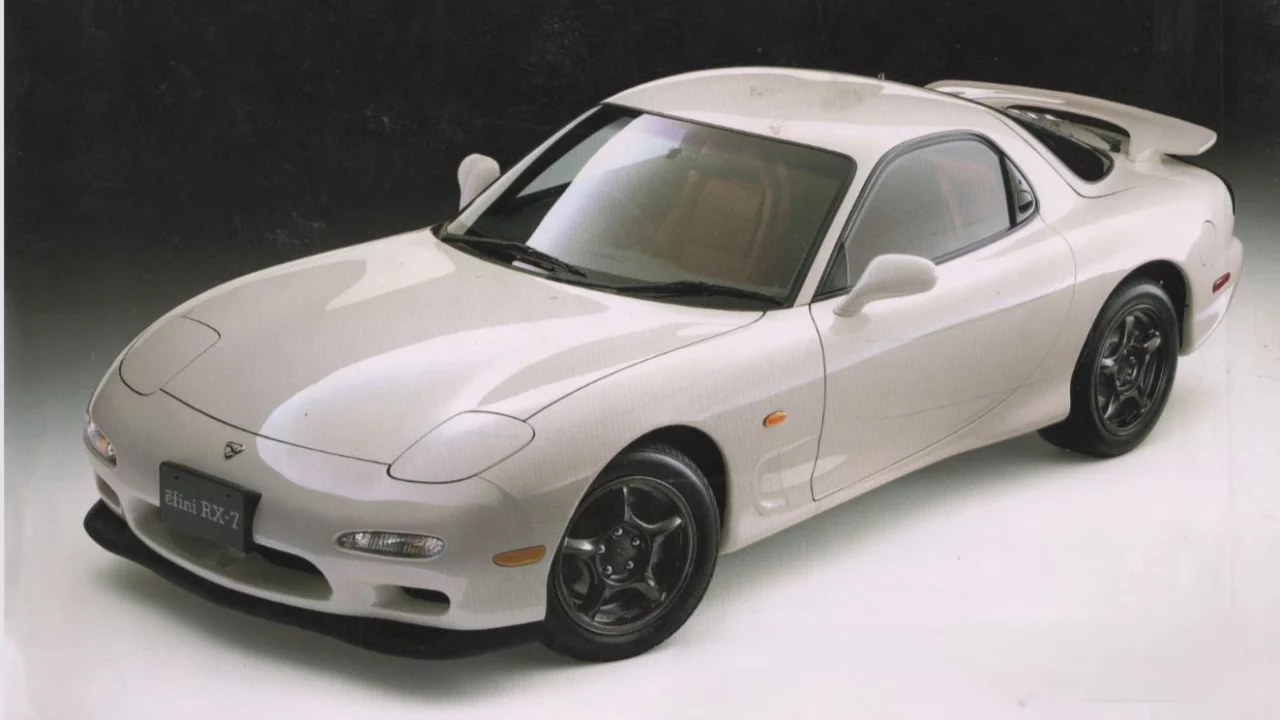
The lightweight “FD” generation of the Mazda RX-7 was Mazda’s player in that game. It was sold in the United States from 1992-2002 as a nimble two-seater with balanced 50:50 weight distribution and a drivetrain that set it apart from the competition. Design was drawn by Tom Matano, also known as the father of the legendary MX-5 Miata.
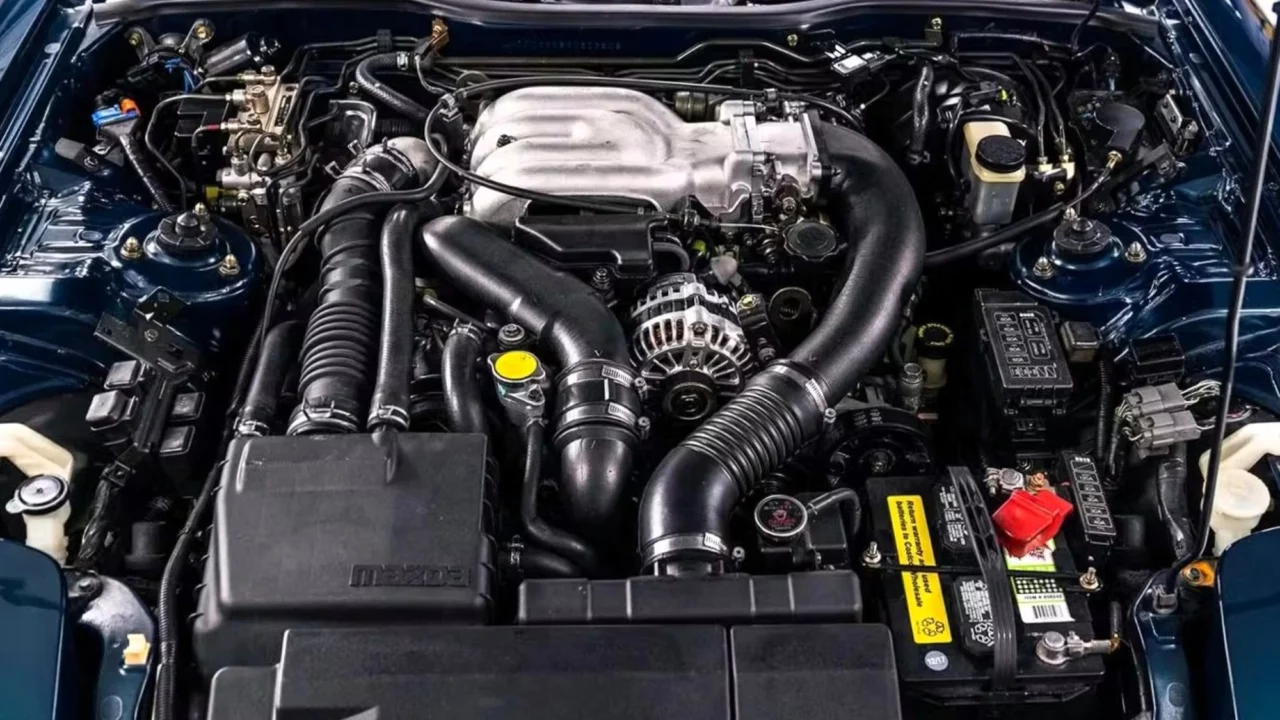 1.3-liter 13B-REW twin-rotor Wankel
Under its hood from the Hiroshima factory was a 1.3-liter 13B-REW twin-rotor Wankel rotary engine with sequential twin turbochargers. It was rated at a respectable 255 horsepower and 217 lb-ft of torque, just 15 horsepower fewer than the NSX offered at the time.
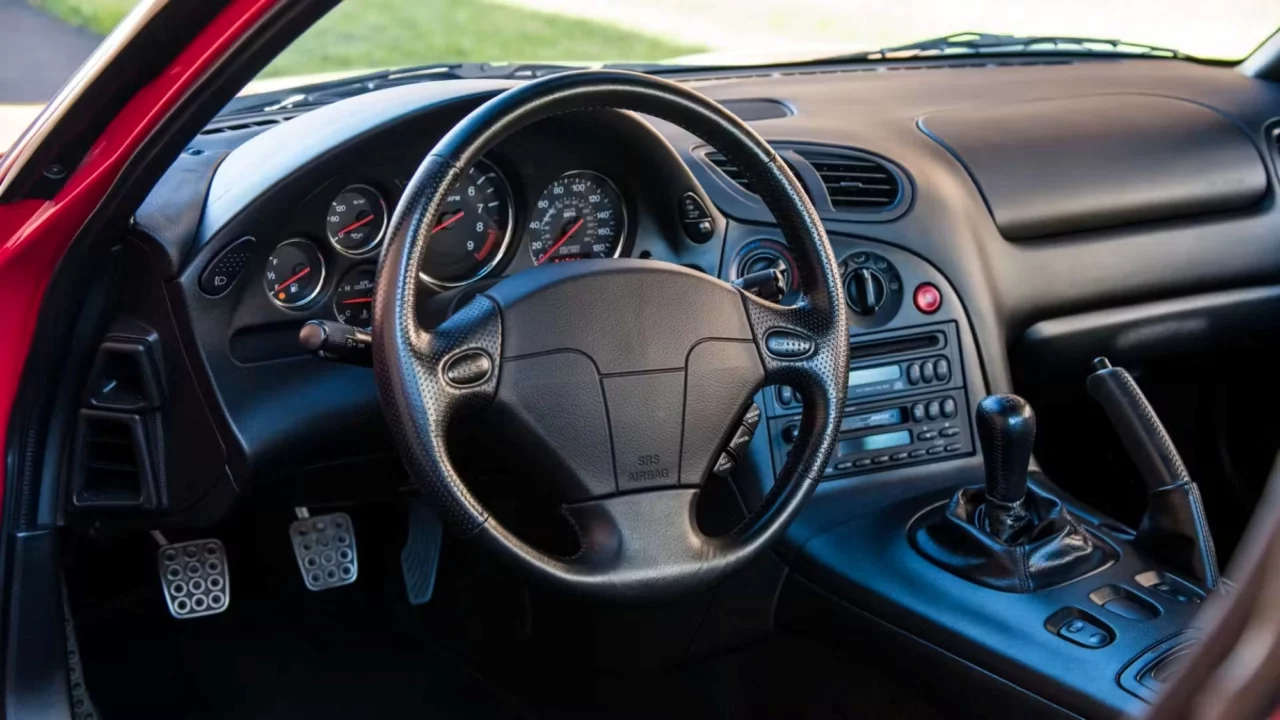
Truly, the RX-7 prioritized agility over displacement. Advertisements for the RX-7 called it “Lightning in a world of thunder.” Mazda said, “Our aim wasn’t to build another heavy-metal cruiser, but to return to the pure sports car. So instead of adding gadgetry, we streamlined. First, we chopped 20 pounds off the glasshouse area. And another 17 from the exhaust system. Then, we drilled holes to lighten up the brake pedals. We even trimmed the spark plug wires. The result is a 255-horse rotary car that ‘Car and Driver’ named to its Ten Best Cars in 1993, 1994, and 1995. The Mazda RX-7. Not a hot rod — a lightning rod.”
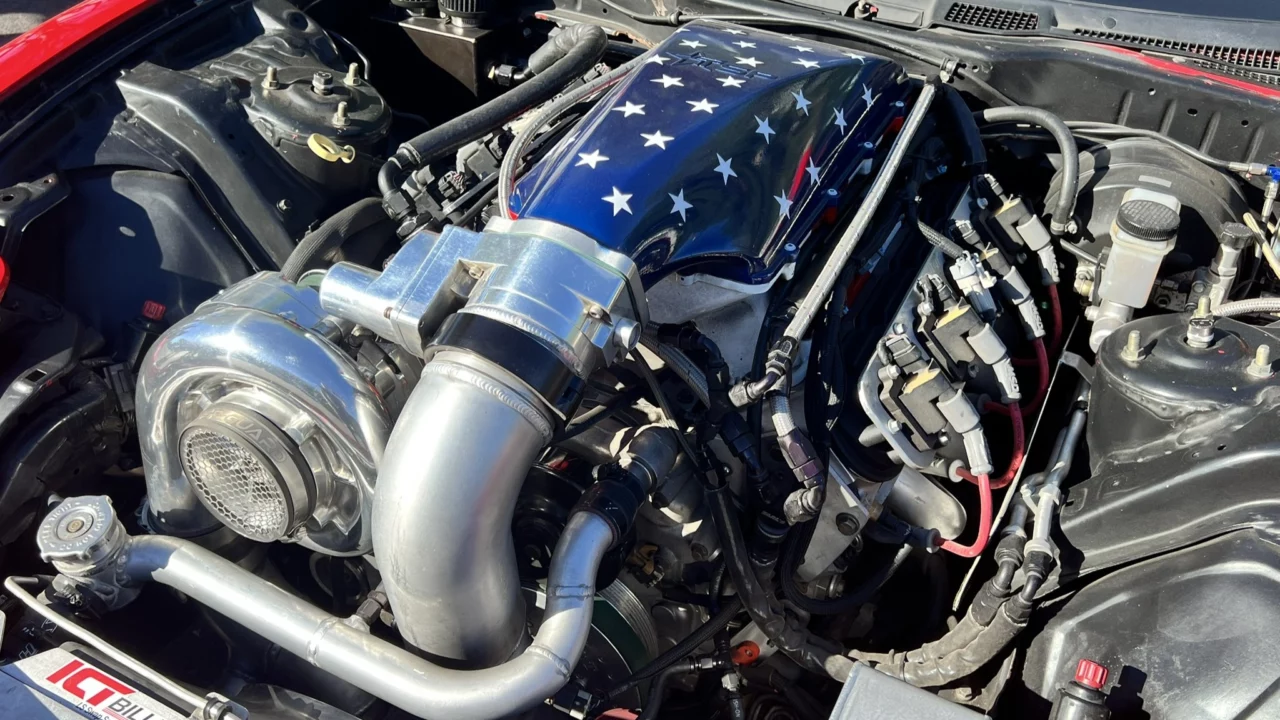
No matter how well Mazda engineers did at building a “pure” sports car, bigger will always be better to some. Without knowing the specifications — I wish I could have interviewed the owner to find out — it’s easy to see that this Mazda was the beneficiary of a high-horsepower American V-8. And it was dressed in patriotic stars, just to add to the messaging.
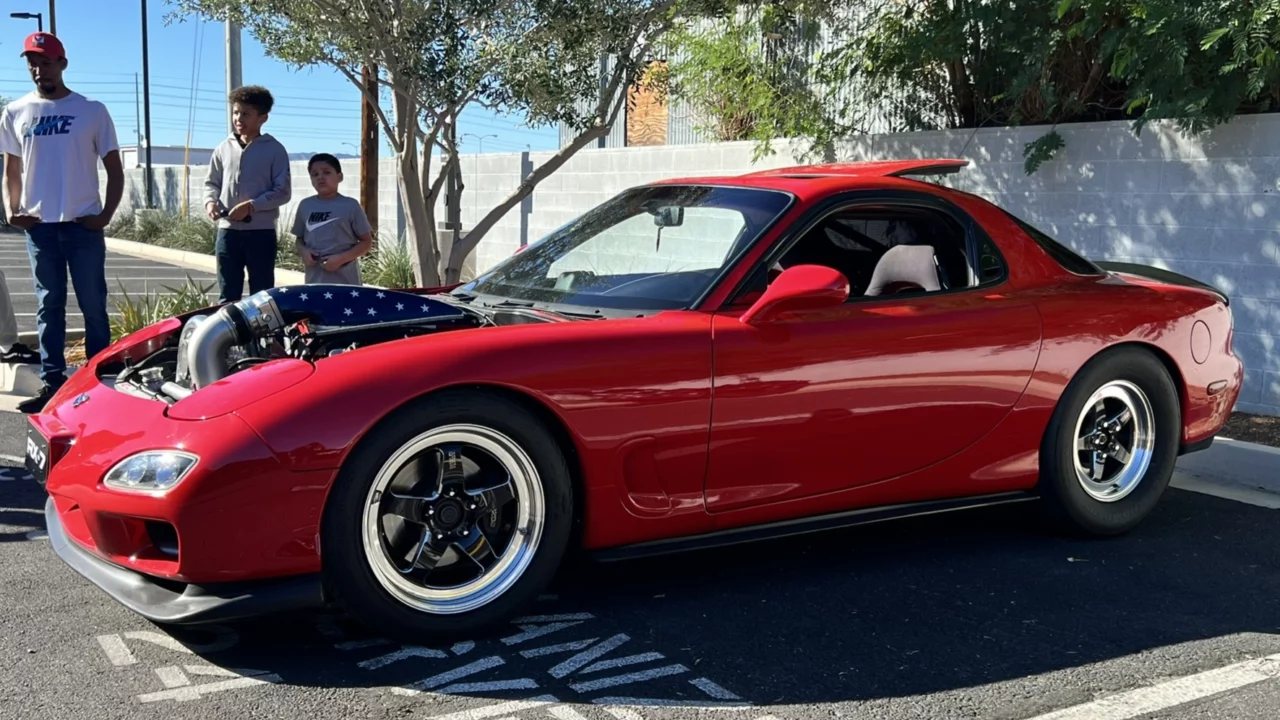
All it took was one look at the beefy racing slicks at the rear to know that the car probably performs as well as it looks. So, are you Team LS or Team Rotary?