One of the cars I came across at the Honda Cars, Bikes, & Coffee event reminded me of a vehicle that Diego wrote about earlier this year. In his story, my colleague introduced us to some of the ins and outs of the first-year Plymouth GTX, a Mopar muscle car that could comfortably go head-to-head with the Pontiac GTO. This was a step in the right direction when it came to Plymouth’s image, something its predecessor was lacking.
As Diego pointed out, Plymouth’s midsize series was based on the entry-level Belvedere model. The Belvedere name makes me think of the Mr. Belvedere television series, an American sitcom from 1985-90 about a proper, refined English butler played by Christopher Hewett. Perhaps Hewett’s polished character is one of the reasons why I associate the word Belvedere (at least when it comes to automobiles) with formality as opposed to sportiness. Seems like Diego was of similar thinking.
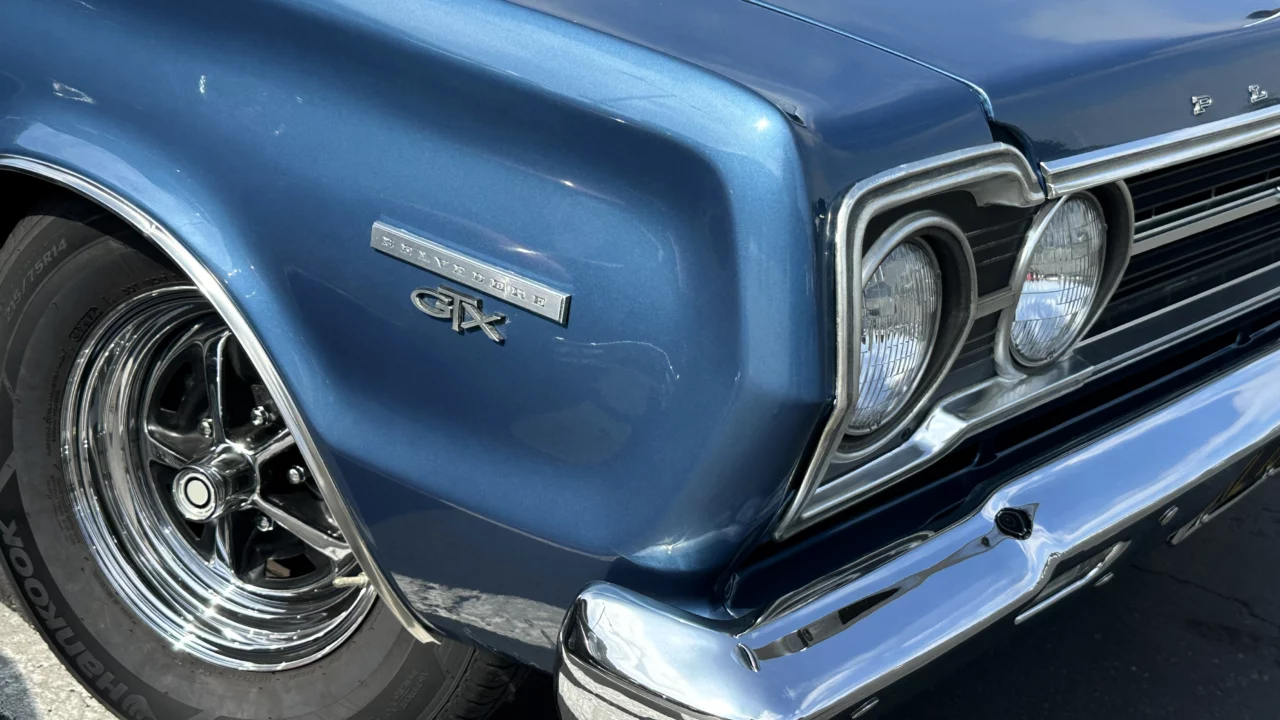
A magazine ad for the ’67 GTX said, “Plymouth is out to win you over this year.” It explained, “The standard GTX powerplant just happens to be the biggest GT engine in the world. At 440ci, it pumps out 375 horsepower and 480 lb-ft of torque. What’s more, the GTX comes with a raft of equipment to complement its under-the-hood prowess: special suspension, brakes, and exhaust system — even a pit-stop gas filler and hood scoops.”
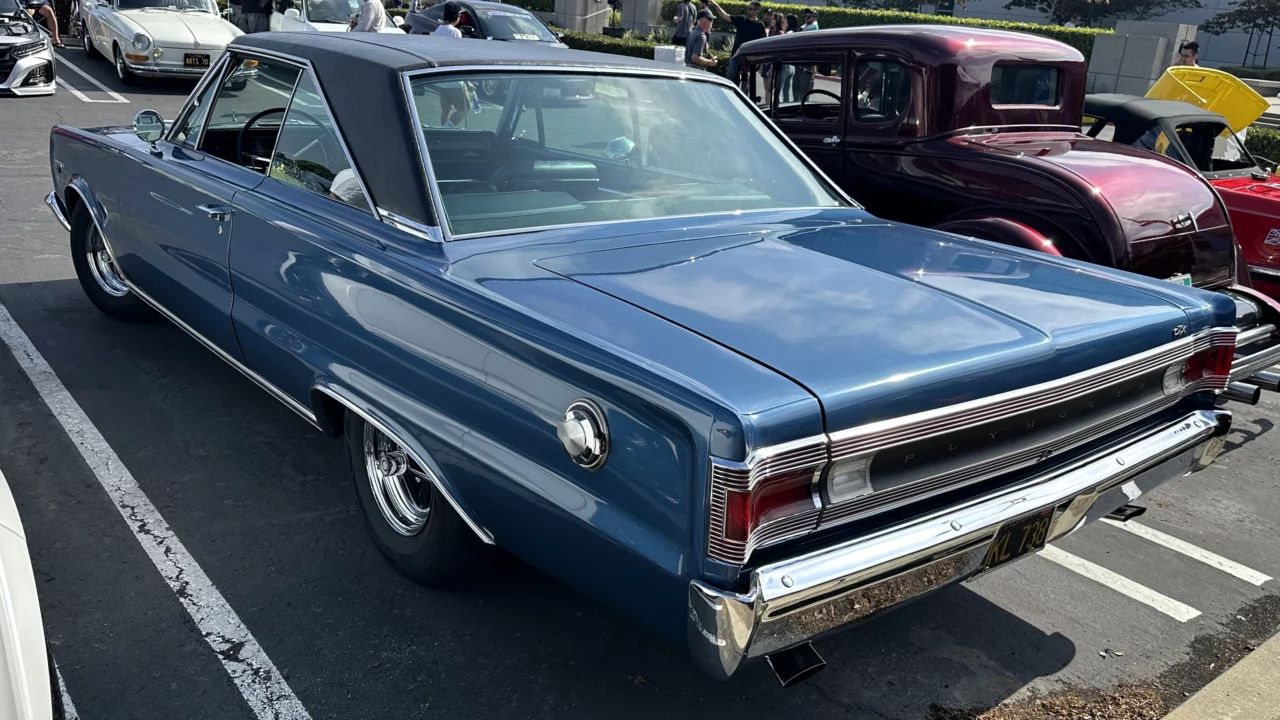
It’s worth noting, however, that those hood scoops were purely aesthetic in nature. Other exterior features of the two-door hardtop included chrome bumpers, quad headlights, antenna, rocker moldings, driver side mirror, vinyl roof, unique rear deck trim, and dual exhaust outlets.
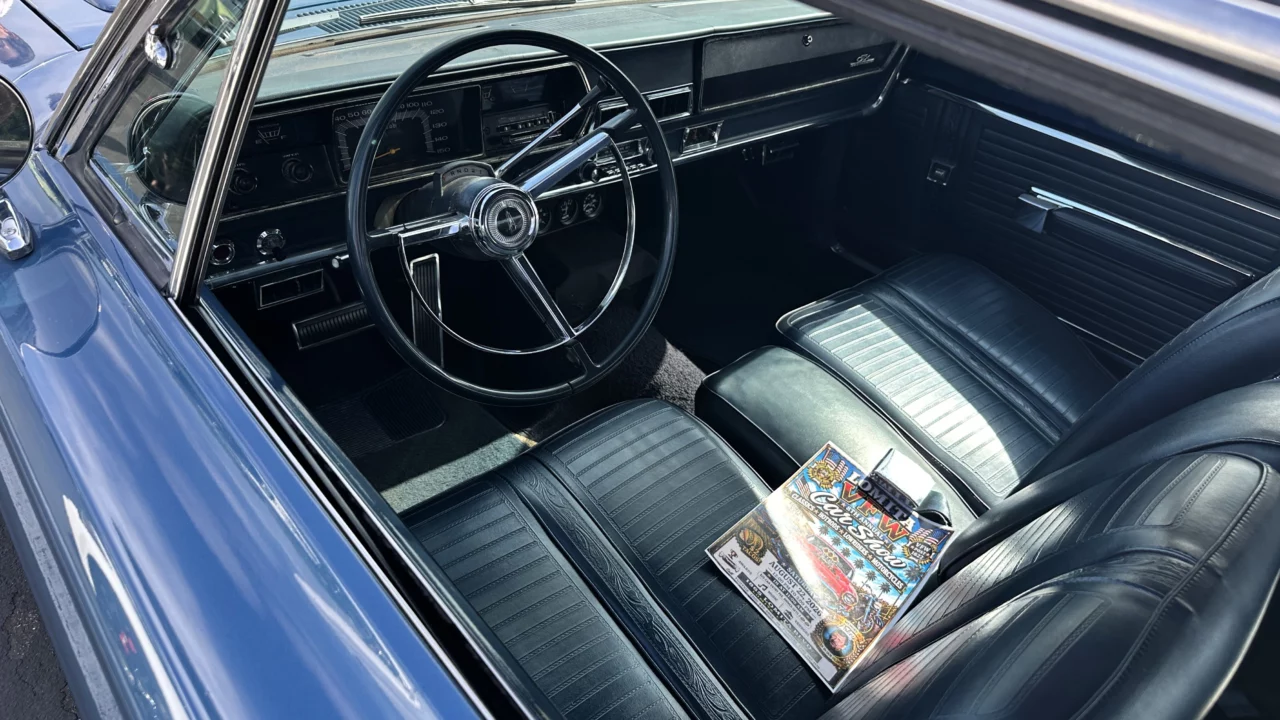
Interior features included embossed blue vinyl upholstery, lap belts, power windows, and 150-mph speedometer.
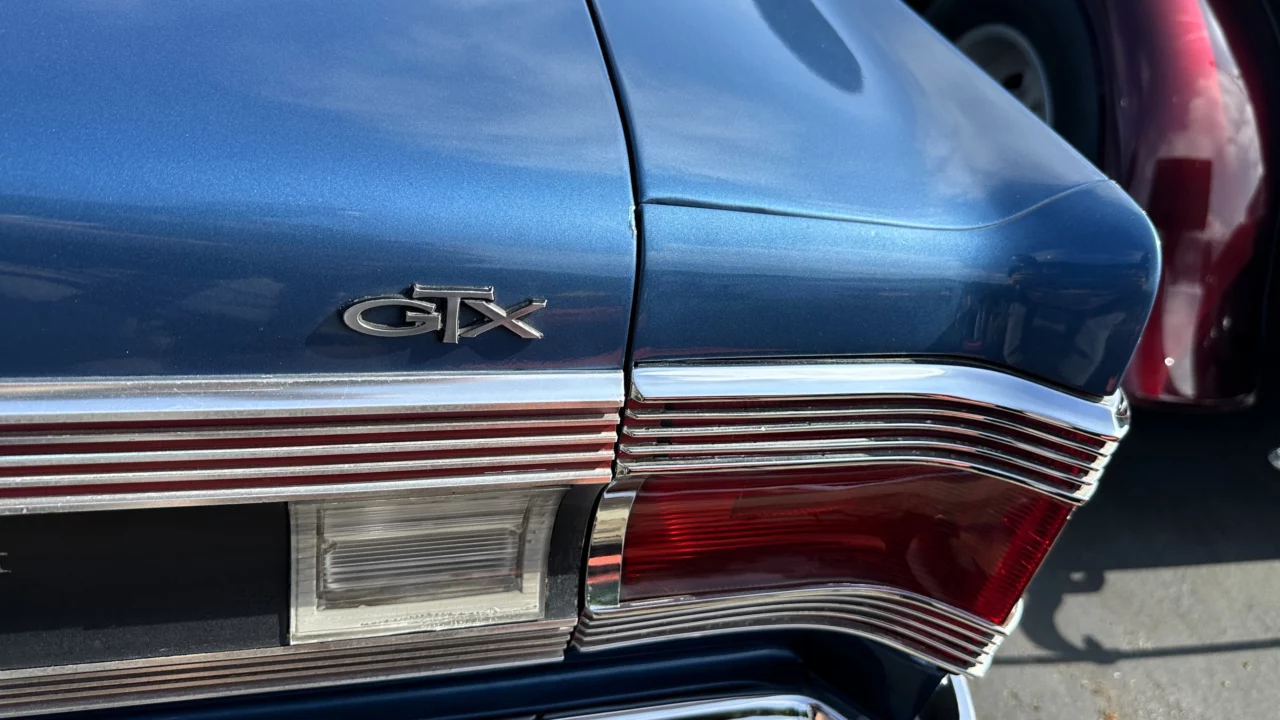
As mentioned in Plymouth’s ad, the GTX came standard with a 440ci Super Commando V-8; a higher-powered 426 Hemi was optional. Based on the lack of Hemi badges, the car in question had the 440, and its transmission was a TorqueFlite three-speed automatic. The GTX set itself apart from the run-of-the-mill Belvedere via engineering upgrades such as heavy-duty brakes and suspension.
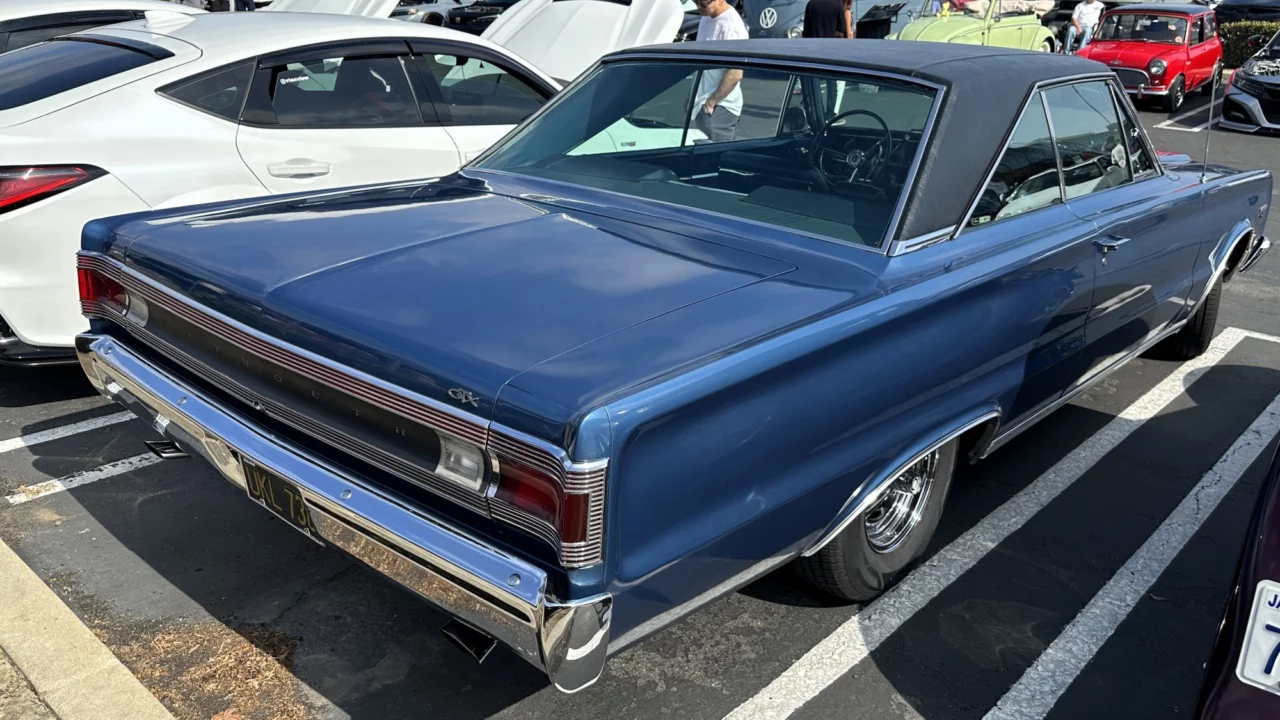
The GTX was displayed in a sea of predominantly later-model Honda cars at the event in Torrance, so it was a pleasant surprise to come across one of the most important cars in Mopar’s entry into the muscle-car game.