August 1945: American streets were flooded with citizens celebrating Japan’s surrender, marking the end of World War II. A new world free from fear of the Axis Powers had arrived. Soon after, a new car culture would emerge in California: lowriders.
When Chicano veterans returned home from the war in the mid-1940s, they began to customize vehicles that would cruise “low and slow.” This movement would explode in the 1950s as they began cutting spindles, adding lowering blocks, installing reduced-length suspension spring coils, and creating “Z frames” from standard production vehicles. At a certain point, creating one’s own lowrider was less about showing signs of rebellion toward the mainstream push of hot rods and fast cars than it was an expression of one’s identity and the Chicano culture that influenced the cars.
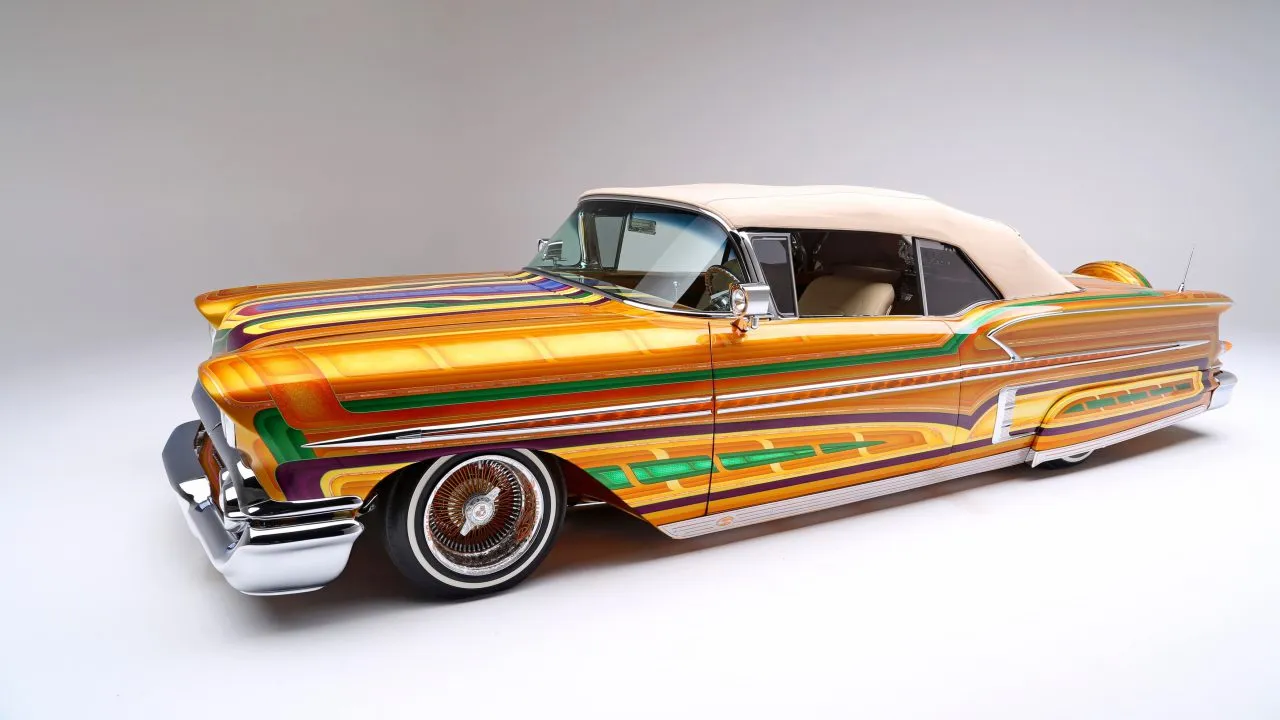 1958 Chevrolet Impala courtesy of the Petersen Automotive Museum
There were certain people in high places who did not appreciate this new culture. On January 1, 1958, the California government passed California Vehicle Code §24008, which stated, “It is unlawful to operate any passenger vehicle, or commercial vehicle under 6,000 pounds, which has been modified from the original design so that any portion of the vehicle, other than the wheels, has less clearance from the surface of a level roadway than the clearance between the roadway and the lowermost portion of any rim of any wheel in contact with the roadway.” The law would remain in effect until it was repealed by the California governor in 2023.
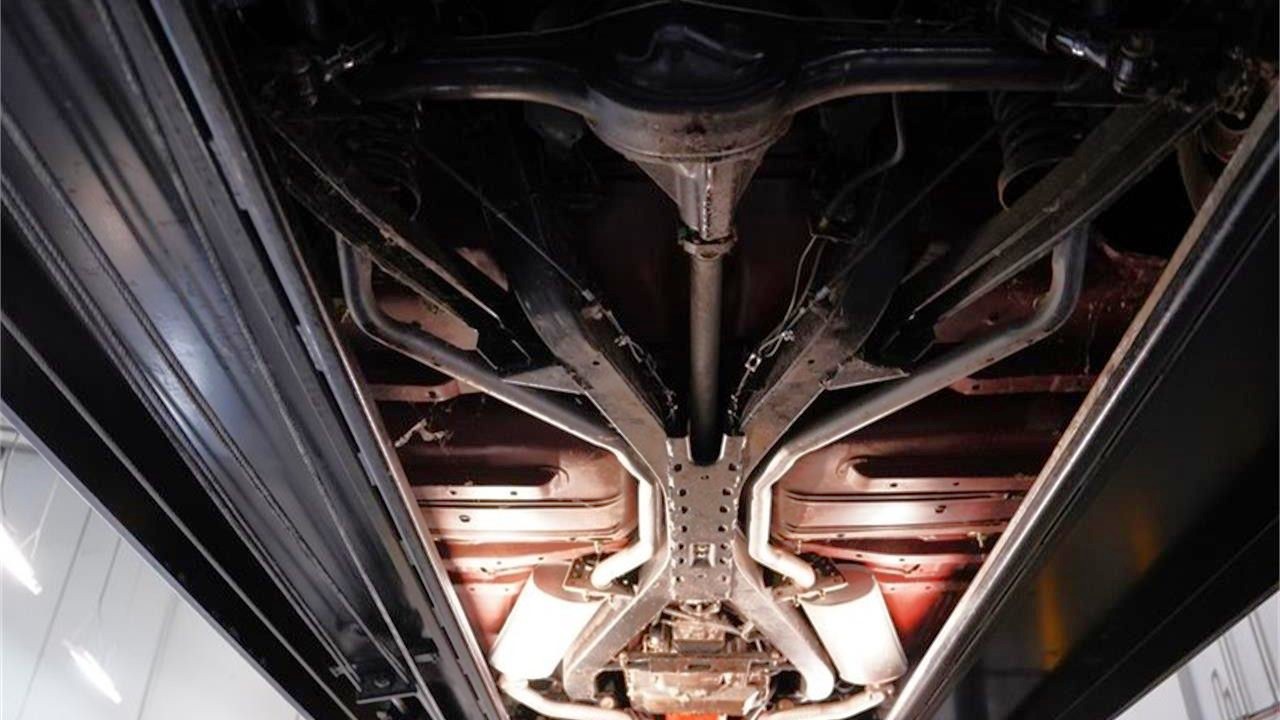
The 1958 Chevrolet Impala would play a role in saving lowrider culture from this law due to its X-shaped frame. A brochure from those days touts the new frame as an “integrated ‘backbone.’” Chevrolet goes on to say that the “husky new crossmembers” join body to frame in “a new way.” As opposed to standard side rails, the body was strengthened in the rocker panels and firewall, and the frame would meet in an elongated “X” in the center of the undercarriage.
Ron Aguirre — a mechanic and lowrider owner who was tired of being targeted by the police in Rialto — invented a workaround in 1959 using this frame. He and his father used hydraulic Pesco pumps and valves that allowed the driver to change the ride height at the flick of a switch, something that fit perfectly on the X-frame Impala.
As exterior designs became more ornate in the 1970s, people would gather to appreciate the creativity, craftsmanship, and cultural expression of these unique vehicles more than ever. Lowrider clubs would hold shows, serving as key fundraisers for El Movimiento (Spanish for “the movement”) that worked to combat structural racism, encourage cultural revitalization, and empower the community by rejecting assimilation.
Lowrider culture continued to spread across the United States thanks to three things:
- In 1975, War released “Low Rider,” which hit No. 7 on the U.S. Billboard Hot 100
- Also in 1975, multi-chapter car clubs such as Carnales Unidos were established
- In 1977, students at San Jose State University created Low Rider magazine, which would eventually grow to have monthly sales totaling 60,000 copies at its peak in 1988
Lowriders were kept at the forefront during the 1990s thanks to the West Coast hip hop movement, which saw artists such as Eazy-E, Ice Cube, Dr. Dre, and Tupac Shakur prominently displaying lowriders in their music videos.
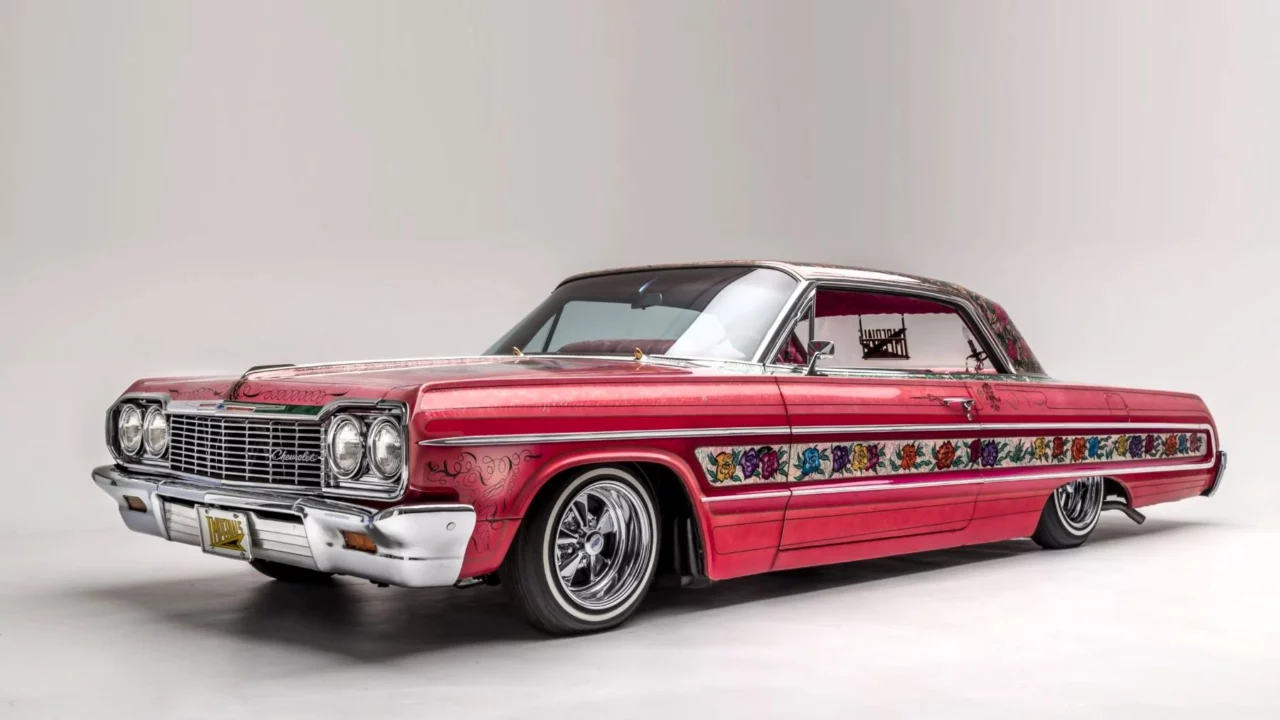 1964 Chevrolet Impala courtesy of the Petersen Automotive Museum
Today, lowrider culture is garnering the recognition that it has always deserved. In March 2026, the United States Postal Service released a series of Forever stamps celebrating lowriders; as recently as last week, California Governor Gavin Newsom signed Assembly Bill 2541 into law, which creates a specialized lowrider license plate to raise money for “nonprofit entities with a history of supporting the lowrider community, Latino culture, and youth development.”
“Lowriding is more than a car; it is cultura, it is art, it’s family, and it is a powerful expression of Chicano and Latino pride,” says Assemblymember Mark González. “For generations, our communities have used lowriders to tell our stories, celebrate our heritage, and create something beautiful out of the streets we call home. Yet too often, lowriders were treated as a problem to be policed instead of a culture to be celebrated. AB 2541 helps change that narrative.”
In 2024, the Oceanside Police Department partnered with its citizens to create a special hand-painted lowrider car, and the San Jose Police Department built its own custom lowrider to participate in the city’s annual Cinco de Mayo parade. The Albuquerque Police Department, who used to crack down on lowriders, not only has created its own custom lowrider police car but also created a “Cruising Task Force” to help “promote responsible cruising” within city limits.
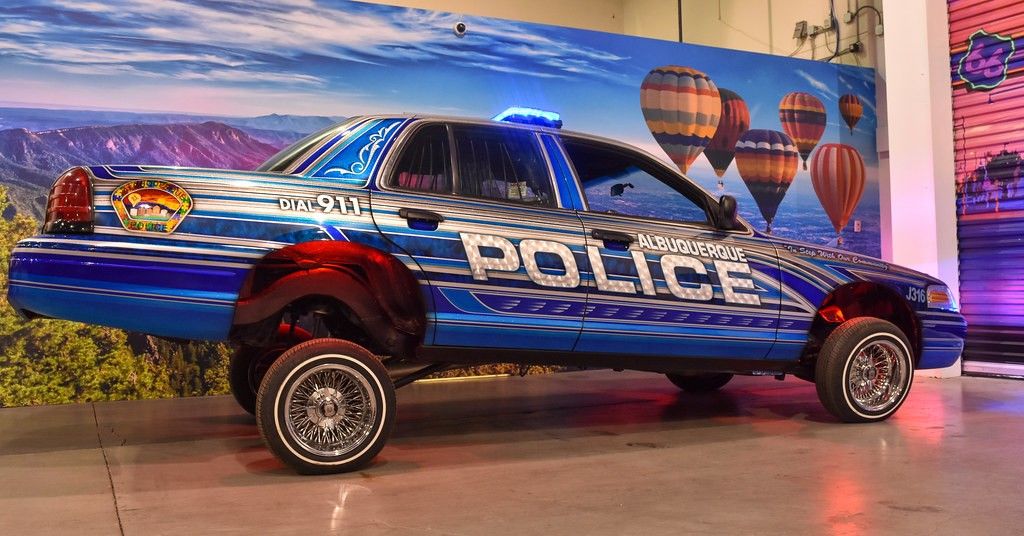 APD lowrider courtesy of City of Albuquerque
Sometimes I underestimate how wide-ranging classic car culture can be. I get wrapped up in my likes of muscle cars and old pickups enough that I may forget or remain ignorant of the deep historical lessons that emerge from subcultures. In uncovering the history of lowriders, one thing becomes clear: some things can be more than a passing interest — they can be a symbol of cultural identity.
If you’re digging the 1959 Chevrolet Impala lowrider, it’s listed for sale on ClassicCars.com.