Whether we like it or not, Artificial Intelligence (AI) is having its moment. All we can do is hope that, as a world populace, we have learned enough from the works of Ray Bradbury, George Orwell, and others not to lead us into a dystopian future. Currently, the automotive industry is using AI in many tangible ways. Popular brands like General Motors (GM), Hyundai, and BMW are currently putting it to work in their manufacturing departments as we speak.
Per industry reports, it seems that the AI innovations in the realm of manufacturing have more to do with providing an extra set of eyes or tools rather than workforce replacement.
 Courtesy of General Motors
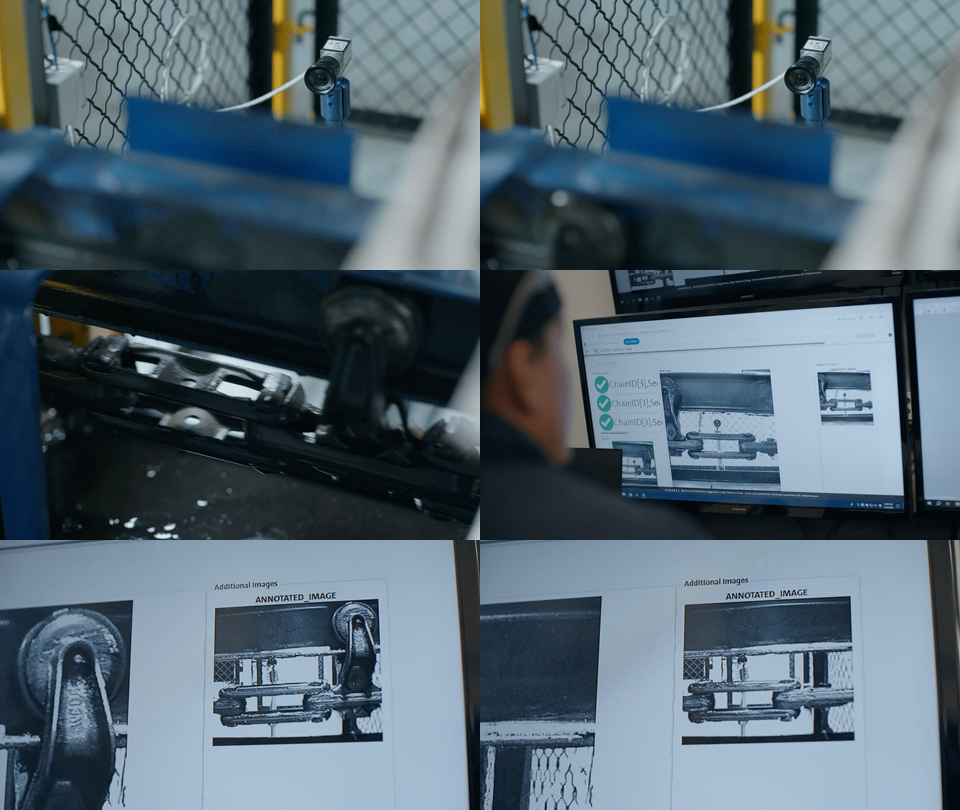
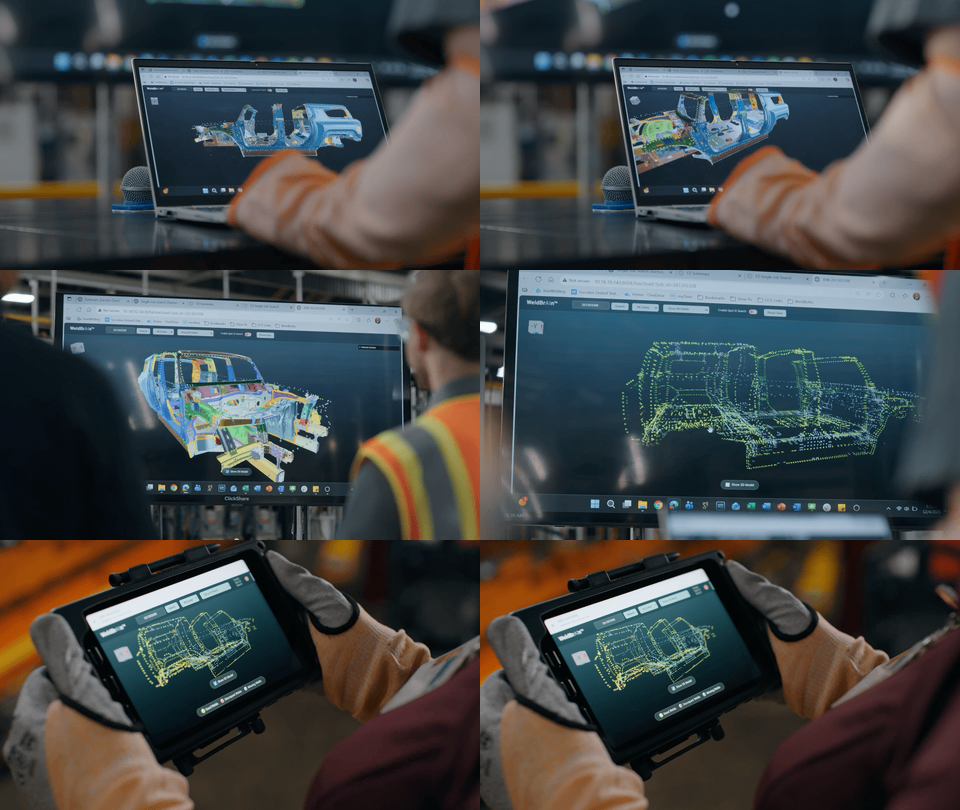
Take GM’s proprietary WeldBrAIn (WeldBrain) technology: It is part of an extra step to double-check the welds on each vehicle to ensure stability and safety. It doesn’t do the welding for you — it just checks your work. Before this technology, each weld that was visible to the human eye was checked by hand. Now, it’s still checked by hand, but with help from this AI-powered system, it can check even the welds that can’t be seen by the human eye.
At Hyundai, it has leveraged reinforcement learning-based AI to create Transfer Cart Sequencing Optimization Technology. In the past, when equipment would malfunction and disrupt needed parts-transfer carts moving across the production line, employees would have to stop everything and manually determine the best routes. Now, AI determines the best routes before the malfunction occurs; as a result, unnecessary production downtime has been reduced by approximately 86 percent according to Hyundai.
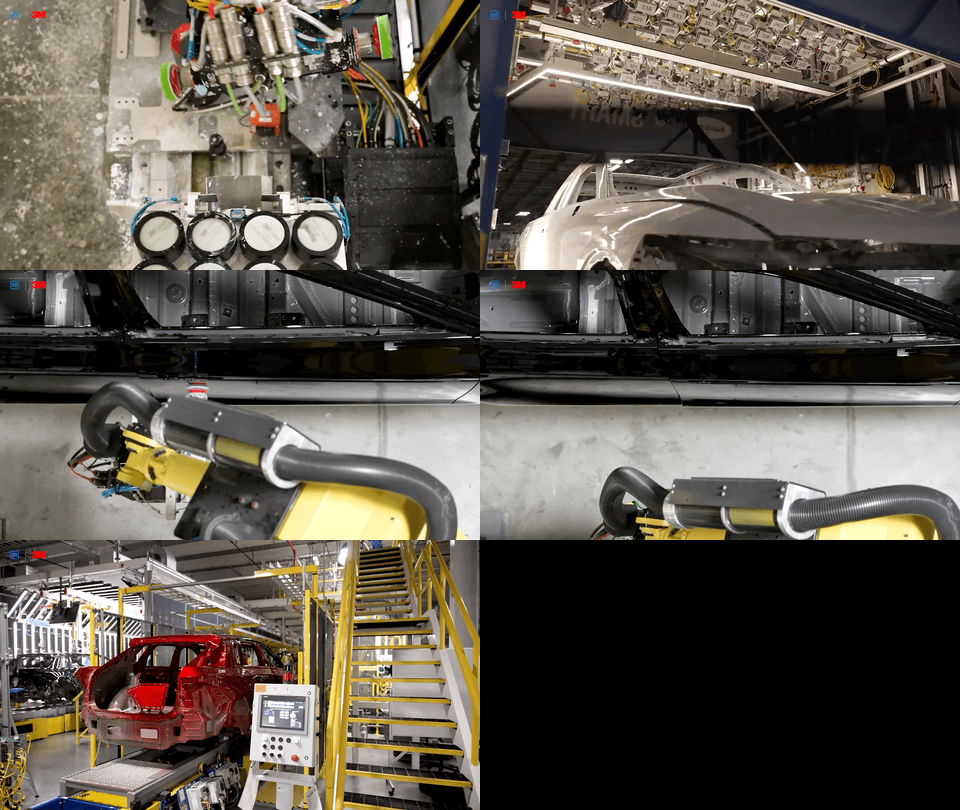
BMW has been implementing ways to combine its existing robots with AI technology. At its facility in Spartanburg, South Carolina, BMW is currently running a pilot project that utilizes humanoid robots in its body shop. Automotive Manufacturer Solutions (self-described as “the essential resource for automotive manufacturing professionals and suppliers globally”) believes BMW’s approach suggests that robots won’t necessarily replace workers, but it will redefine their roles, creating more opportunity. For example, forklift drivers will go from driving equipment to careers in IT, control, or maintenance.
 Courtesy of General Motors
At the end of the day, it seems AI is being implemented for three reasons: innovating processes, double-checking work, and speeding up production. As much as AI can and will evolve, there are certain things it will never be better than a human at, such as creativity.
Human intuition is not something that can be replicated by binary code. It can get close, but you’ll still need a human to test-drive these vehicles, review designs, and even double-check the manufacturing.
Why? Because all technology must break eventually — it’s finite. The capabilities and possibilities are infinite but, at the end of the day, there’s a reason why software developers and IT professionals exist. AI modules will have to be programmed and checked by humans. Even Mercedes-Benz has more than 1,500 employees across its organization in a “hackathon” as part of its rollout.
Our human experiences affect the design of these vehicles as we want them to sell to specific target markets. AI might be able to pull some stories from social media, but it does not have the lived experience of folding up a stroller, making room for a gym bag, buckling a baby in a car seat, and fixing a boo-boo on one of your other kid’s elbow all the while getting home early enough to start the bedtime routine at a reasonable hour. You need engineers, designers, and developers that live regular lives to make the most practical upgrades to these vehicles so they fit the target market perfectly.
 Courtesy of General Motors
AI is only as good as the dataset that it pulls from. As mentioned earlier, it is going to make a lot of lives easier. At the same time, it’s going to continue to increase isolation across humanity since the need to check in with one another dwindles — it may get to the point of “Why walk all the way to that department when I can just ask AI?”
As classic car enthusiasts first and foremost, we have an antidote: Continue having in-person car shows, keep showing younger generations the thrill of a four-barrel carbureted V-8, and continue making connections. That way, we can grow with AI rather than under it.