Frequent The ClassicCars.com Journal contributor Tyson Hugie has written about a 1965 Mercury Montclair Breezeway that he found in a junkyard. The Breezeway is an interesting point in Mercury history, a sub-model of sorts that was soon joined by the Marauder. This reverse-slant roofline actually has its origins in 1950s Ford Motor Company products and also has been influential on other cars around the world.
Few enthusiasts would disagree that 1957 was an important model year in Detroit. This was the year that the Virgil Exner unleashed The Forward Look upon the world; the $10,000 Continental Mark II concluded its production by the end of the year while the $13,000 Cadillac Eldorado Brougham was just getting started; both Chevrolet and Pontiac introduced fuel injection; luxury brand Packard became a fancier Studebaker; and Mercury introduced a restyled lineup with a futuristic marketing campaign.
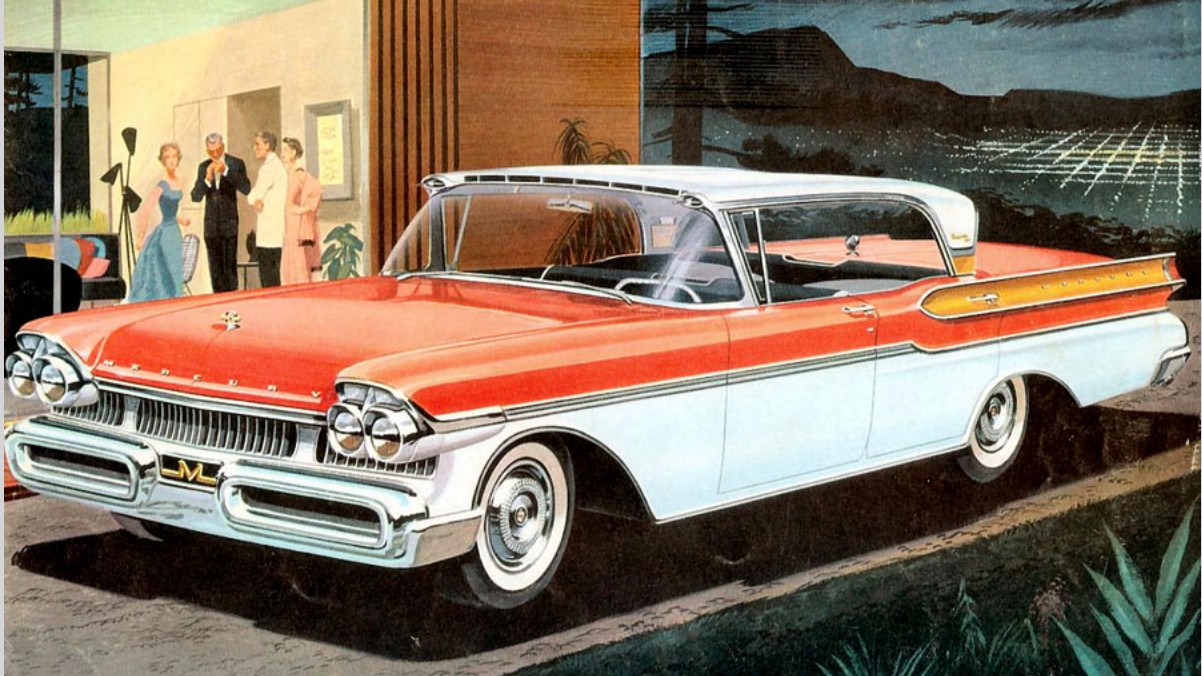
Nineteen fifty-seven Mercurys were all-new, touting “Dream-Car Design” that was previewed by the 1956 XM-Turnpike Cruiser dream car. Models were Monterey and Montclair, plus four station wagons; the Custom and Medalist were discontinued (though Mercury reintroduced the Medalist returning for 1958 to counter the recession).
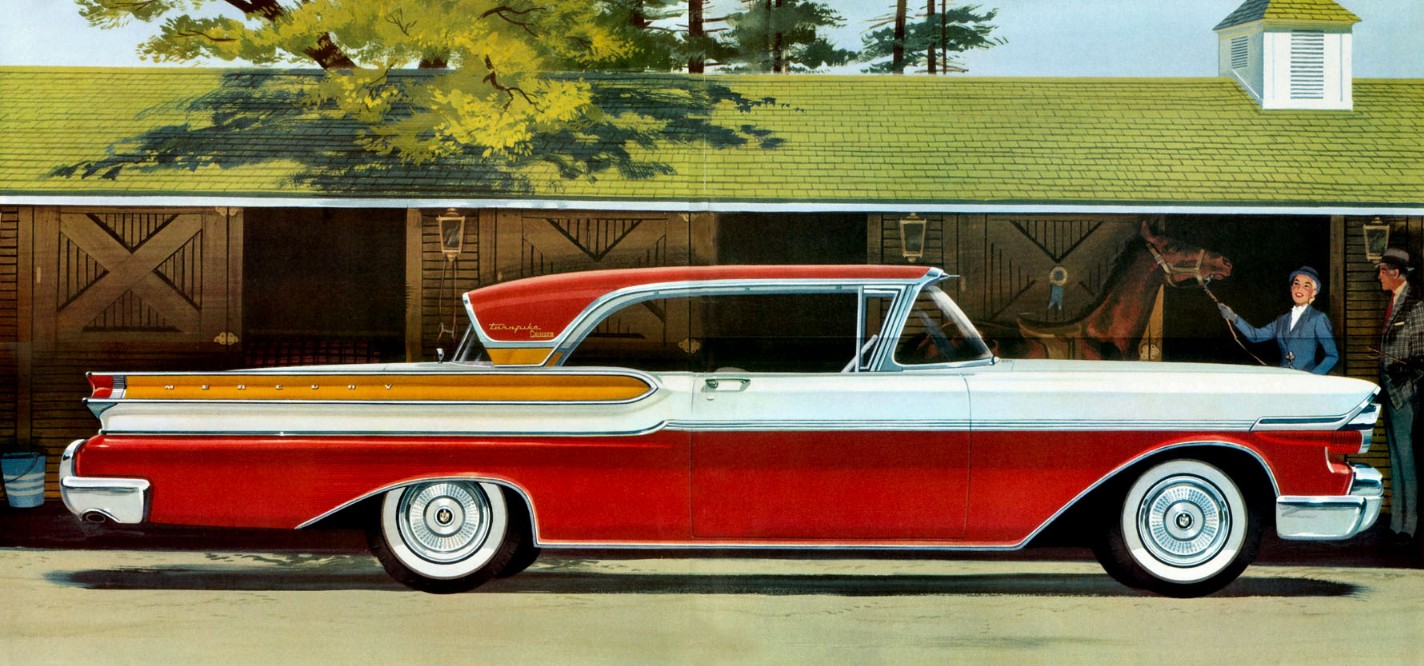
Soon after the 1957 model-year debut, Mercury introduced its “most dramatic expression of Dream-Car Design . . . The Turnpike Cruiser with exclusive features no other car offers” such as:
- Skylight Dual-Curve Windshield
- Roof-level air intakes with integrated antennas
- Breezeway Ventilation with power-operated backlite
- Quadri-Beam Headlamps (legal in all 48 save South Dakota and Tennessee)
- Monitor Control Panel including Average-Speed Computer Clock and tachometer
- Merc-O-Matic Drive with Keyboard Control
- Full-Vision Steering Wheel
Though the name “Turnpike Cruiser” sounds somewhat goofy today, this model is from a time when interstates were a growing concept, so it was no accident that this accidental homage to kitsch exploited this form of modern living.
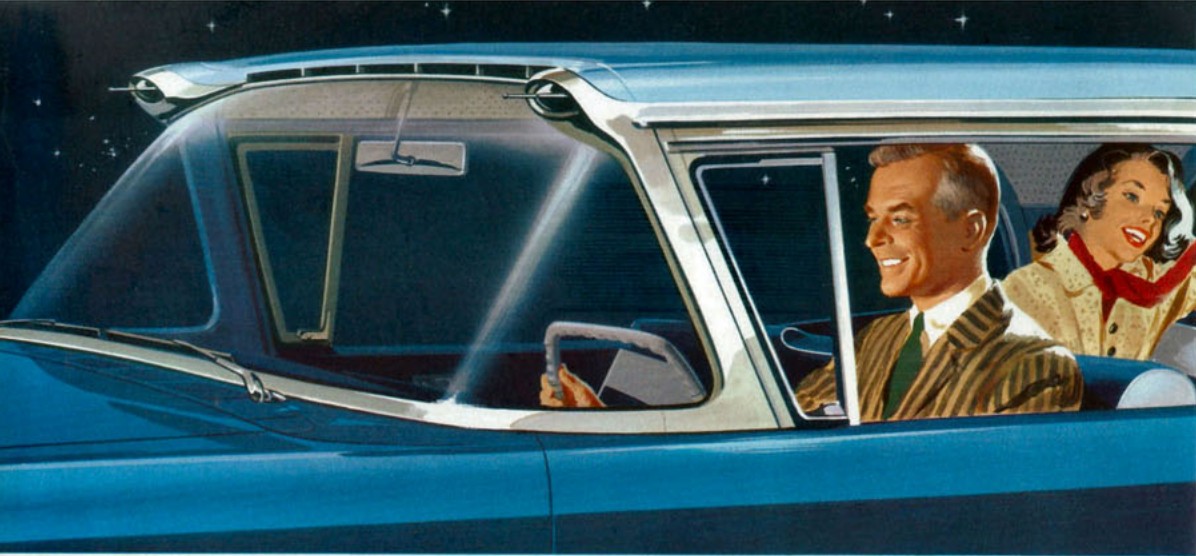
Unique to the Turnpike Cruiser was the power-operated rear window that was part of the Breezeway Ventilation system. It “combines roof-level air intakes and a power-operated back window” for the “greatest improvement in car ventilation automotive history.” The driver, not rear passengers, controlled the backlite. This design continued into 1958, though the Turnpike Cruiser lost its independence and was rolled into the Montclair series.
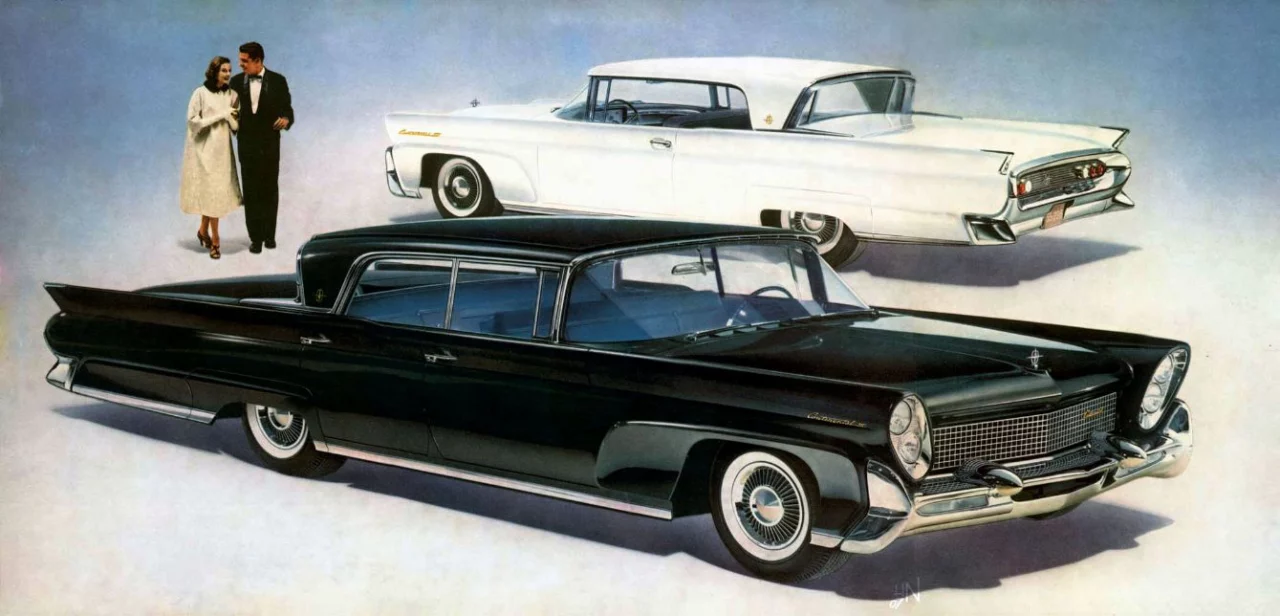
That same year, Ford Motor Company spread the concept to the Continental Mark III by Lincoln. For 1956-57, Continental (with the Mark II) was a separate brand superior to Lincoln, but subsequently the brand was discontinued in November 1956. Lincoln then followed it up with the 1958 Continental Mark III as a downgraded successor, more in line with the Cadillac Eldorado Seville and Biarritz than the Brougham. The design’s reverse slant featured glass that followed the contours — even for the convertible — unlike what Mercury had been doing. Also, unlike Mercury, the retractable window wasn’t branded, and all regular Lincolns followed the same reverse-slant roofline but featured wrap-around glass. This style continued for the 1959 Continental Mark IV and 1960 Continental Mark V.
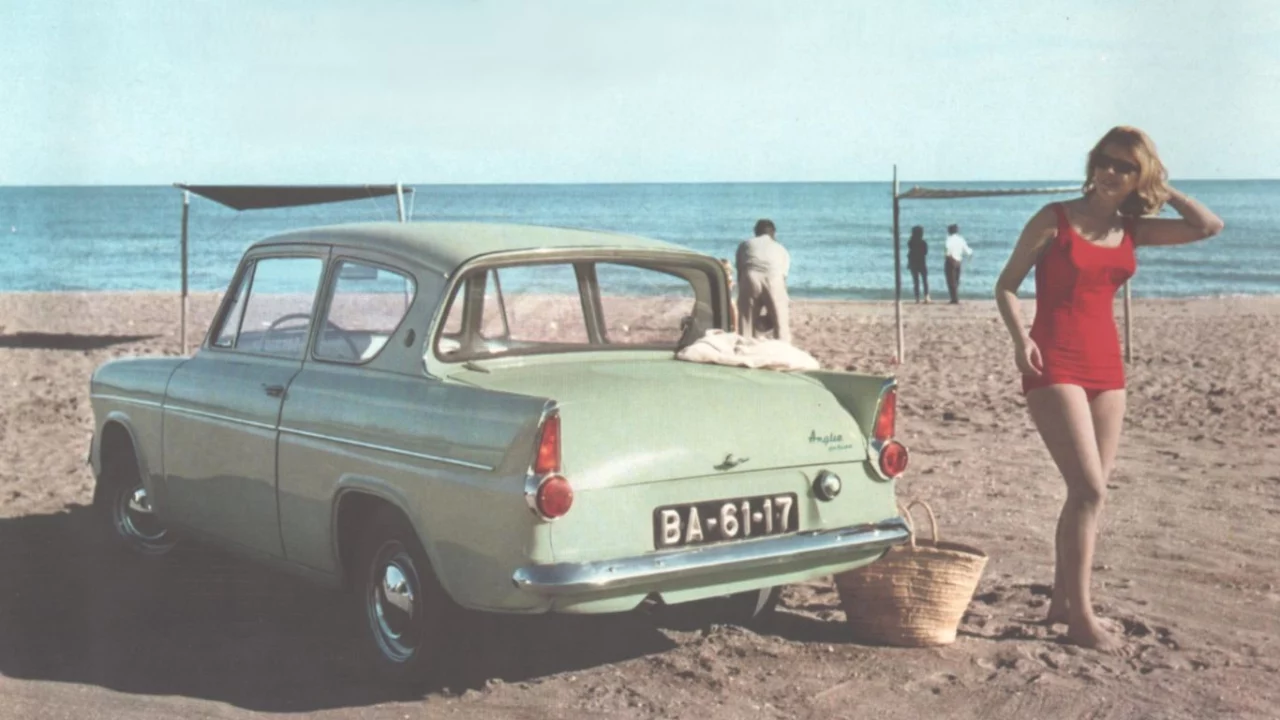
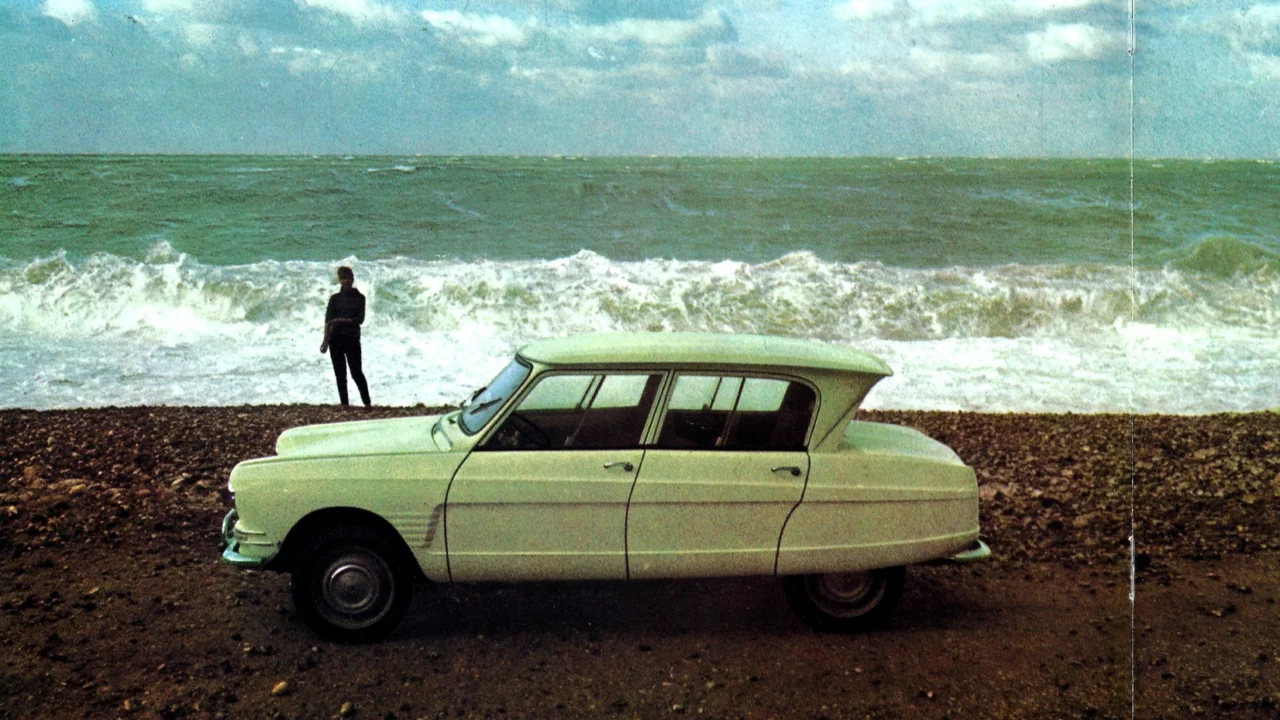
After 1960, this reverse-slant roofline and retractable rear window would disappear from Lincoln’s portfolio, only to reappear for the 1963 Mercury series. It also influenced a Ford model from the United Kingdom sometimes seen on American roads and in Harry Potter books: the Anglia. Citroen also used a similar design for the Ami 6. Were there others? Tell us in the Comments section below.