Over the past 100 years, cars have advanced in every way, from engines and transmissions to interior electronics and safety features. Snow, on the other hand, has always been snow — and capable of causing problems for travelers. That was especially true back in the 1920s, when there was no Interstate Highway System, traction control, or tires engineered specifically for rough winter weather. However, a Wisconsin company called The Snow Flyer Corporation offered equipment that transformed Ford and Chevrolet vehicles into snowmobiles.
Anyone who needed more traction in the snow, such as sales representatives, doctors, or mail carriers, could add Snow Flyer’s hardware to his or her vehicle, but it had to be a certain kind: a Ford Model T open car or truck, or a Chevrolet Model K or Model V. Up front, Snow Flyer added two 54-inch steel runners, each with a removable sub-sole. Thanks to their Duo-Gauge functionality, both runners could be adjusted to a narrow 44-inch width or the standard 56-inch width to fit different roads. An auxiliary front wheel axle was available so that drivers could travel on dry city streets or through powder on rougher roads.
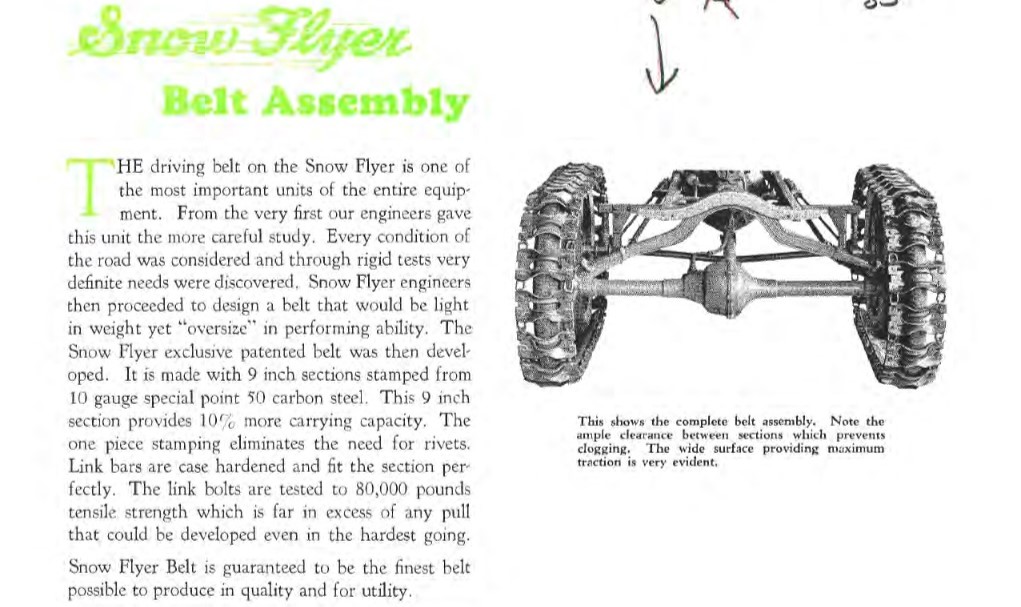
At the back, an anti-slip Scurlock differential transferred power to the drive belts, which automatically tightened. Each belt was made up of nine-inch panels of 10-gauge steel wrapped around the vehicle’s rear tires and those connected to the Snow Flyer auxiliary axle’s wheels. A hole in the middle of each section kept mud or snow from building up and stopping forward movement.
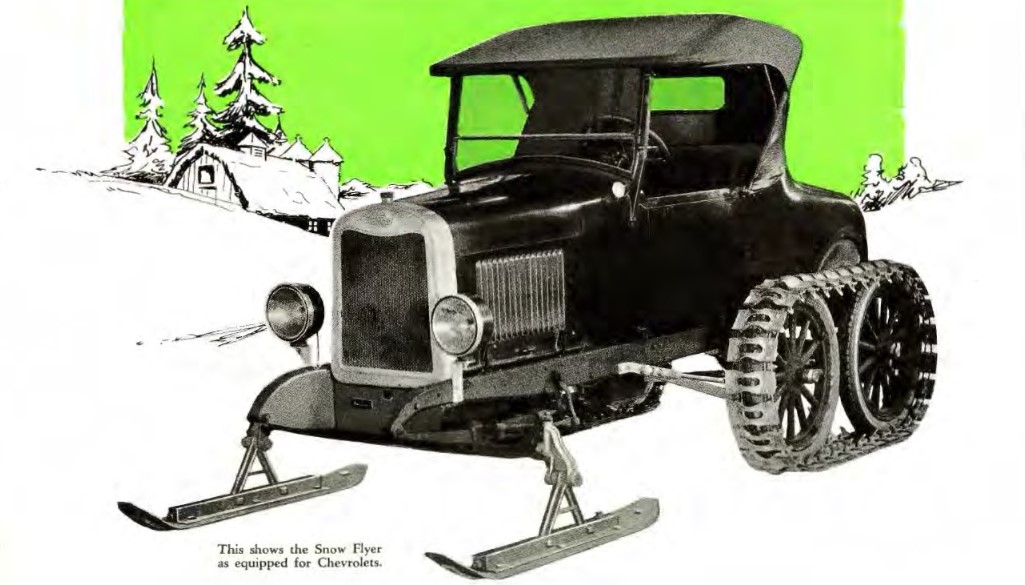
Only Fords could be equipped with the Ruckstell axle, which provided four forward and two reverse speeds; Chevys didn’t need it because of their three-speed transmissions.
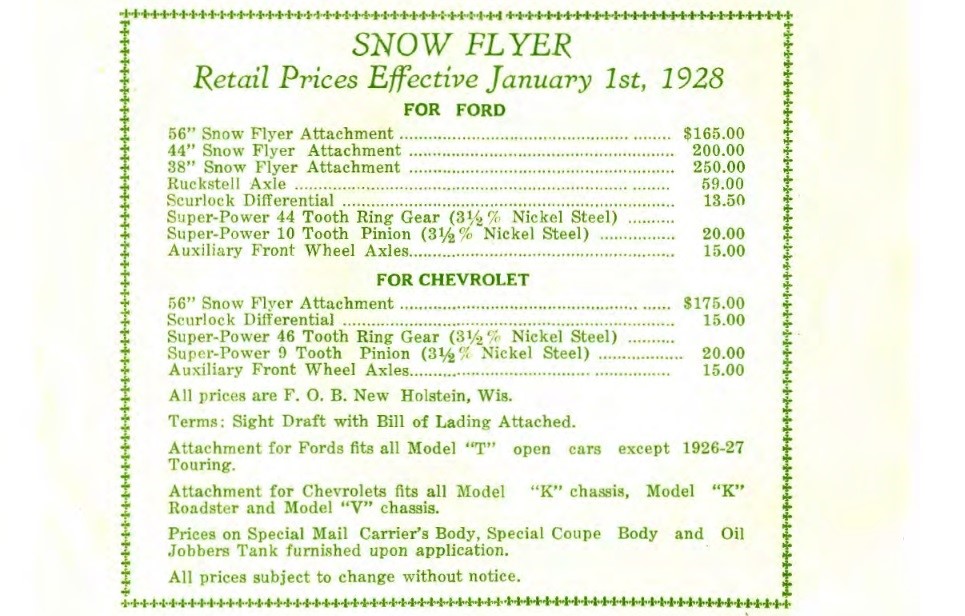
In 1928, the main Snow Flyer hardware started at $165. Seeing a Ford or Chevy with it at a local car show? Priceless.