Not all Chevrolet Camaros were designed to be all-out sports cars. Some, in fact, placed an emphasis on comfort, and perhaps even offered a dash of luxury. The Berlinetta was a “touring” version of Chevy’s popular F-body pony car, offered for select years of both its second and third generations.
When the Berlinetta nameplate first debuted for 1979, a magazine advertisement said, “The new Camaro Berlinetta offers a superb balance between the qualities of a sporty road car and the comfort of a touring car. Beneath its classic Camaro styling, Berlinetta also offers a wealth of engineering advances.
For example, special insulation surrounds you to help reduce engine, wind, and road noise. A new suspension system, unique to Berlinetta, gives you a smooth, responsive ride with a road-hugging pleasure you would expect from a car that wears the Camaro name.”
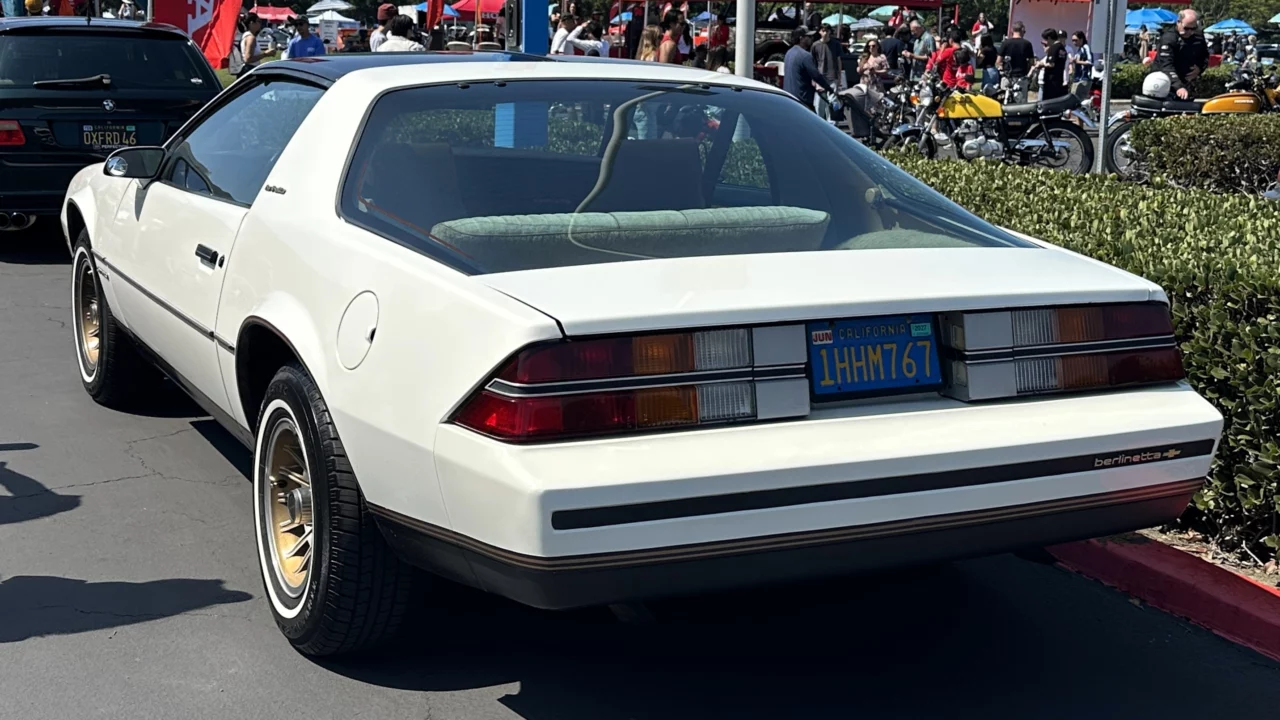
A car I came across at a recent California-based cars and coffee event was a White (code 11) over Camel 1983 Camaro Berlinetta in exceptional condition. Without getting uncomfortably close and personal (I didn’t find the owner), I snapped several pictures and made a mental note to research the Berlinetta trim level.
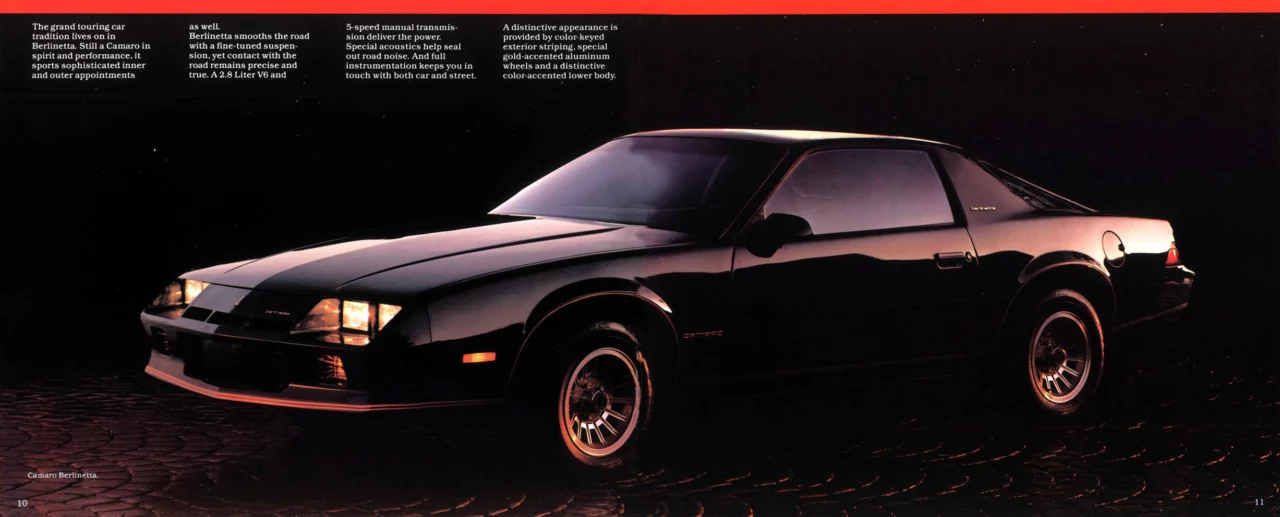
A promotional sales brochure highlights the key specifications for Camaro for 1983. That year, the three available models were Sport Coupe, Berlinetta, and Z28. The page for Berlinetta brings up some of the same engineering features that were mentioned a few years earlier in 1979: “The grand touring car tradition still lives on in Berlinetta. Still a Camaro in spirit and performance, it sports sophisticated inner and outer appointments as well.”
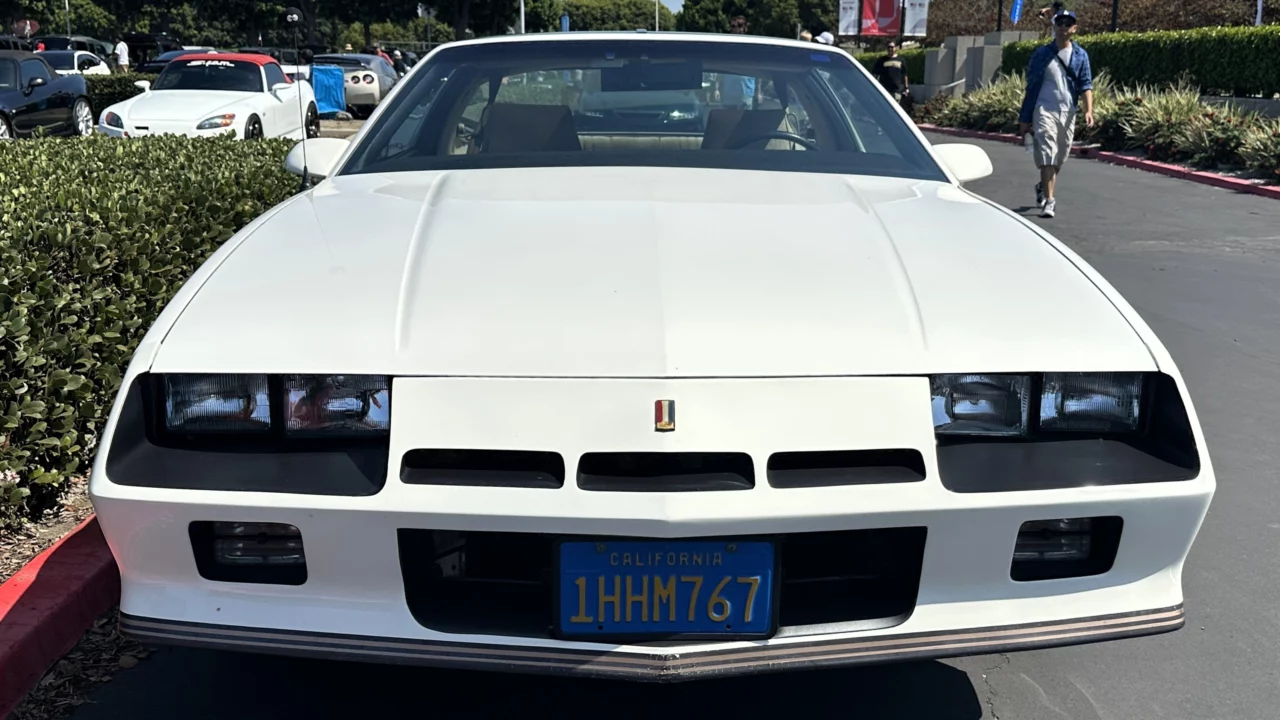
One of the things that stood out to me about the exterior — especially given the car’s white paint job — were its triple horizontal slots on the upper front fascia. While designed primarily for visual differentiation, they did allow some ambient air into the core support area.
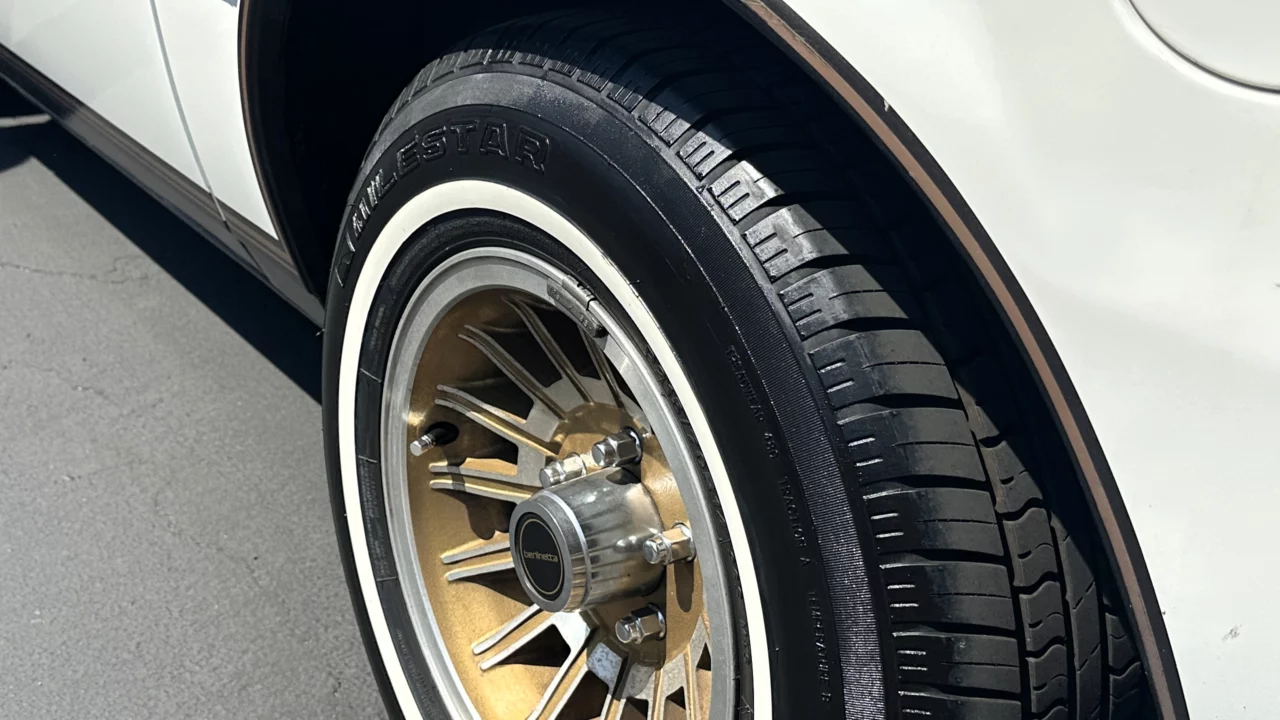
Other exterior features included black headlight enclosures, gold pinstriping, body side moldings, color-keyed side mirrors, removable T-tops, and finned aluminum 14-inch wheels wrapped in Milestar whitewall tires.
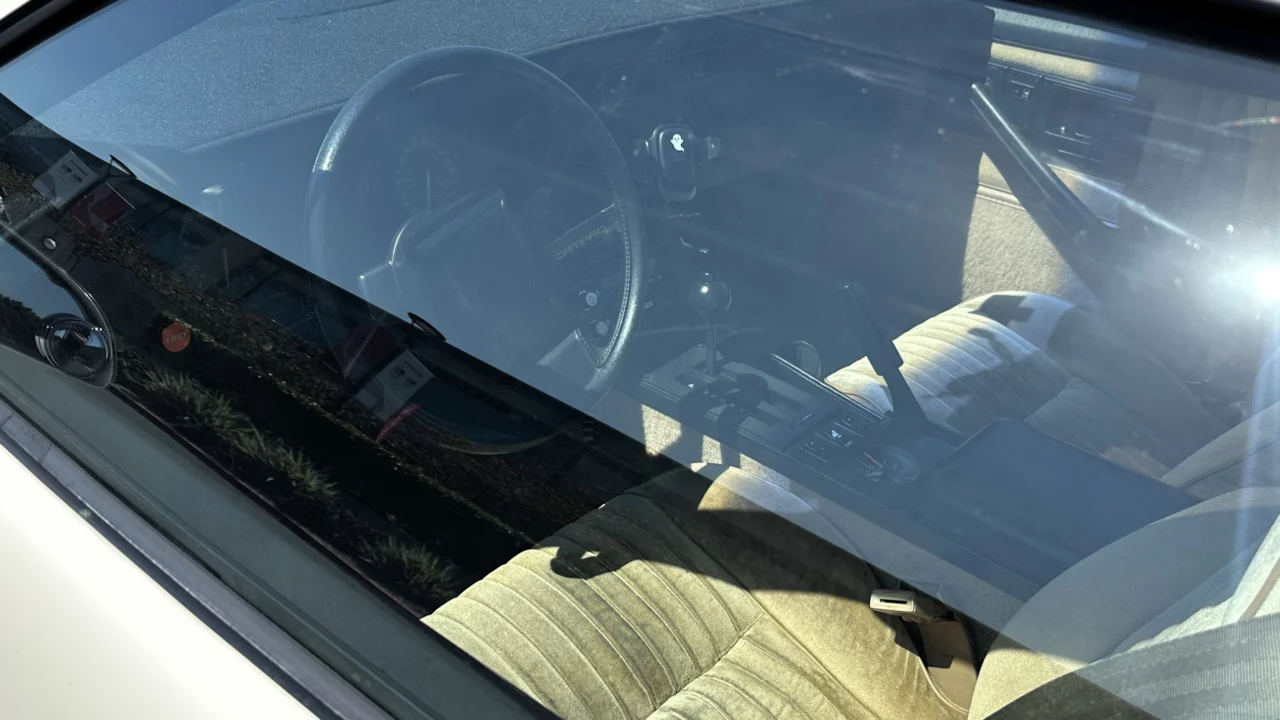
Peering into the interior (via a closed window at least), I could admire the Camel cloth upholstery, center console, and analog gauges.
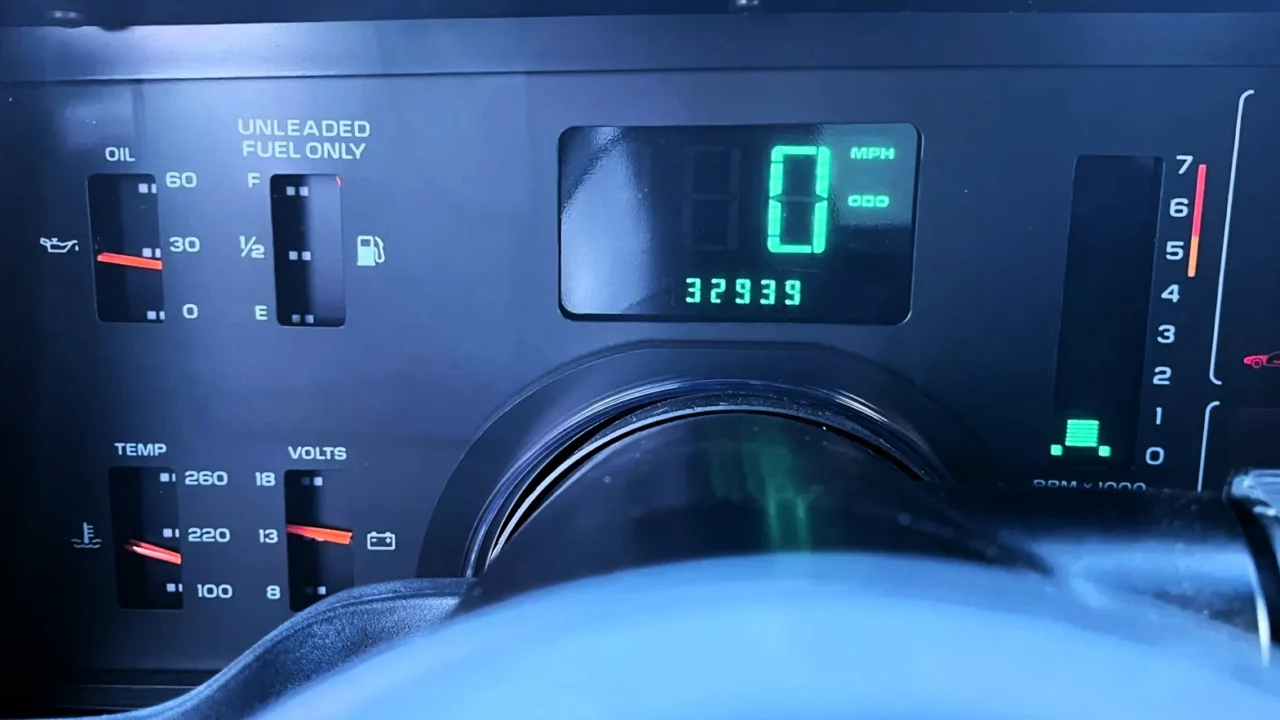
Speaking of gauges, Berlinettas had digital instruments starting for 1984, with a bar-style tachometer as shown above.
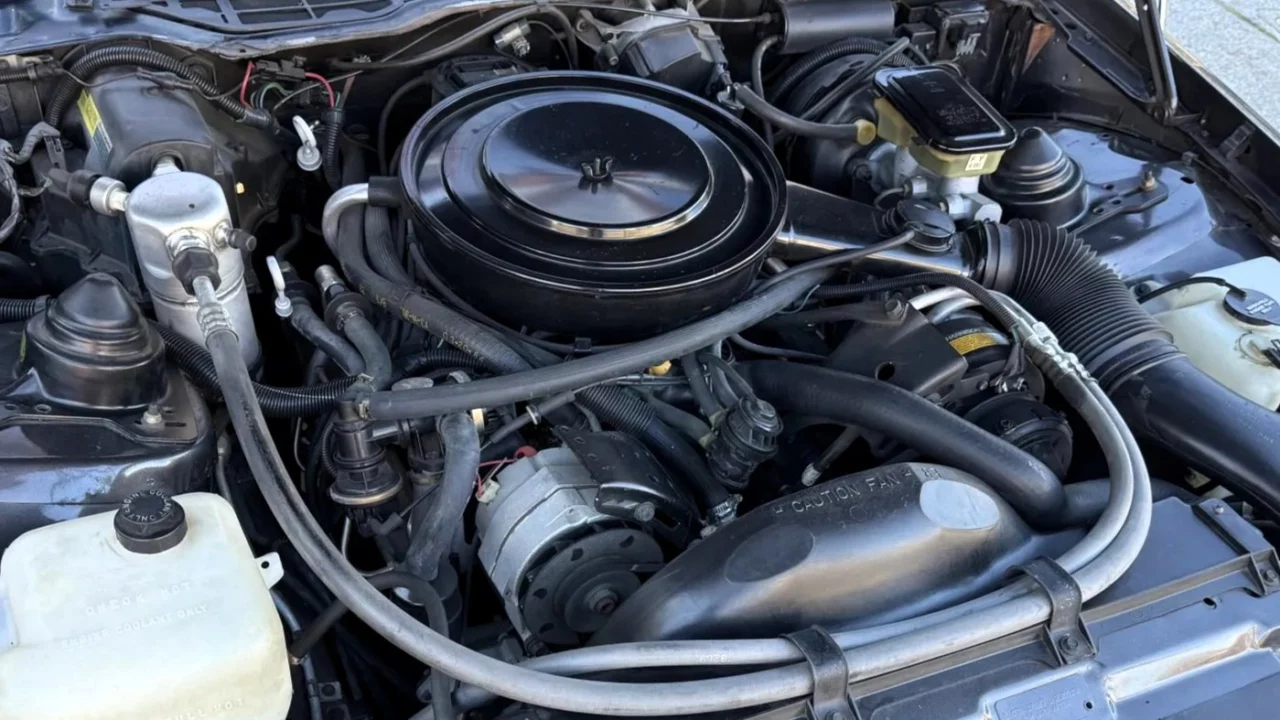
Berlinetta for 1983 came standard a 2.8-liter V-6, while a 5.0-liter four-barrel V-8 was optional. A photo of the latter is shown above. Depending on the engine choice, the available transmissions for Berlinetta buyers were three-speed automatic, four-speed automatic, or five-speed manual.
When it comes to garnering the affection (and attention) of enthusiasts, there is no doubt that the performance-oriented Z28 and IROC-Z are the favorite variants of third-gen Camaros.
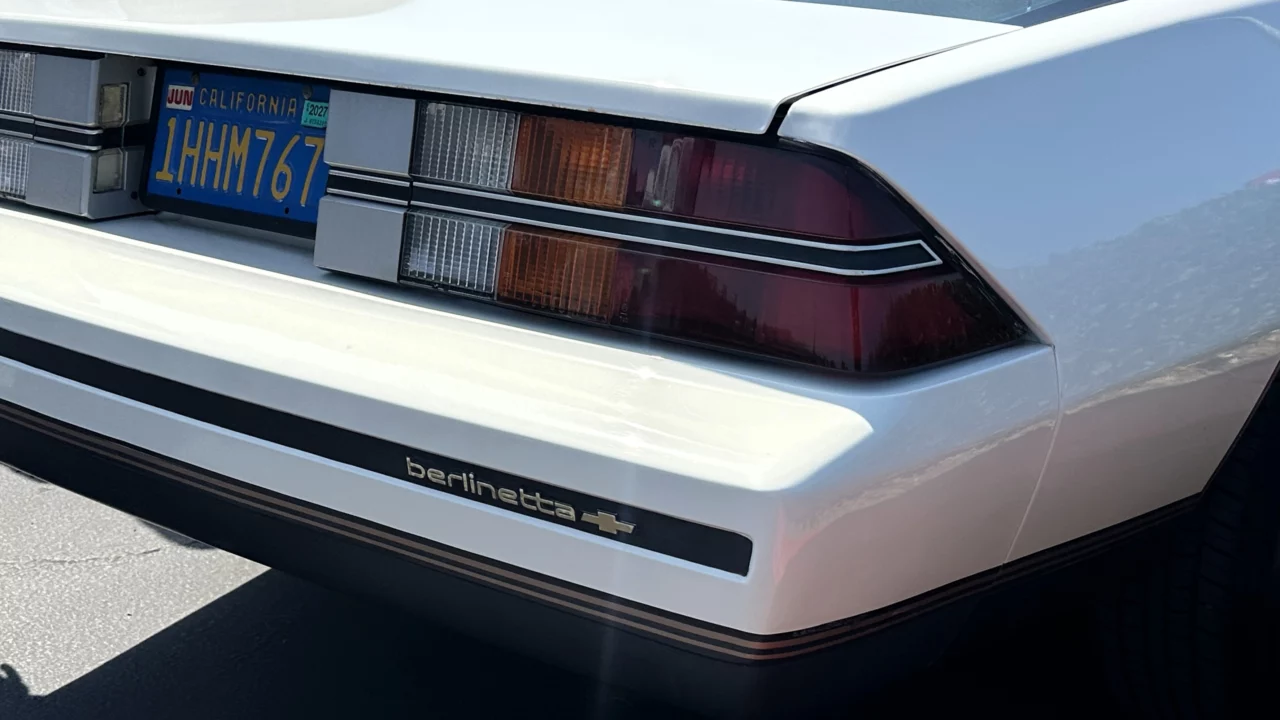
However, as someone who consistently roots for the underdogs, I love to see someone out there preserving and displaying a near-perfect Berlinetta — period-correct blue California license plates and all. Bravo!