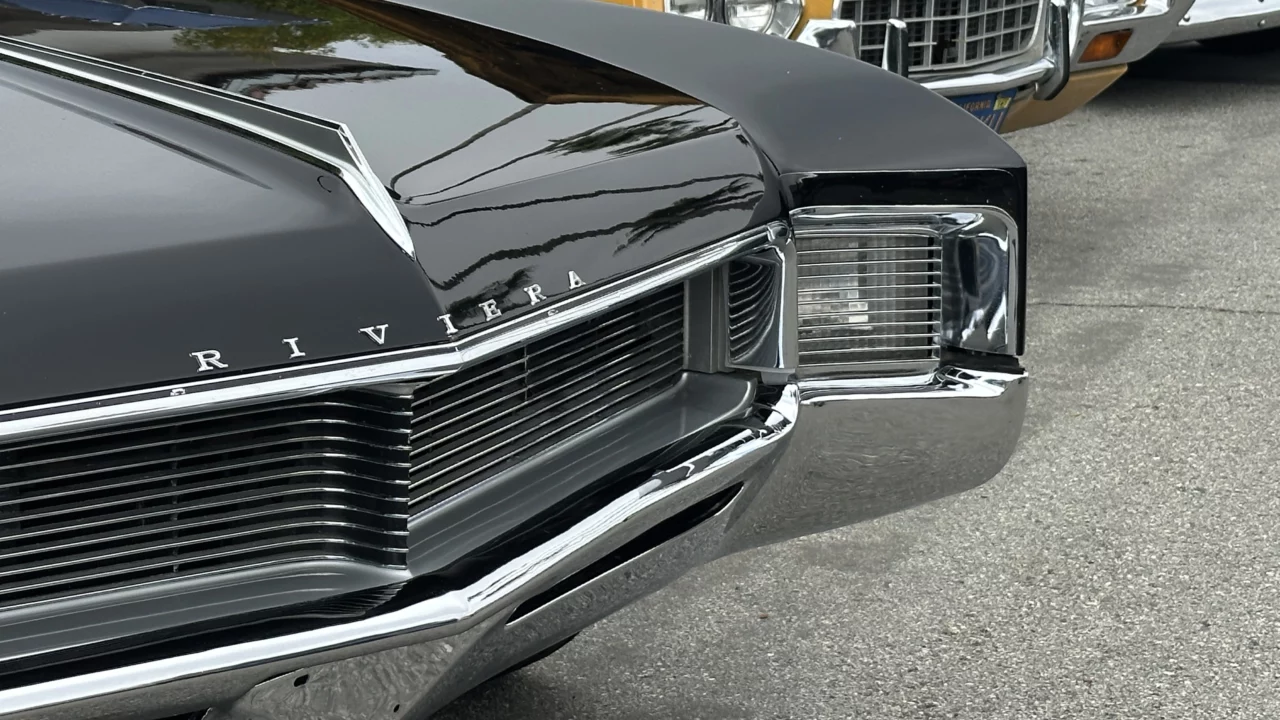
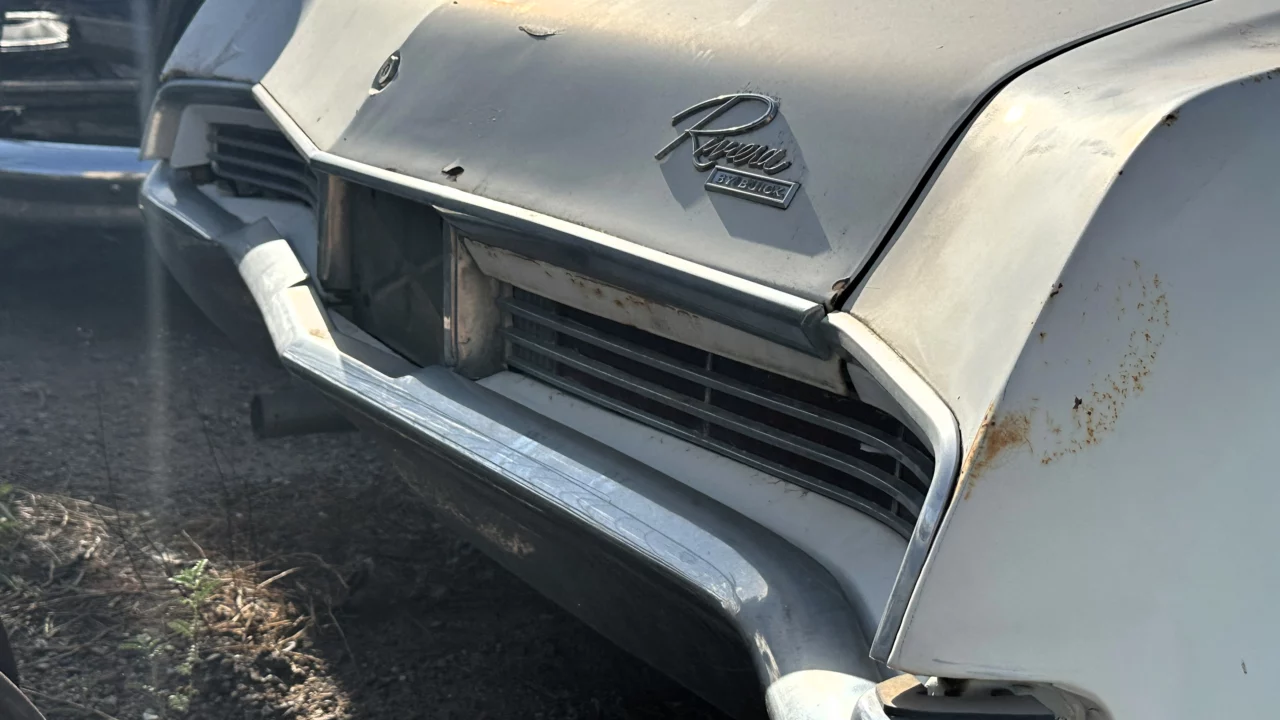
I’ve had Rivieras on the brain lately. Back in August, I attended the Millbrae Machines Motor Show as part of my visit to Monterey Car Week. One of the cars that stood out to me the most for its compelling design was a sleek, black 1966 Buick Riviera. The only picture I captured at the time was of its full-width grille with distinctive hideaway headlights.
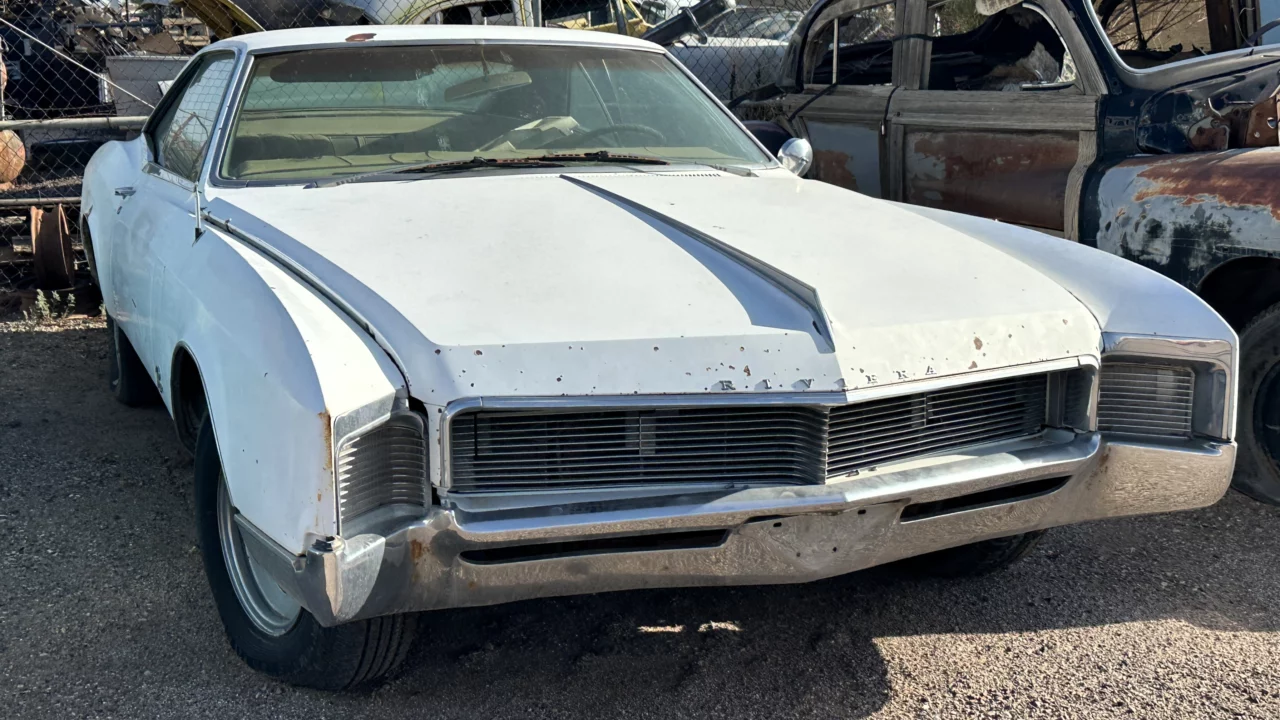
Then more recently, I saw a ’66 Riv on the front lot at Desert Valley Auto Parts in Casa Grande, Arizona. It wasn’t as done-up, but it was equally attractive and finished in white.
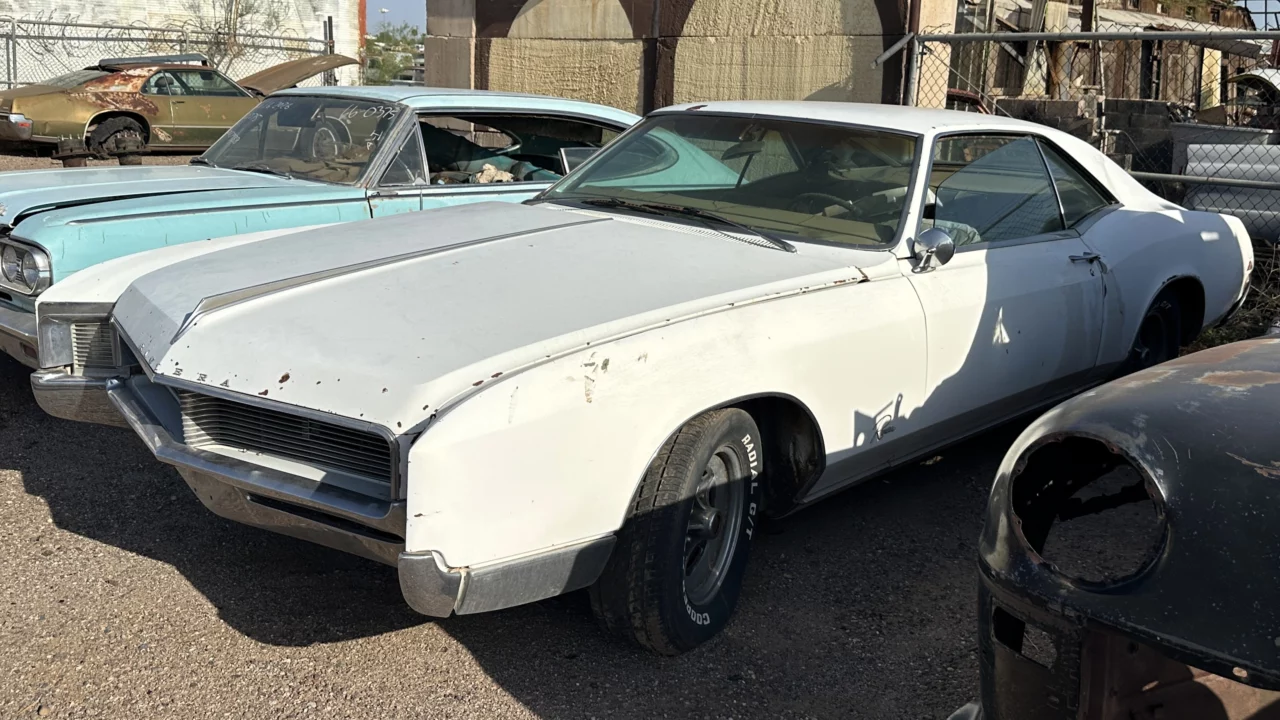
For 1966, the first year for the second-generation Riviera, the personal-luxury-oriented two-door hardtop was been redesigned to be longer, wider, and heavier on the GM E-body platform. According to an article posted by the Riviera Owners Association, Buick’s chief designer Dave Holls was responsible for the look, and it was an overwhelming success with buyers and journalists alike. Car Life magazine named it the “Handsomest car of 1966.”
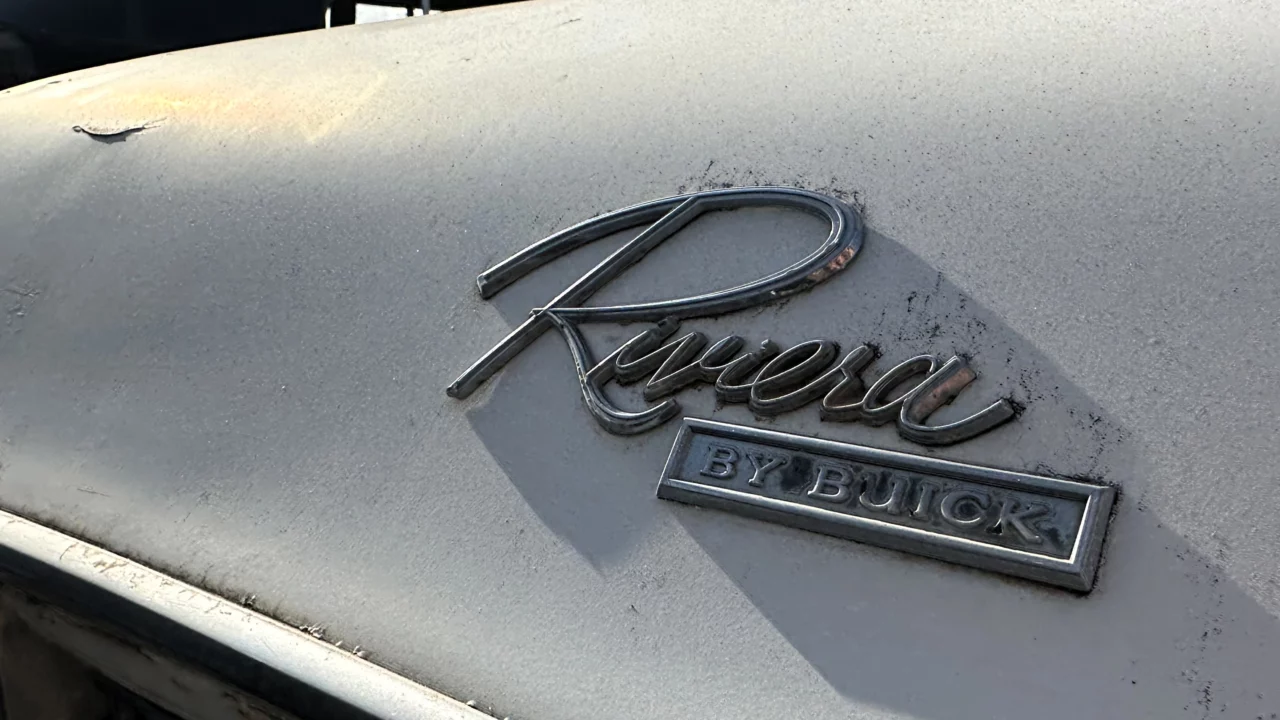
There were 45,348 units produced for the year, each one carrying a base price of $4,424.
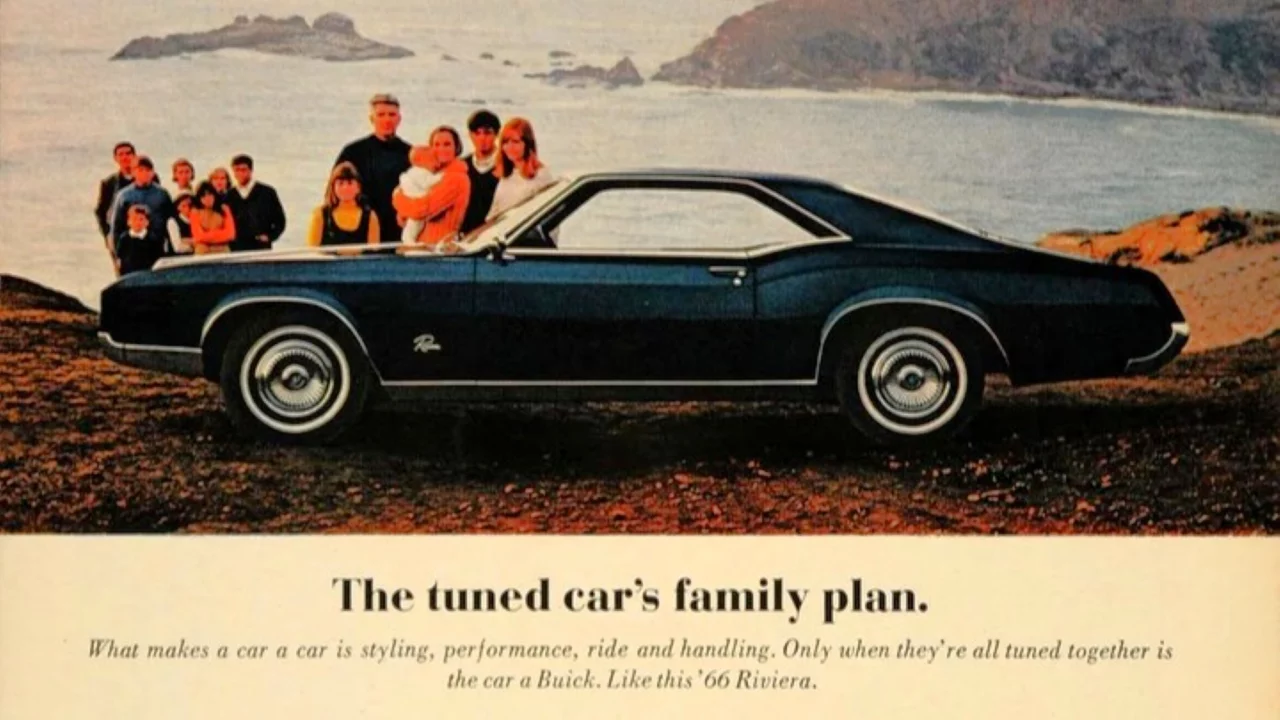
In Buick’s marketing materials, the company called some of its cars “tuned.” One ad said, “A magnificent blend of styling, performance, ride, and handling, the tuned car by Buick is everything you could hope for on four wheels.”
What did Buick mean by “tuned” anyway? According to the ad, the term (at least in reference to the Riviera) was connected to various things: the Wildcat V-8, closed-window ventilation system, and safety equipment like padded dash, back-up lights, and two-speed electric wipers.
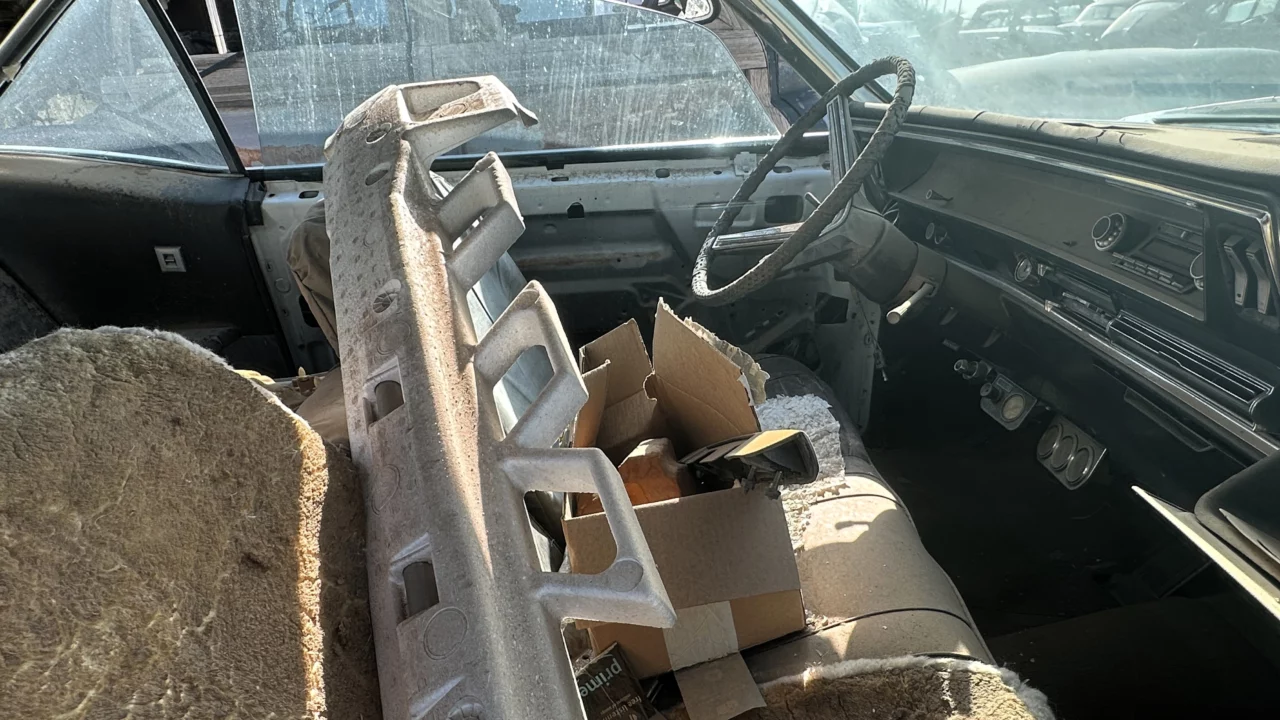
New for 1966 was available seating for six. Bucket seats were standard up front, while a new “notch-back” seat was available that converted from a regular bench to “semi buckets.” Riviera came standard with power steering, power brakes, and tilt steering wheel. There was plenty of dust and debris scattered about the interior of the Riviera I encountered, but I could see that it had power windows, radio, and some under-dash aftermarket gauges.
Most 1966 Rivieras came with a 425ci Nailhead V-8: a 340-horsepower, MW-code, four-barrel engine. An optional dual-quad version (code MZ) called the Super Wildcat boosted output to 360 horsepower.
I didn’t peek under the hood, but based on the car’s completeness and overall preservation, it may have made a solid candidate for a light restoration or a weekend driver as-is. I still vow get ahold of a classic 1950s or ‘60s Buick of my own one day! Until then, I’ll just keep noticing them everywhere I go…