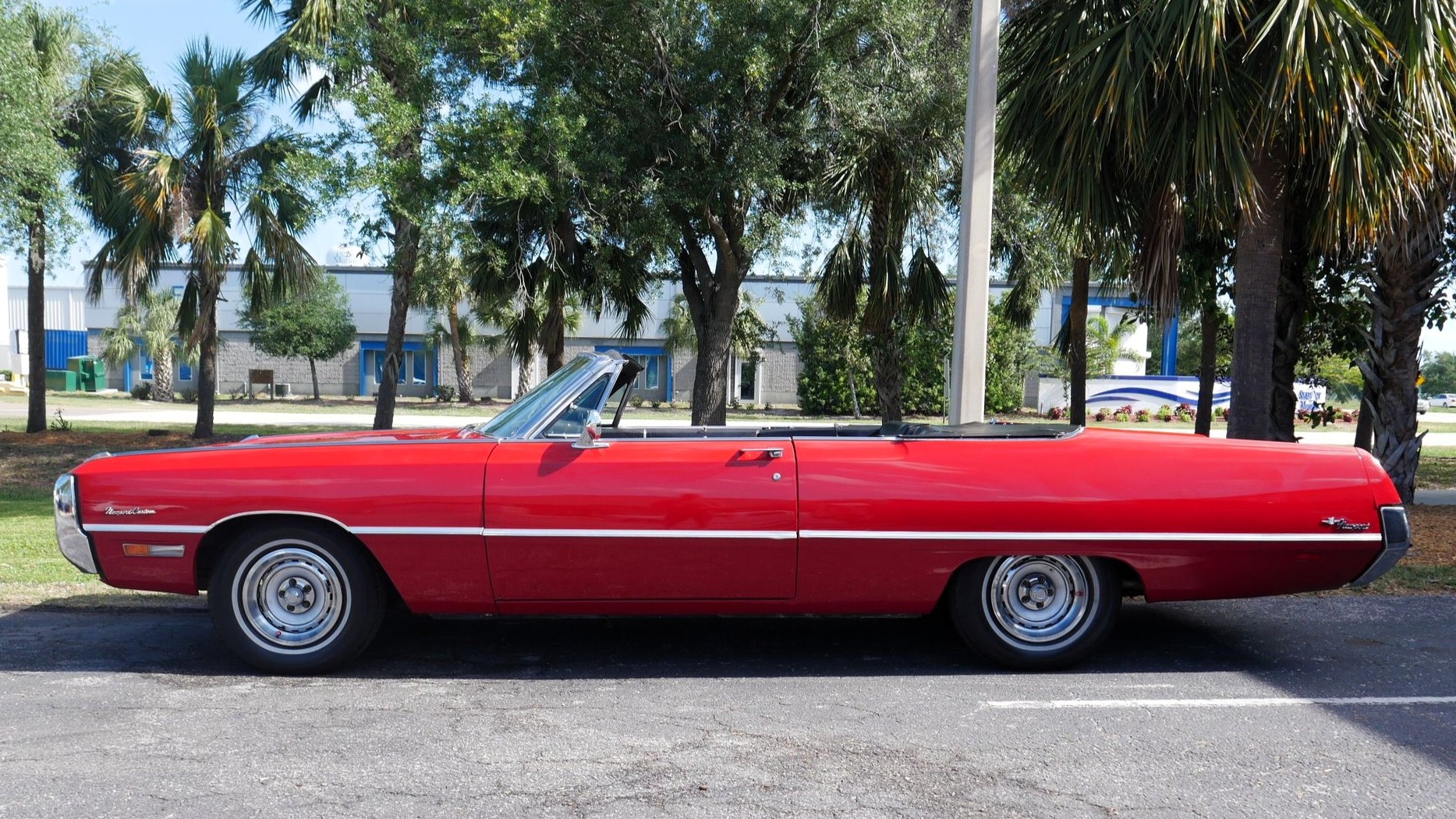
The Chrysler Corporation was quite conservative in the 1960s. After several debacles leading up to the 1962 “downsized” Plymouths and Dodges, playing it safe ended up being the rule for much of the decade. It wasn’t until 1969 that the corporation introduced a new design theme, as exemplified by our Pick of the Day, this 1969 Chrysler Newport convertible. It is listed for sale on ClassicCars.com by a dealership in Palmetto, Florida.
If you need a reminder of how bad it was for the Chrysler Corporation: After sending General Motors to the drawing board after the 1957 “Forward Look” cars, the corporation had quality issues that developed while trying to meet demand. Combined with the “Eisenhower Recession,” many of Chrysler’s brands were hit quite hard. Unibody construction for 1960 could be thought of as addressing the quality issues, but DeSoto was dying and there was a stock market scandal that dragged the corporation even more downward. Though the ’62 downsizing debacle is often used as the peak example of how Chrysler Corporation screwed up, it was the ‘61s that demonstrated that something was wrong.
Elwood Engel was hired to fix things. Formerly a big guy at Ford, Elwood was hired to replace Virgil Exner as the head of design. The slab-sided look of the 1961 Lincoln Continental — originally his design submitted for the 1961 Ford Thunderbird — began to appear everywhere, perhaps even to a fault. It wasn’t until 1969 that the Chrysler Corporation tried to step out of its comfort zone with the “Fuselage” C-bodies.
According to NASA, “The fuselage, or body of the airplane, is where the passengers and cargo are located. It is a long hollow tube which holds all the pieces of an airplane together and to which the wings are attached. As with most other parts of the airplane, the shape of the fuselage is normally determined by the mission of the aircraft. It is streamlined so that it produces the least possible drag.” The 1969 Plymouth Fury series, Dodge Polara/Monaco, and Chrysler Newport/300/New Yorker, and Imperial all featured smooth, rounded sides, high beltlines, low greenhouses, curved glass, and massive loop front and rear ends. The inspiration was aircraft, with a body that surrounded passengers with a hull. “Your next car can have a fuselage-frame that curves up and around you in one fluid line,” said Chrysler. “Close the window and the arc is complete. From under the doors to over the cockpit. Inside your next car, a cool, quiet room of curved glass and tempered steel. Soft, contoured seats and easy-to-read gauges. A controlled environment for you and each individual passenger. Your next car can have no protruding chrome, bumps, knobs, gargoyles, or wasted space. It can be an extension of your own exhilaration of movement. Your next car can be a car you can move up to. Without effort. Your next car is here. Today.” Though the cars may look bulky to contemporary eyes, this was peak full-size for the era. A repeat of the Forward Look? Not quite, but Chrysler deserved kudos for emerging from the conservatism of its past.
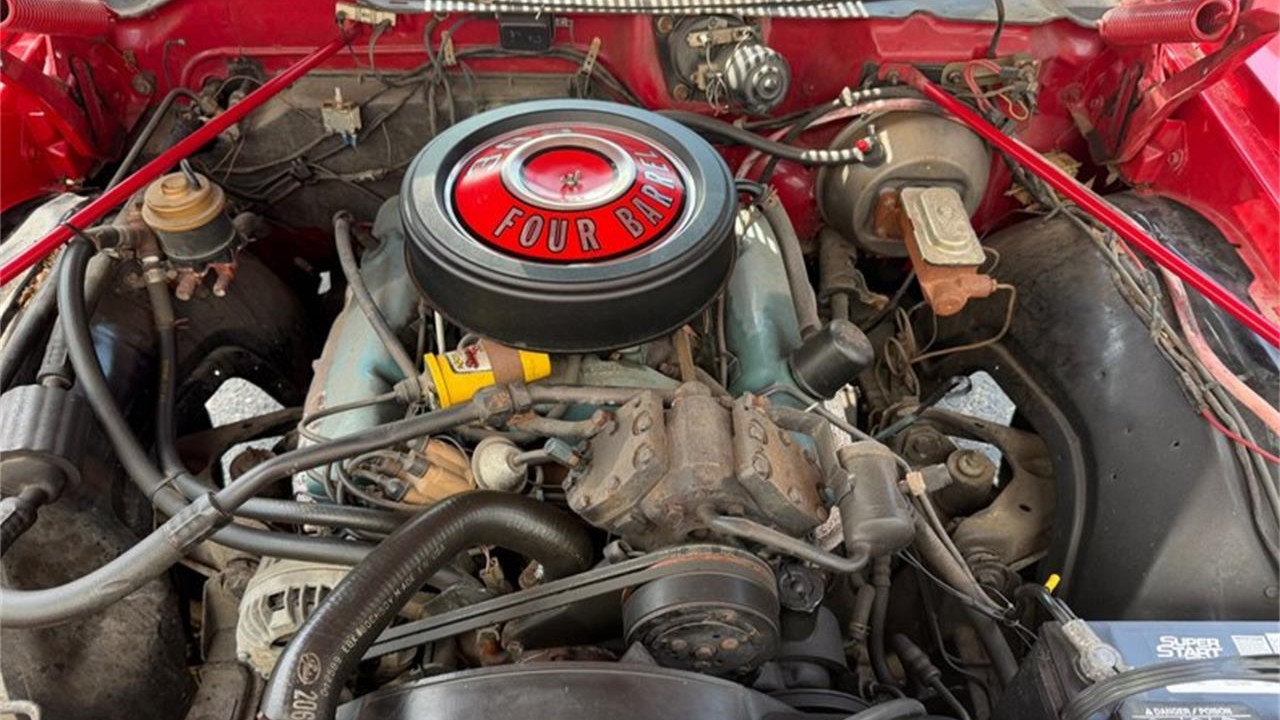
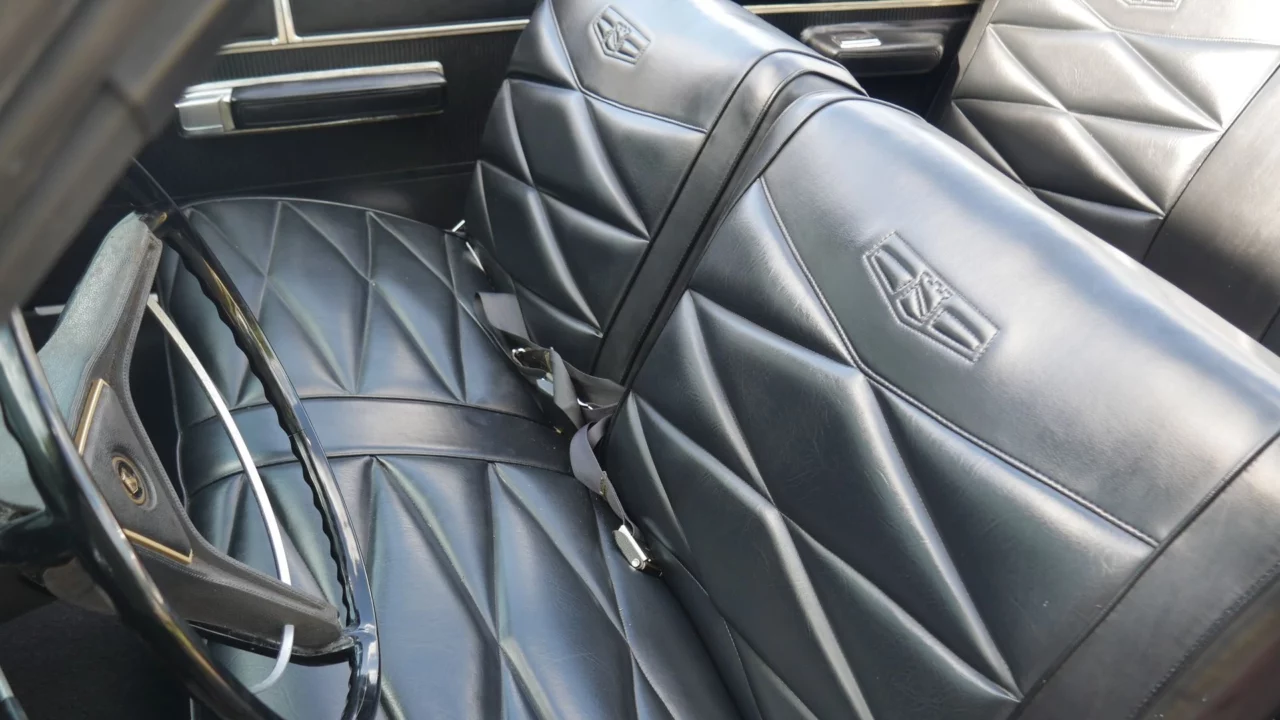
Chrysler’s lineup for 1969 consisted of the entry-level Newport, step-up Newport Custom (generally, a fancier interior and additional trim distinguished it), sporty 300, and elegant New Yorker, plus the Town & Country wagon. The Newport and 300 were available as convertibles. Chrysler bragged that the Newport was five inches longer than before, and trunk space could now handle one extra suitcase. Inside, front passengers were greeted with three extra inches elbow to elbow. The Newport convertible, in particular, could be furnished with a standard front vinyl bench seat or pleated vinyl buckets complete with center cushion — both with room for six! Or order a center console with the latter and you’d have a sporty five. Standard was a 290-horsepower 383 two-barrel and a three-speed manual; optional was TorqueFlite, which was required with the 330-horse 383 four-barrel “XP” (extra power) or 375-horse 440 four-barrel “TNT”.
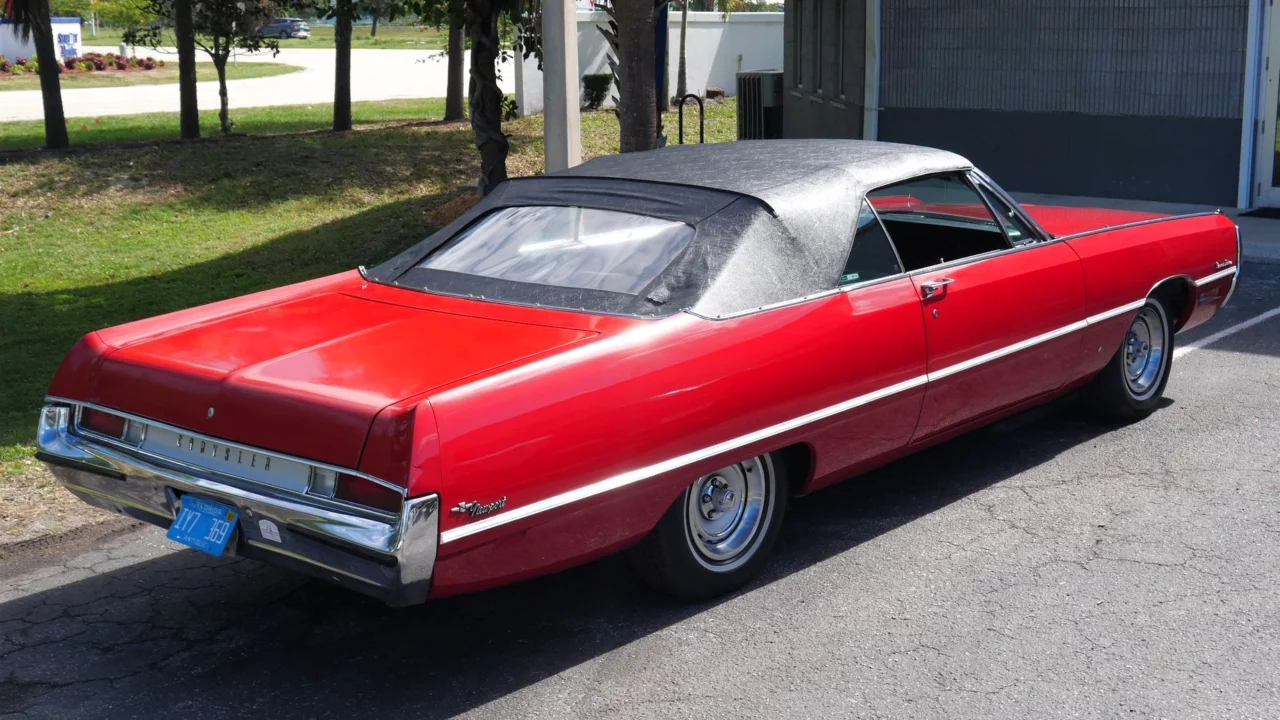
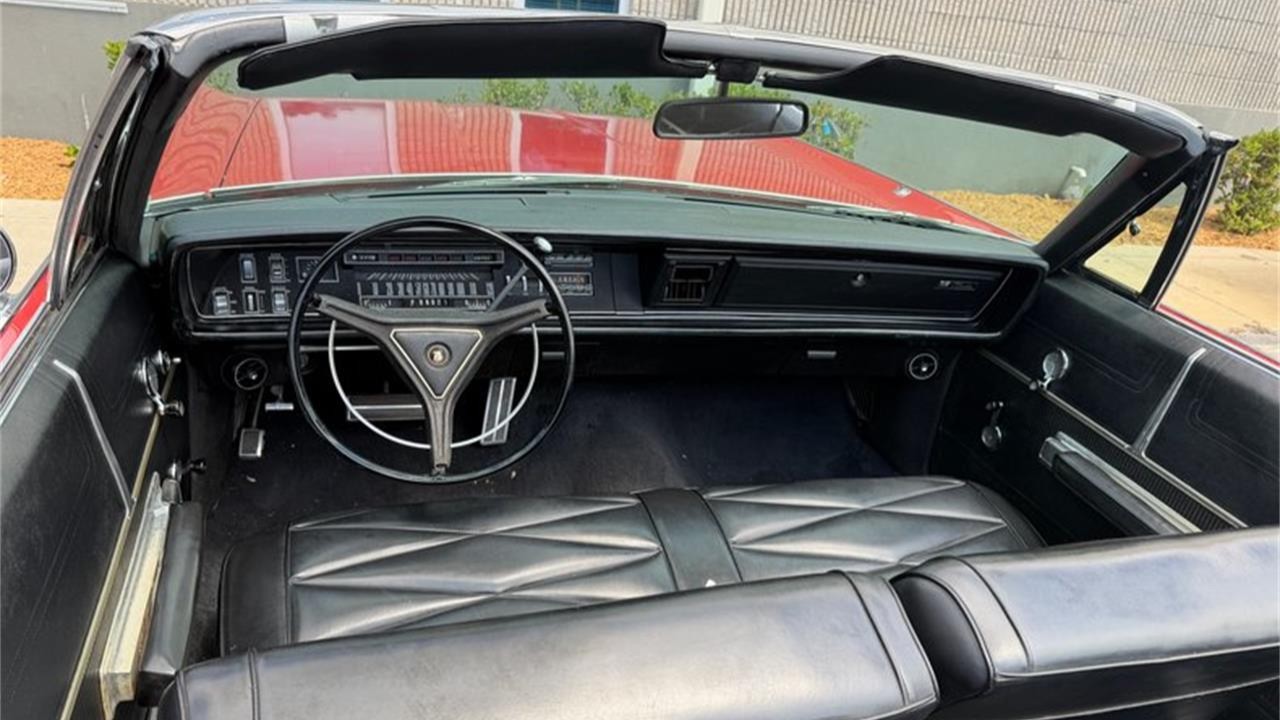
Is there a better example of driving the American open road than doing it in a Fuselage Chrysler ragtop? This 1969 Chrysler Newport convertible is red and black, so there’s none of that ugly green stuff that seems to have permeated Highland Park. Though the description in the ad is currently lacking, we can see the standard split-back bench, air conditioning, Light Group (which included fender-mounted indicators, map courtesy light, ash receiver light, trunk light, and glove compartment light), Basic Radio Group (radio, power brakes, power steering, remote driver-side mirror, and three-speed windshield wipers), cornering lights, rubber bumper guards, and 1970 Styled Steel Road Wheels. A glance at the VIN shows “G” in the fifth character, which means the standard 383.
The odometer shows 32,172. Is that accurate? You never know until you ask. For $22,995, it may be worth your time, considering only 2,169 were built.
Click here to view this Pick of the Day on ClassicCars.com