When World War II ended, America’s automakers were eager to move beyond wartime production and return to building cars for the public. At first, however, most manufacturers relied on prewar models while factories retooled and designers prepared something genuinely new. That changed in 1948, when Detroit began unveiling cars that reflected the optimism, technology and forward-looking style of the postwar era.
At General Motors, styling chief Harley Earl had been imagining a more modern Cadillac long before peace returned. Those ideas reached production with the third-generation Series 62 and Cadillac’s other all-new 1948 models. As GM’s prestige division and the self-proclaimed “Standard of the World,” Cadillac was positioned to lead American luxury motoring into a sleeker, more contemporary age.
The design marked a dramatic break from the separate-fender look of earlier vehicles. Its front fenders flowed cleanly into the body, the hood and headlights were visually integrated, and the overall shape appeared lower, smoother and more unified. The influence was unmistakably aerodynamic, drawing on the era’s fascination with aviation and speed.
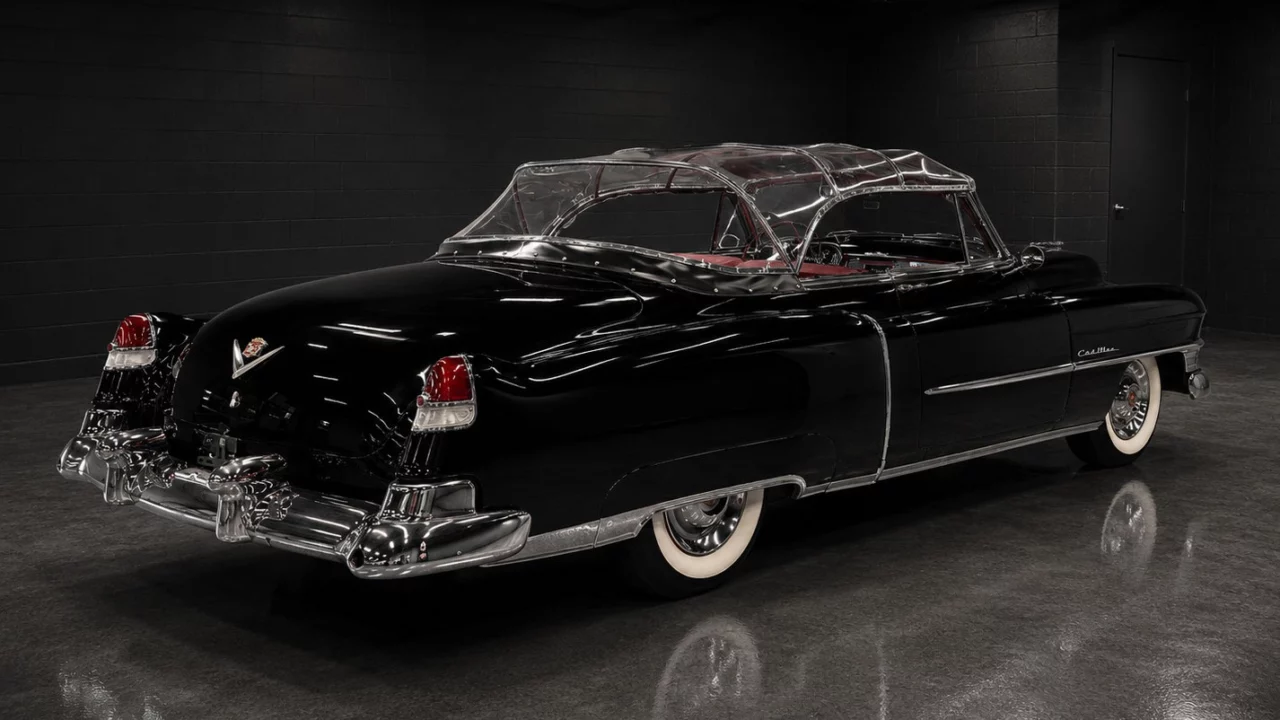
Airplanes were not new by the late 1940s, but wartime advances had made them symbols of modern engineering. Cadillac translated that excitement into metal with the modest tailfins introduced on the 1948 Series 62. Inspired in part by the twin-boom profile of the Lockheed P-38 Lightning, those rear fenders became one of Cadillac’s defining styling signatures and helped launch one of the most recognizable design trends of the 1950s.
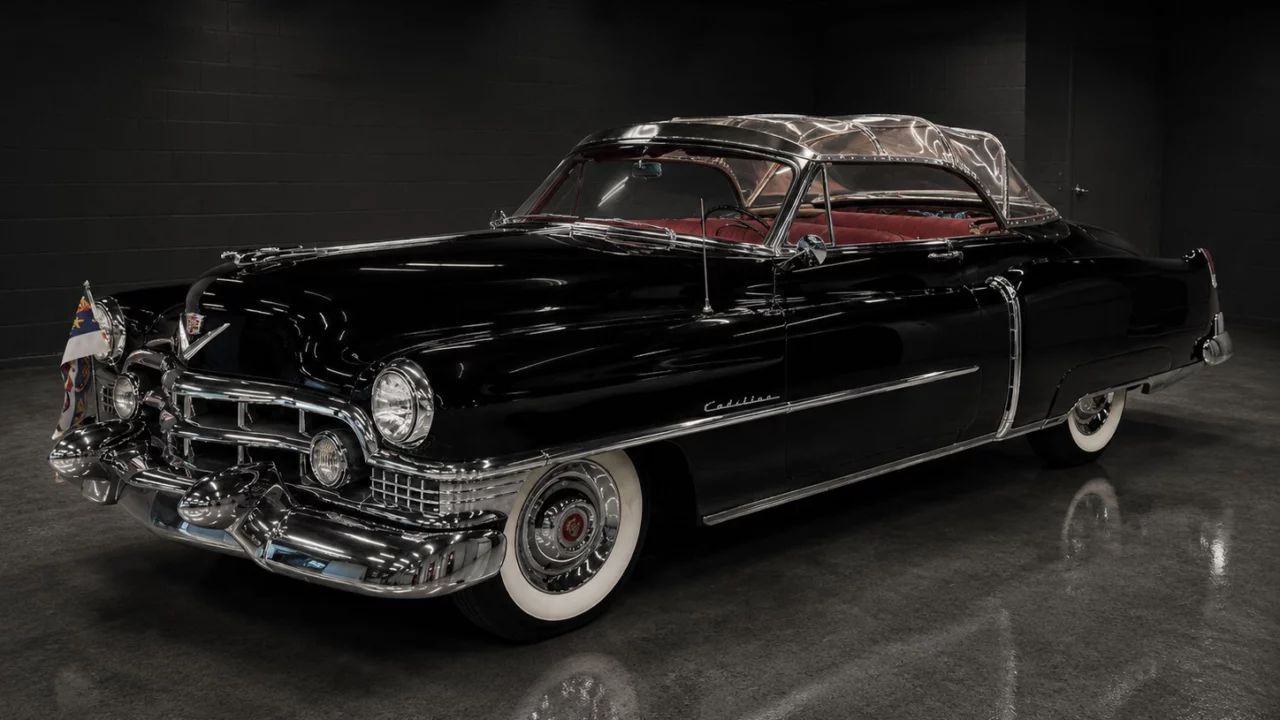
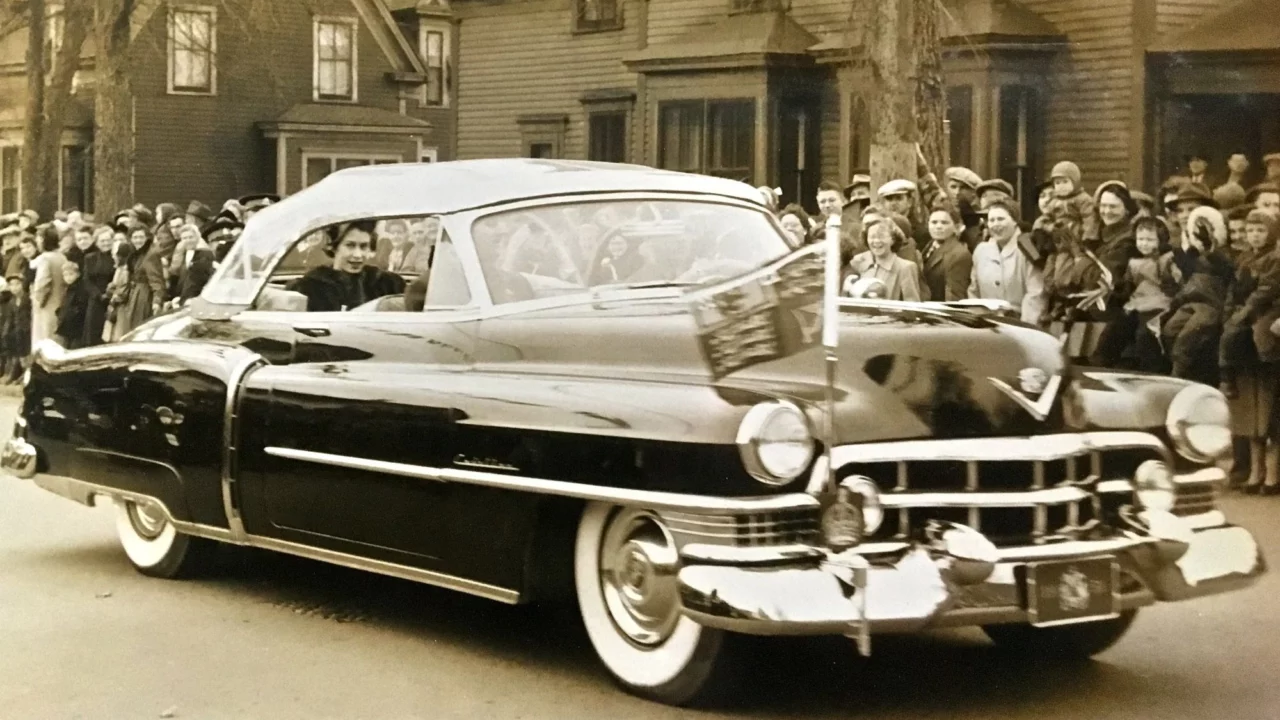
Against that backdrop, this 1951 Cadillac Series 62 Custom Royal Parade Convertible stands apart as far more than a postwar luxury car. In 1951, long before she became the longest-reigning monarch in British history, Her Royal Highness Princess Elizabeth was scheduled to embarked on a cross-country Royal Tour of Canada that would inevitably draw enormous crowds eager to catch a glimpse of the future queen. General Motors of Canada seized the opportunity, commissioning Cadillac to build a unique parade car worthy of the occasion.
The result was a ceremonial vehicle built specifically for royal duty at the General Motors Cadillac factory in Detroit. Designed to place one of the world’s most recognizable figures in full view while maintaining the elegance, comfort and dignity expected of a royal appearance, the car was provided by GM of Canada to the princess for use during the tour — only months before she became Queen Elizabeth II. Few automobiles can claim a direct role in royal history; fewer still were created by the factory for that exact purpose.
At the heart of the car is Cadillac’s original 331ci overhead-valve V-8, one of the most advanced American production engines of its era. Introduced in 1949, the revolutionary OHV V-8 marked a turning point for Cadillac, delivering smooth, effortless power that helped establish the brand as America’s premier luxury automaker. Paired with a heavy-duty four-speed Hydramatic automatic transmission, the drivetrain provided refined performance that perfectly suited long ceremonial processions and public appearances.
Because this Cadillac was never intended to be an ordinary road car, the factory incorporated several unique mechanical upgrades specifically for parade duty. An enlarged radiator helped maintain cool operating temperatures during extended periods of slow-speed driving, while power steering made maneuvering the large convertible considerably easier. Power windows and power-adjustable front seats added comfort and convenience for the occupants, while one particularly rare feature sets this Cadillac even further apart: a factory-installed four-barrel carburetor. Only two 1951 Cadillacs were built with this configuration, making it one of the rarest factory performance upgrades of its time.
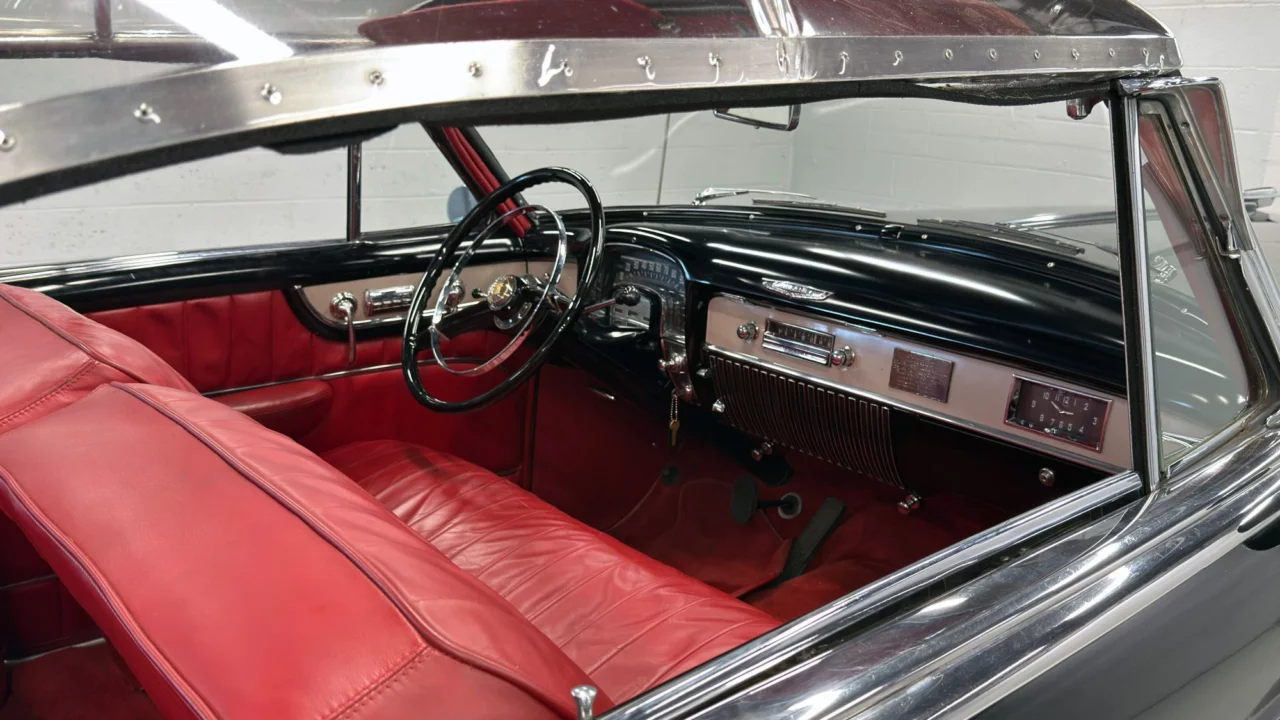
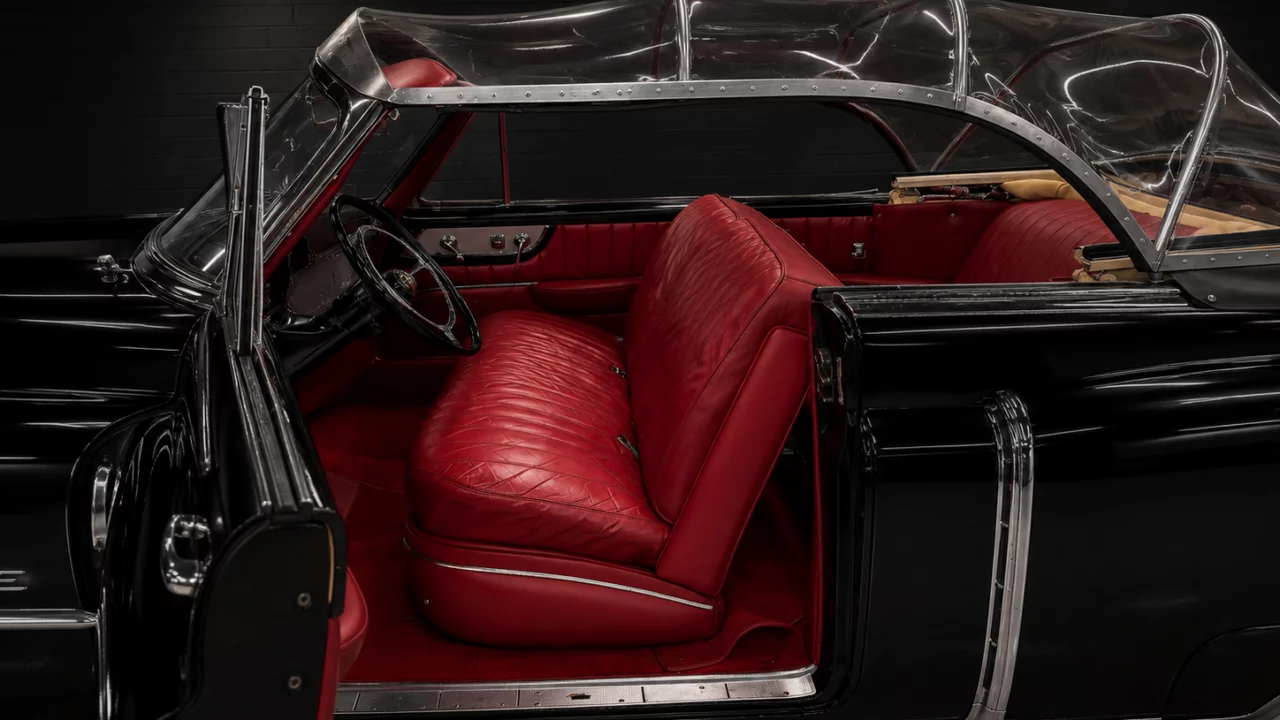
Perhaps the most visually striking feature is the custom clear bubbletop enclosure fitted over the passenger compartment. Produced by an aviation company, the transparent canopy offered protection from rain and wind without obstructing public views of the royal passengers. The aircraft-inspired design gave the Cadillac an unmistakable appearance unlike any other production automobile of the period and transformed it into an ideal parade vehicle capable of serving regardless of weather conditions.
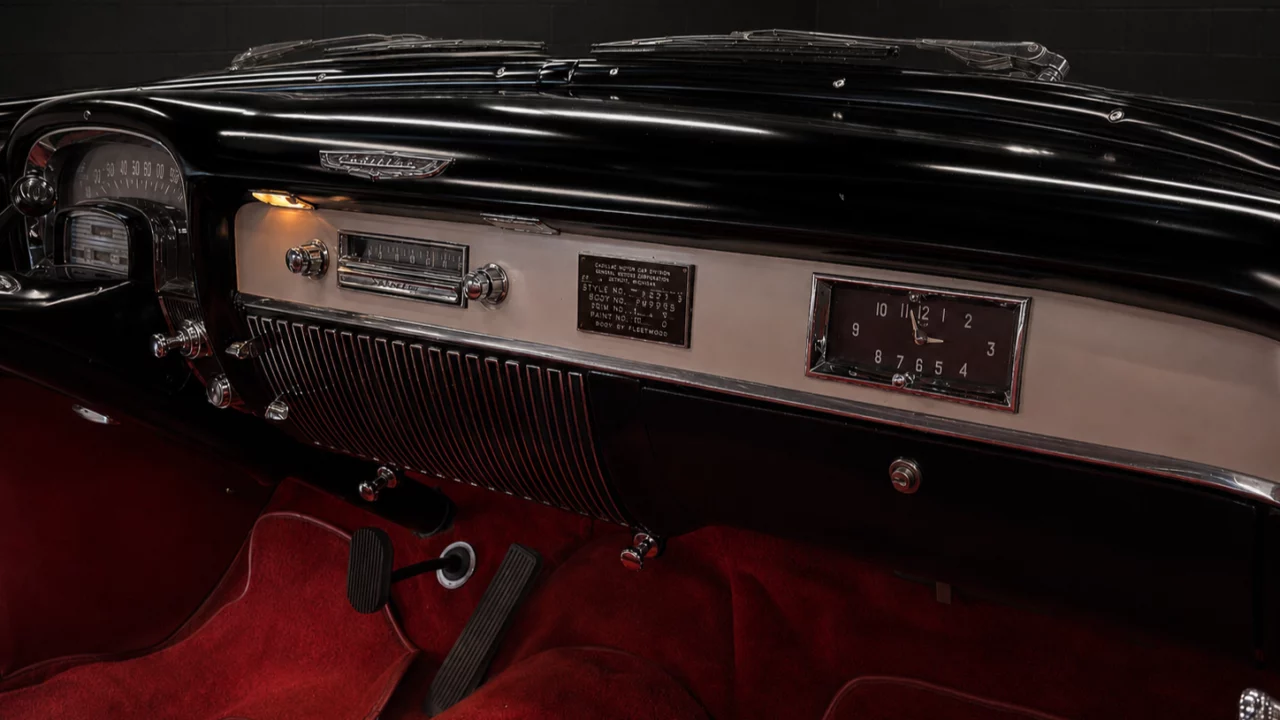
Finished in elegant black over a striking red Hydes leather interior, the Cadillac presents exactly as a ceremonial state vehicle should. Every detail was intended to project prestige and refinement befitting the future Queen of England. Inside, the cabin remains remarkably authentic, highlighted by its original commemorative dash plaque documenting the car’s royal assignment, a factory-installed reminder of the remarkable purpose for which it was built.
The car’s historical significance extends far beyond its mechanical rarity. During that 1951 Canadian Royal Tour, Princess Elizabeth traveled thousands of miles across the country alongside Prince Philip, greeting hundreds of thousands of spectators before she unexpectedly became Queen Elizabeth II following the death of King George VI in February 1952. As a result, this Cadillac represents a fascinating moment frozen in time, the final chapter of Princess Elizabeth’s life before history forever changed her role.
Unlike many ceremonial vehicles whose documentation has been lost over the decades, this Cadillac is exceptionally well-documented. Included with the car is its original factory build invoice, historical publications, and photographs showing the then Princess Elizabeth using the vehicle during official appearances throughout the tour. Together, these items provide an extraordinary level of provenance that few collector vehicles can match.Adding another remarkable touch is an impressive silver and rhinestone replica of the George IV State Diadem. Originally commissioned in 1820 for King George IV, the crown later became one of Queen Elizabeth II’s most recognizable pieces of regalia, appearing in countless official portraits, ceremonial events and even on postage stamps and currency throughout the Commonwealth. Its inclusion creates a fitting connection between the automobile and the monarchy it was built to serve.
Today, the Cadillac has been restored to show-quality standards while preserving the authenticity that makes it historically important. Every element reflects the care taken to honor its unique place in both automotive and royal history.
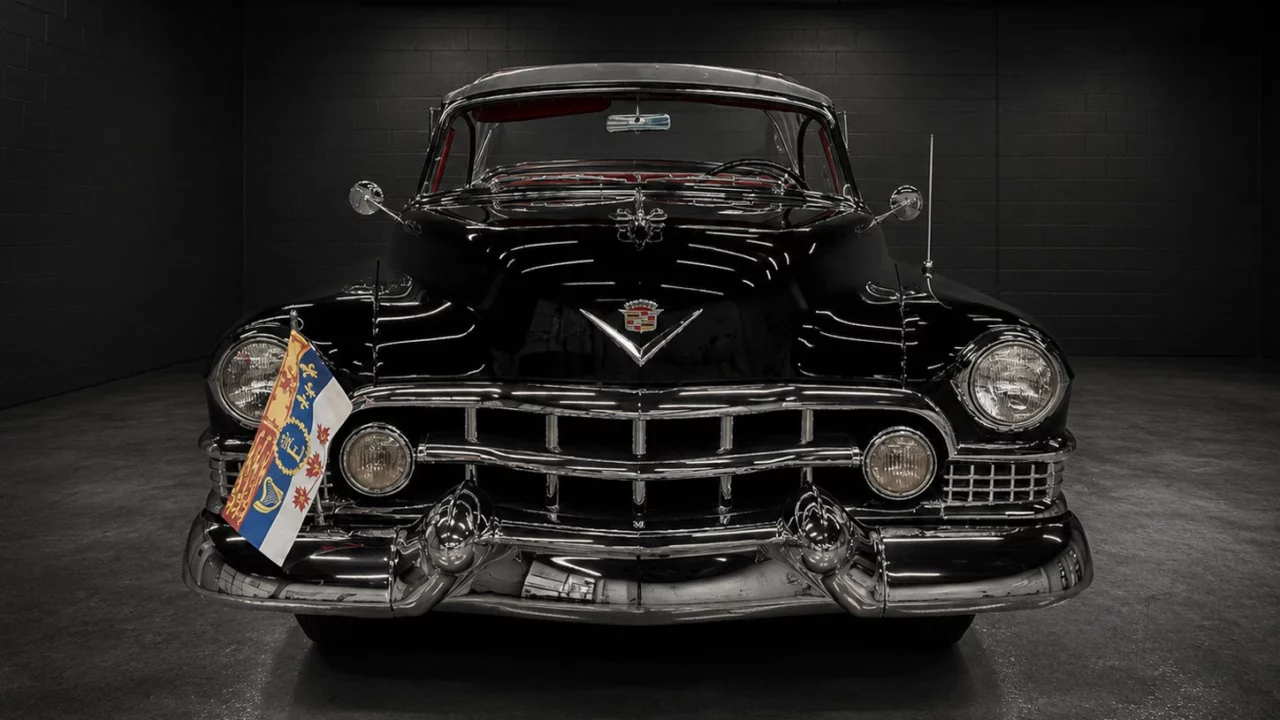
Collector cars often become desirable because of rarity, engineering or celebrity ownership. This remarkable Cadillac offers all three. It is a genuine one-off factory special, equipped with unique engineering features, documented from new, and forever linked to one of the most significant figures of the 20th century. More than simply transporting royalty, this Cadillac helped present the future Queen Elizabeth II to the people of Canada during one of the defining moments of her remarkable life.
Automobiles often tell stories, but very few become part of world history. This one did — and it’s selling with No Reserve during the Sept. 10-12 Las Vegas Auction at the West Hall of the Convention Center.
This article was originally published on Barrett-Jackson.com.