A groundbreaking “dream car,” the 1956 Buick Centurion XP-301 concept was way ahead of its time when it debuted 70 years ago at GM’s Motorama.
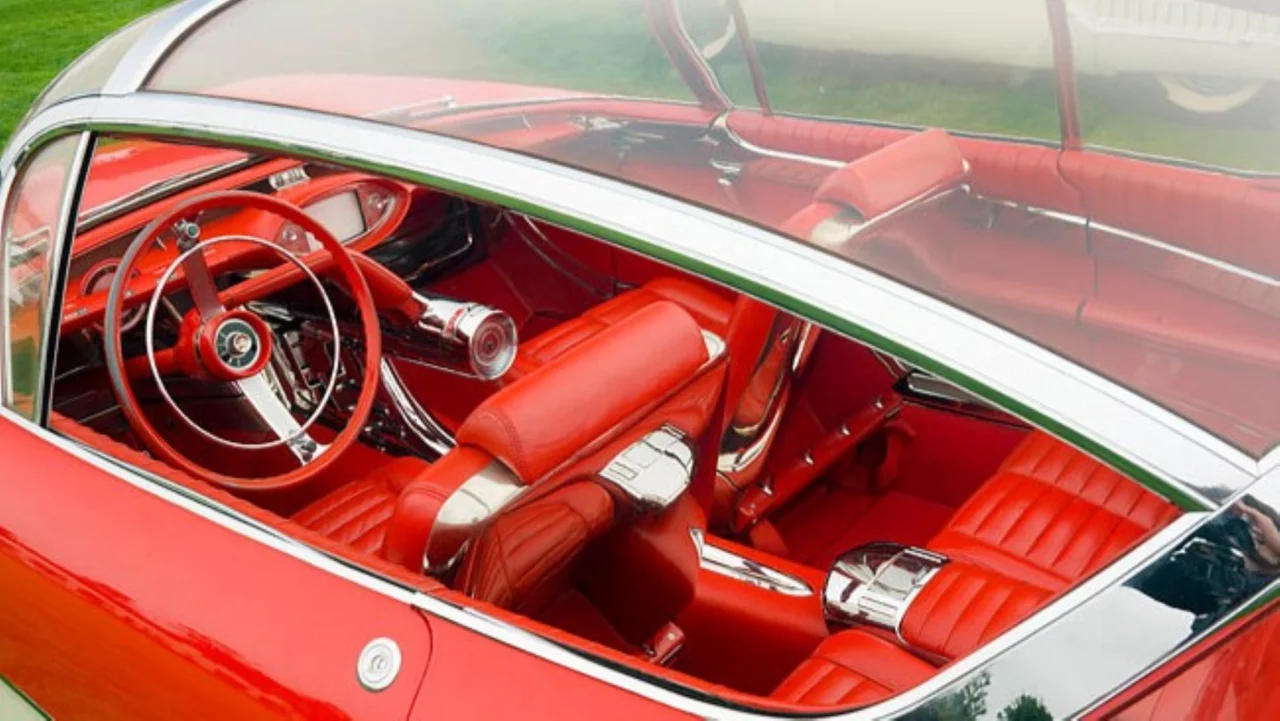
Aside from its bubble-top design, the car also boasted some advanced technology: There was a television camera lens mounted in the rear of the car, and a small monitor was integrated into the dashboard that displayed a live video feed. It was a revolutionary Jet Age concept, and it allowed for the omission of traditional side-mounted mirrors, too. There are a lot of videos on YouTube showing various angles and specifications of the car (here’s one if you’re interested).
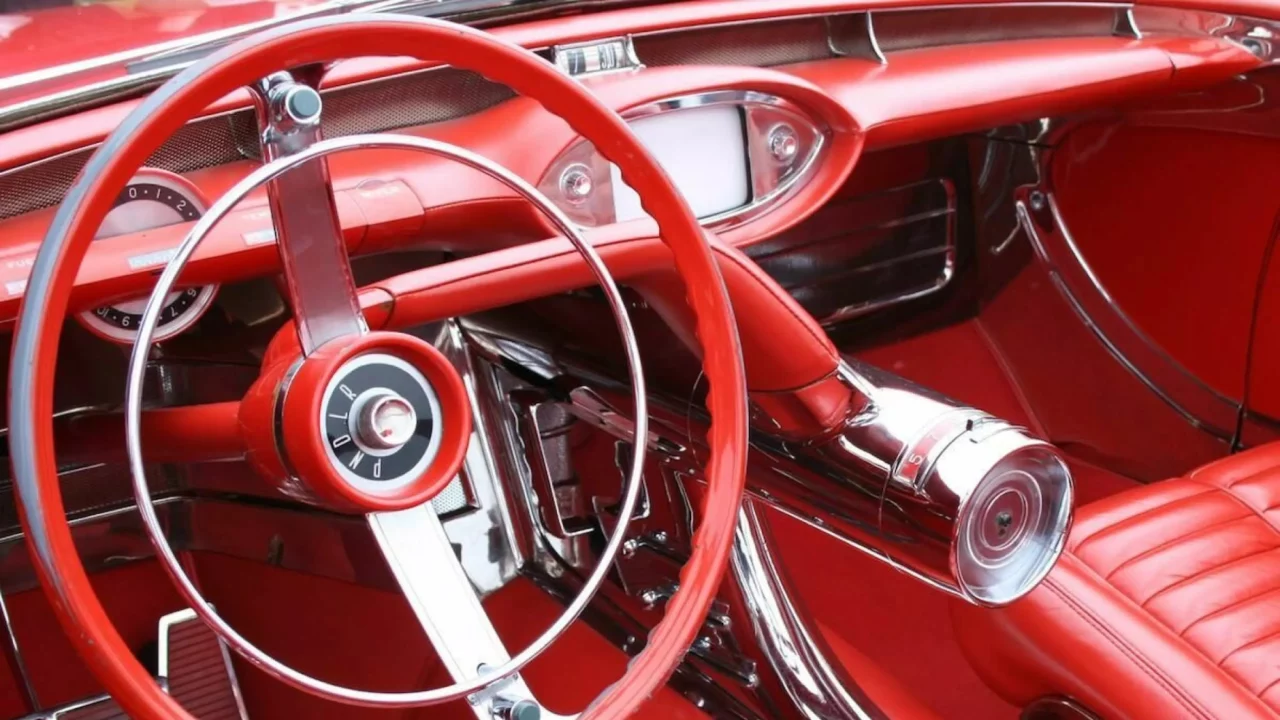
Backup camera technology didn’t gain much traction for decades after the Centurion’s debut, but it sure has picked up speed in recent years. On some new cars, there are camera systems showing just about every conceivable angle. In fact, there are even forward-facing cameras that show what lies ahead. And believe it or not, there are driver-facing cameras inside vehicles that use infrared technology and AI to detect drowsiness by monitoring eye closures, blink rates, and head positioning.
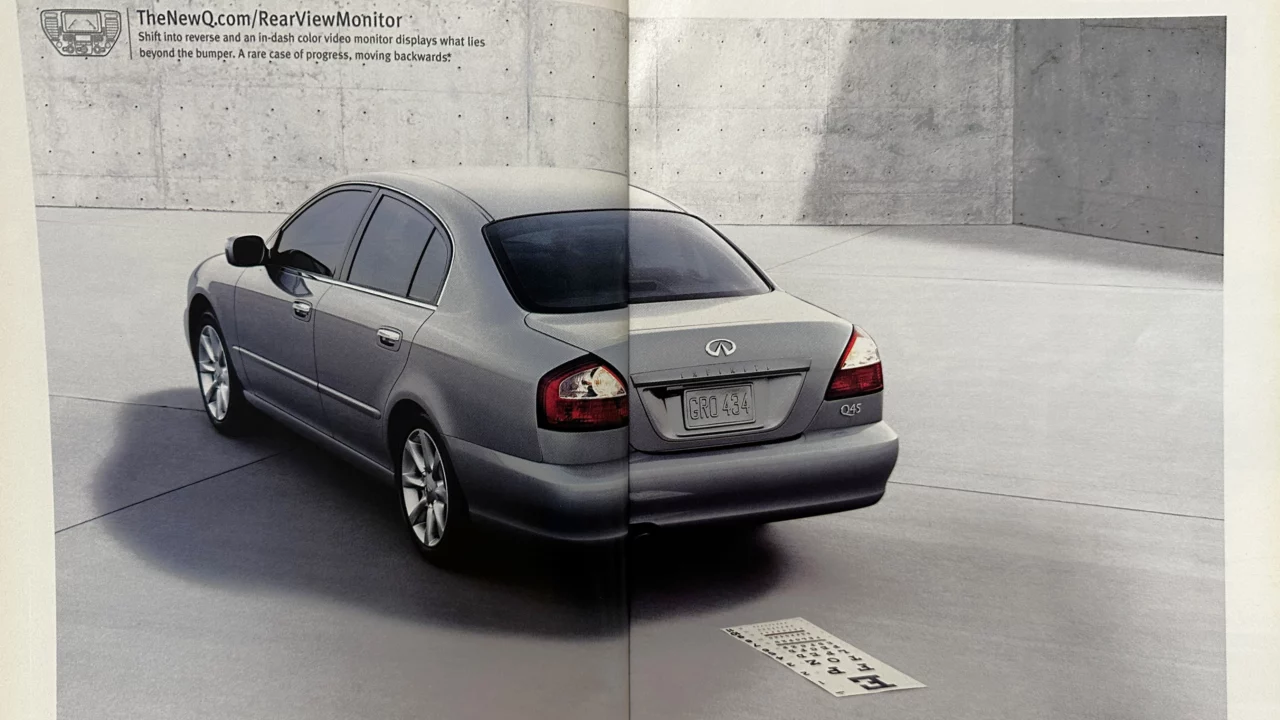
About 25 years ago, the technology was still in its infancy. The above advertisement ran in the June 2001 of Automobile magazine. Did you know that the first production car in the U.S. market to include a rearview camera was the 2002 Infiniti Q45? It’s been a steady rollout of cameras since then. As with many advancements in automotive safety, the increase in the use of cameras is a controversial topic. Some say that added “help” from technology reduces a driver’s need to be alert and attentive.
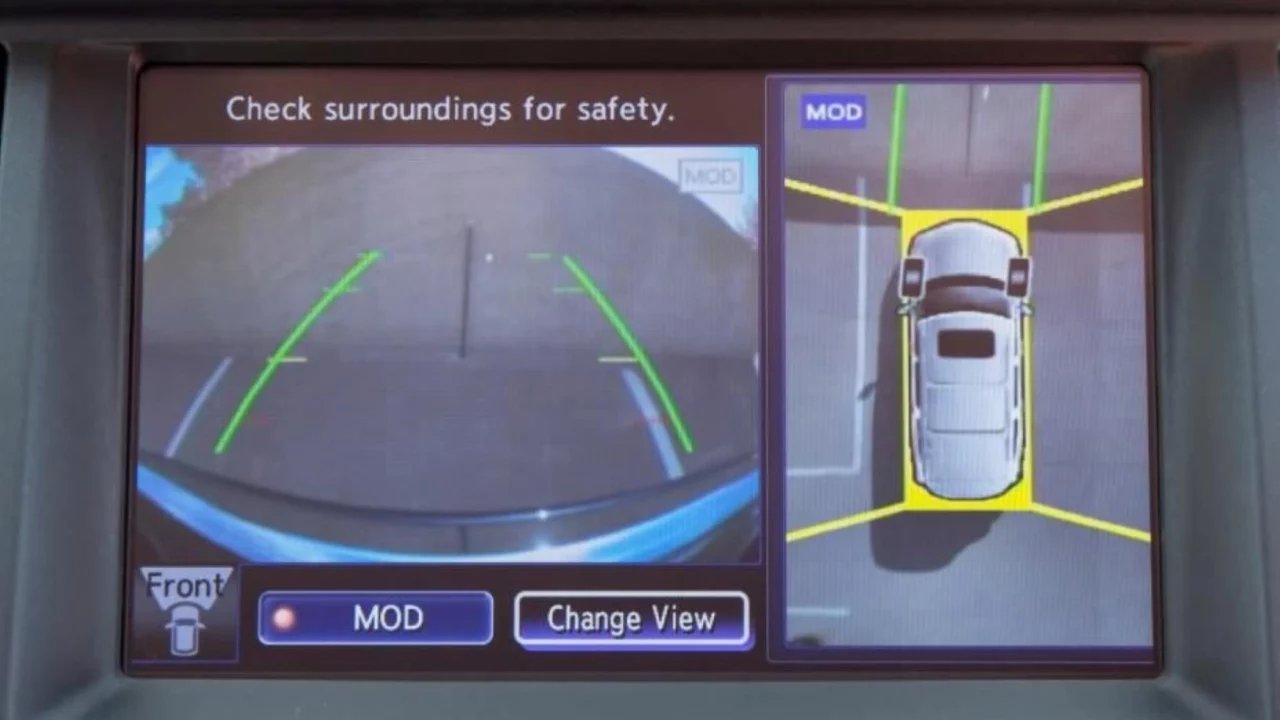
Besides being the first to launch a rearview camera, Infiniti also helped pioneer some of the subsequent advances in camera technology. In 2008, the company introduced what became known as an “Around View” monitor on its EX35 crossover. The system was the world’s first to offer a virtual 360-degree bird’s-eye view of the vehicle using four small wide-angle cameras mounted on the front, side mirrors, and rear. The images were combined to provide a full view of the vehicle’s surroundings.
Backup cameras became mandatory in the United States on May 1, 2018, and ever since that date, all new vehicles under 10,000 pounds have been required to come equipped with rear-visibility technology.
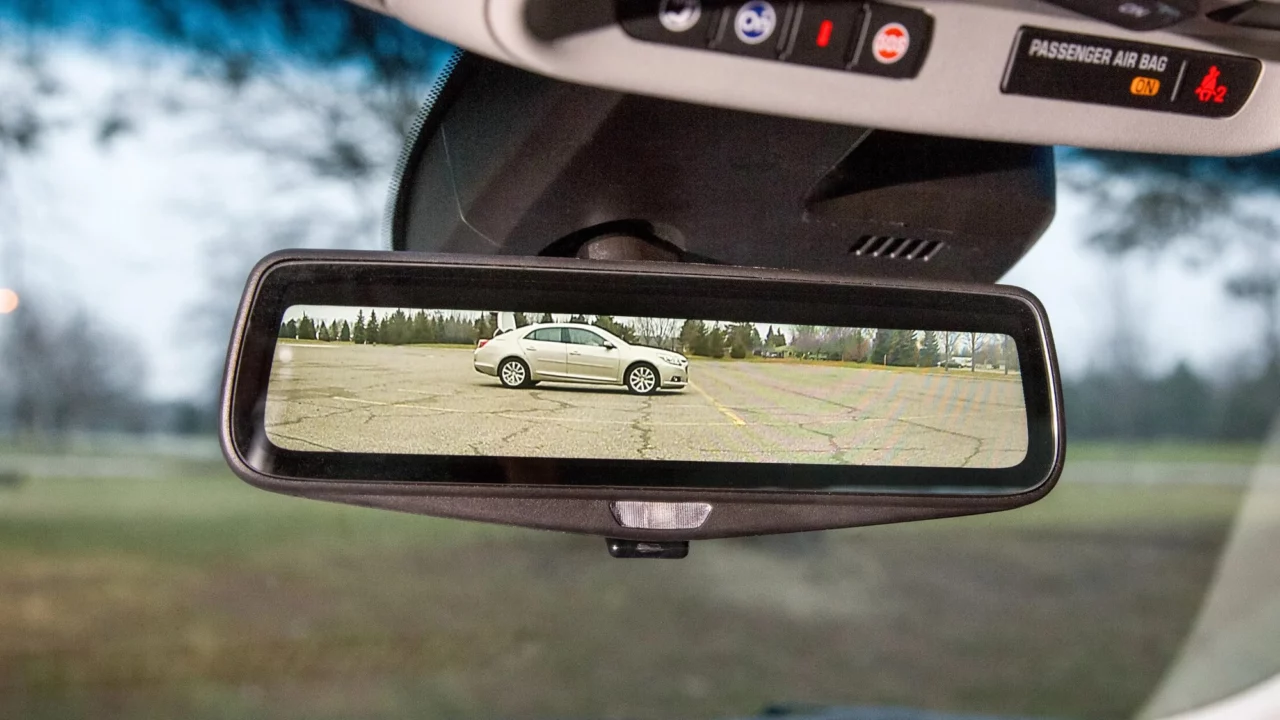
Some manufacturers have taken it farther than others. One innovation, illustrated above, is a camera integrated into a rearview mirror that can be toggled between a traditional reflective mirror and a high-definition video feed. The Cadillac Escalade is one vehicle with such a feature. The company says the camera setup allows for a 120-percent-wider view compared to a standard mirror, and it also has adjustable display parameters for brightness and other settings.
A new Tesla Model Y comes equipped with nine cameras: Three forward-facing, two on the side pillars, two on the fenders, one at the rear, and one above the front bumper. Do you think we’ve gone too far with incorporating that level of camera technology? I’m curious on your thoughts.