Imagine if instead of waiting 20-40 minutes to charge your electric vehicle from 10 to 80 percent, it simply recharged while you were on the go — with no stopping required. This is the reality that Honda, Taisei, and Taisei Rotect are looking to create by developing wireless EV charging integrated into asphalt by way of a wireless power transfer road system. Honda hopes to implement this technology with goals of increased worldwide mobility and realizing carbon neutrality by the year 2050.
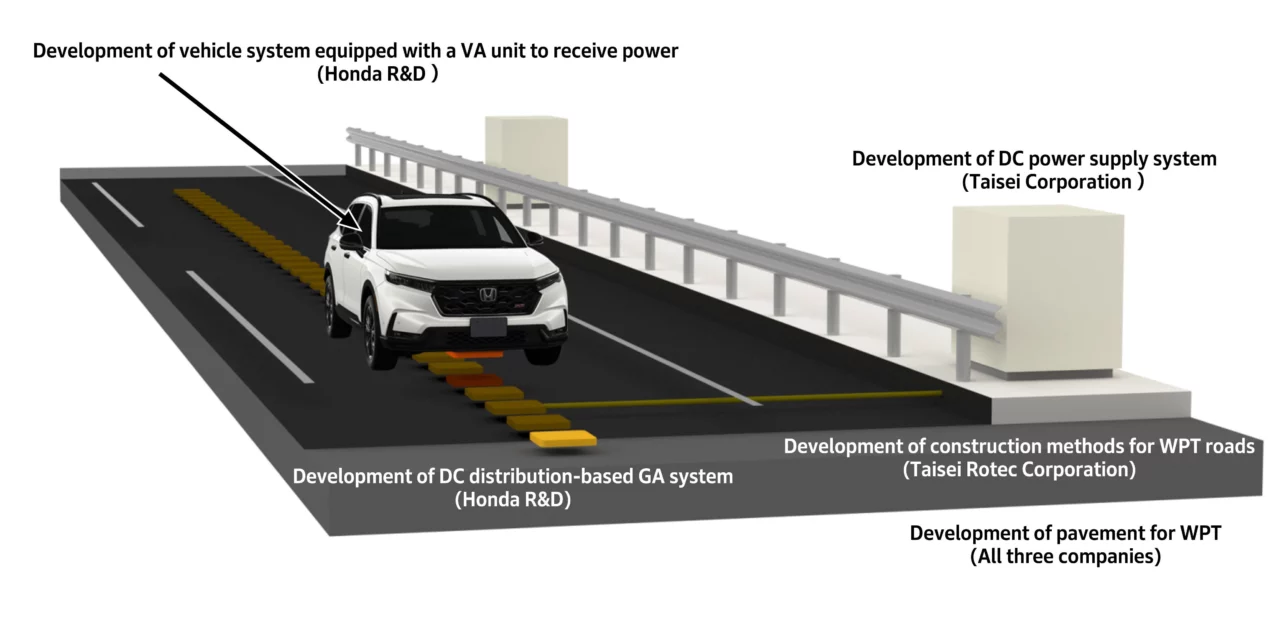 Image courtesy of Honda
How it works is that each vehicle would have an undercarriage-mounted unit that would receive power and distribute it to the vehicle’s battery. The roadway in turn would have a distribution-based ground assembly system connected to a DC power source. The ground assembly transmits power to the receiving unit on each vehicle (including those as large as commercial semis) in such a way that it charges without the driver ever having to leave the vehicle.
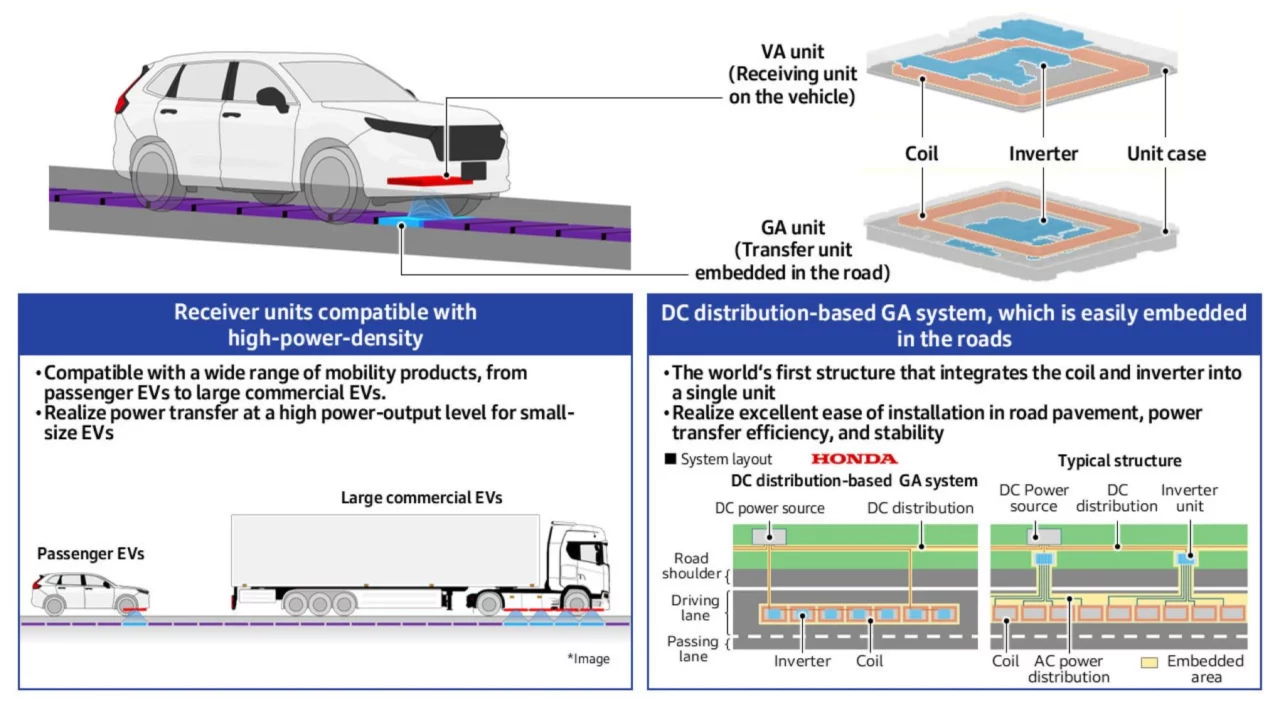 Image courtesy of Honda
Part of the vision for this technology is that the ground assembly system would be installed on high-use roadways like freeways and busy streets. Rather than use a contact wire (like in a catenary system) or contact shoe (like in a subway), which could create friction, Honda relies on the electromagnetic field that is created by a vehicle-mounted receiver unit and the ground-based distribution unit.
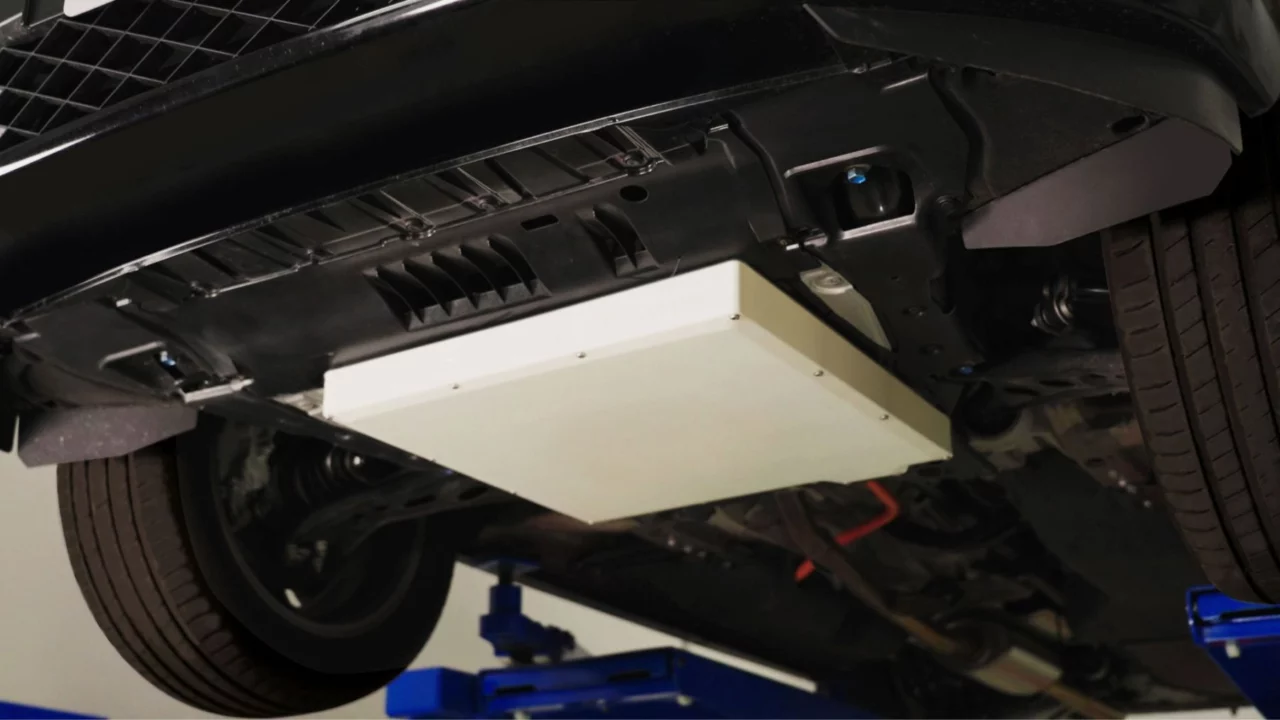 Image courtesy of Honda
The wireless EV charging technology is still in the testing phase as Honda, Taisei, and Taisei Rotect look to begin demonstration testing on April 1, 2027, which happens to be the first day of the Japanese fiscal year.
As of now, there is an interesting proof of concept, a hopeful vision of the future, a lot of scientific mumbo jumbo I still don’t understand, and of course plenty of questions: How many miles would it take a larger electric vehicle to charge? Is there a certain speed that must be maintained to get the most voltage? We don’t have those answers yet, but we will, and I’d bet a substantial amount of money that our government will look for ways to tax it.