My late grandpa Rex was a car enthusiast, and he passed his passion down to my father, who passed it down to me. One of the artifacts that I got from Rex’s house was the Reader’s Digest 1970 Almanac and Yearbook.

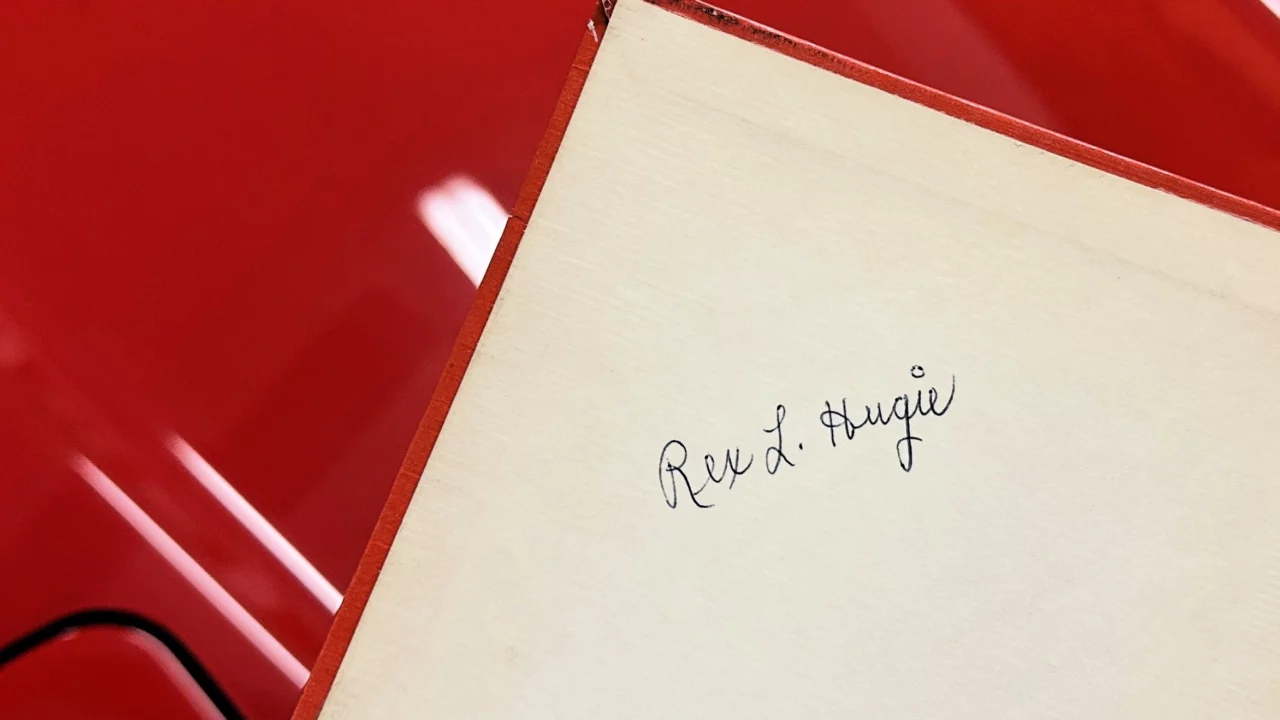
The book contains 1,024 pages of facts and figures — many of which apply to automotive topics that I found interesting. The inside of the front cover was signed by grandpa himself. He was 39 years old when the book was published; the median family income at the time was $8,632.
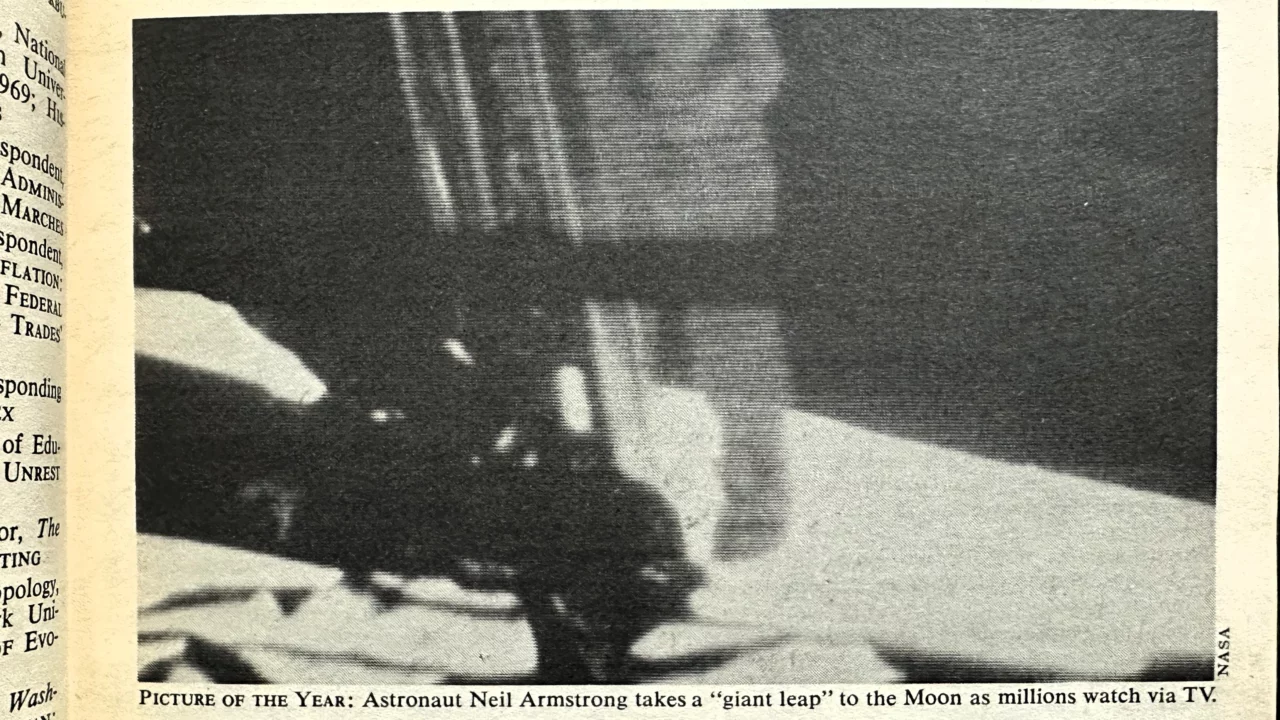
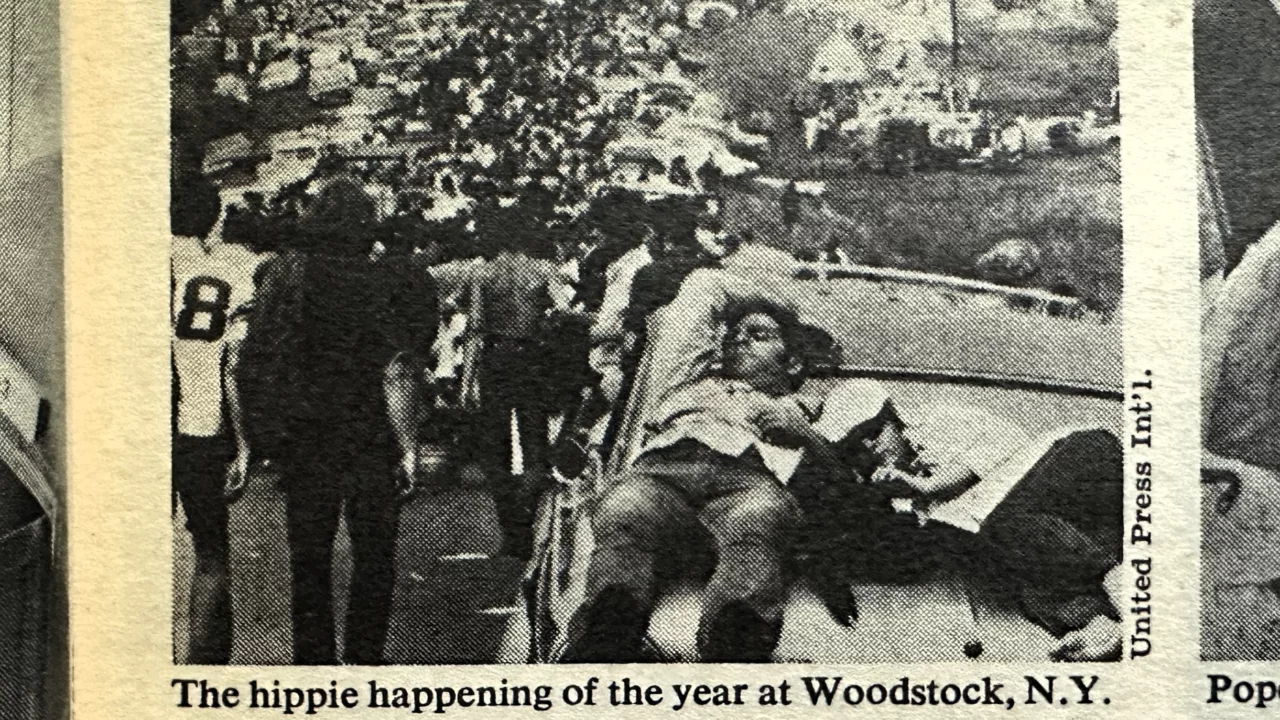
The year 1969, of course, had a lot of big news stories. The almanac’s opening paragraph reads, “1969 was an amazing year: Man took a ‘giant leap’ to the Moon, and the New York Mets won the World Series. Not so surprising, perhaps — yet just as significant — U.S. troops began to withdraw from Vietnam as some Americans demonstrated against the war, and President Nixon reordered the nation’s priorities.” A couple of pages later, there’s a photo from the famous Woodstock, New York rock festival, saying, “Some 300,000 youths braved rain, wind, and shortages of food and shelter for a weekend of music.”
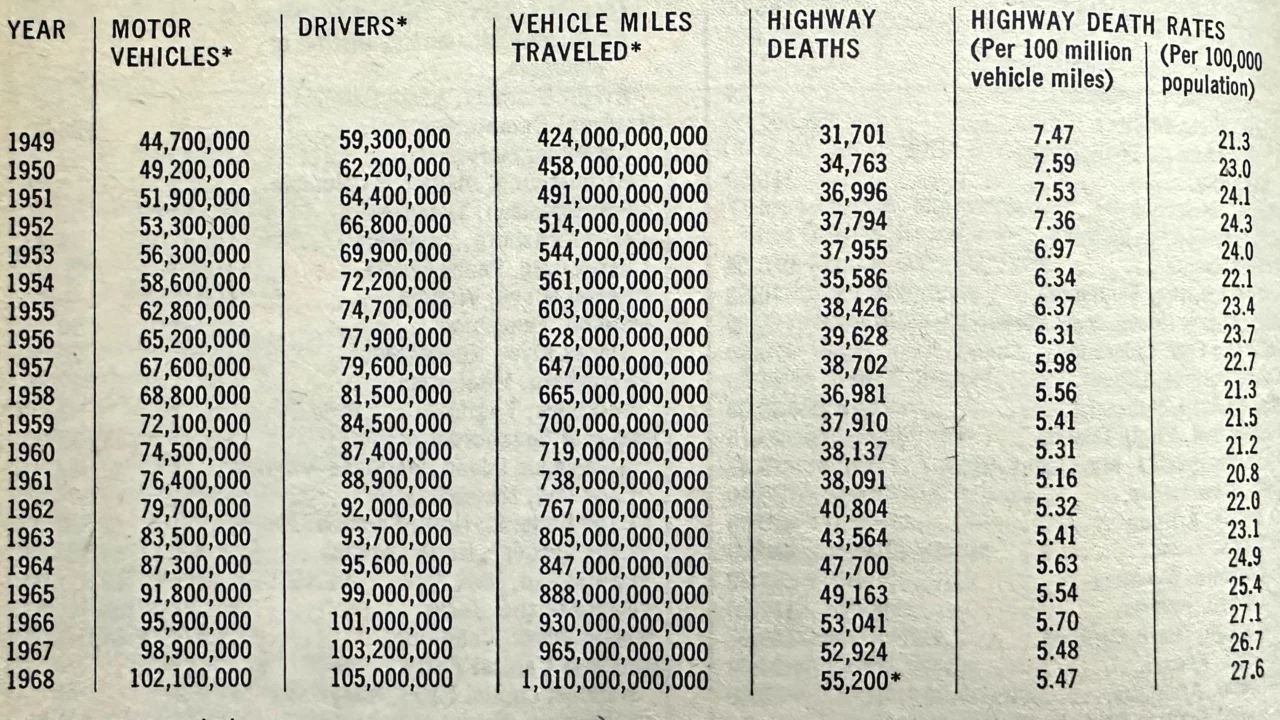
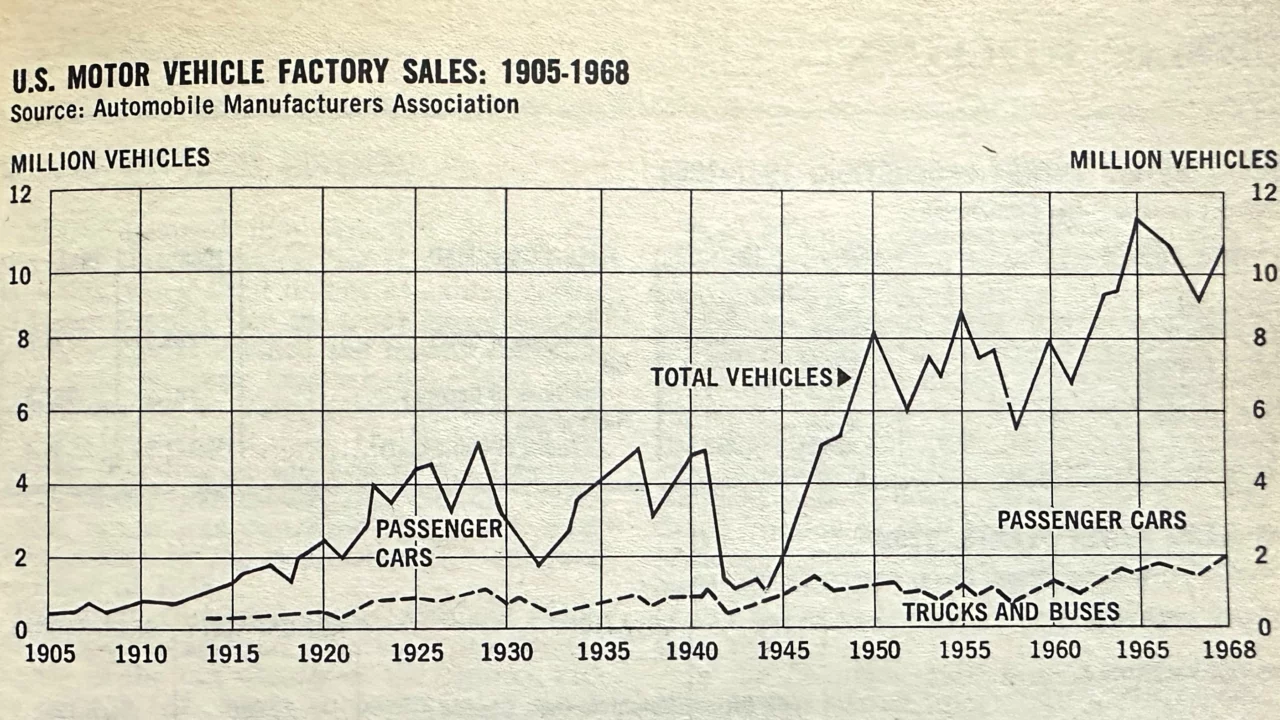
Regarding cars, the book said, “The automobile has become an increasingly important part of American life — in 1968, the number of motor vehicles on the U.S. highways passed the 100 million mark.” A table on the same page showed there were 1,010,000,000,000 (that’s one trillion) vehicle miles traveled. According to the Federal Highway Administration, today, that number is around 3.3 trillion miles per year.
According to Fortune magazine, the five largest U.S. businesses in 1968 were:
- General Motors (net sales $22,755,403,000)
- Standard Oil (net sales $14,091,337,000)
- Ford Motor (net sales $14,074,100,000)
- General Electric (net sales $8,381,633,000)
- Chrysler (net sales $7,445,251,000)
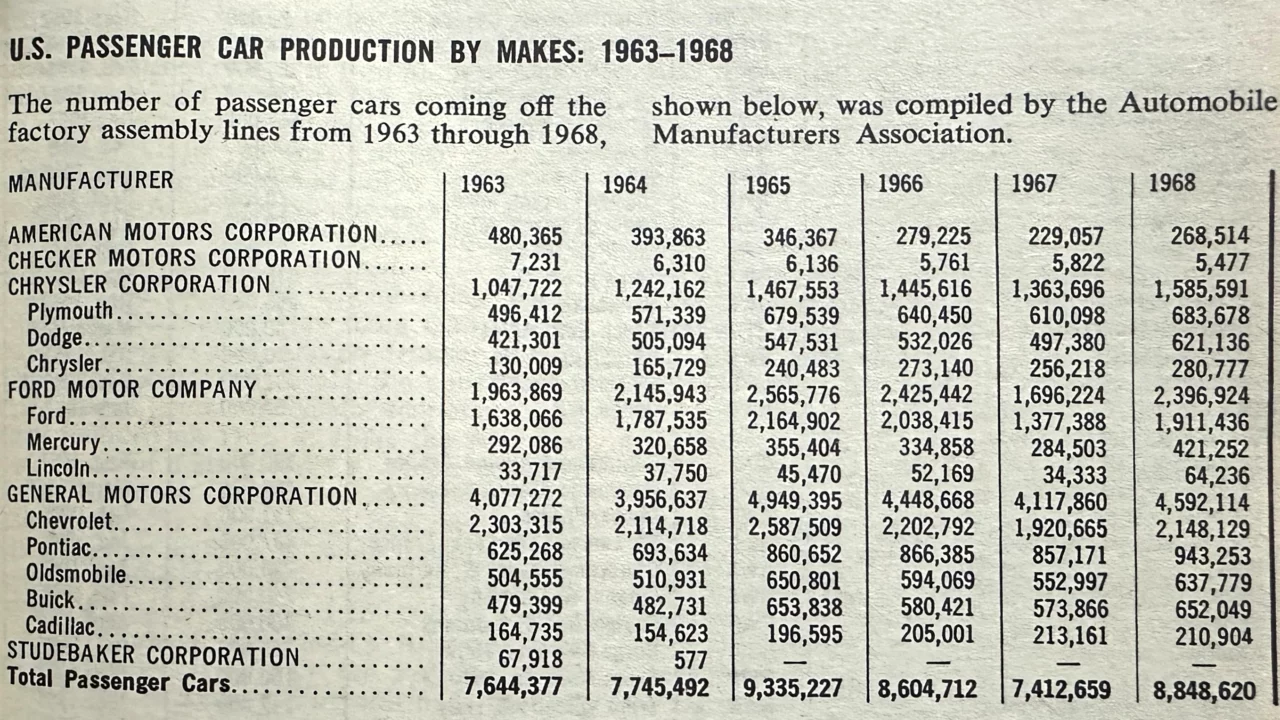
A chart showing the number of passenger cars coming off the factory assembly lines was assembled by the Automobile Manufacturers’ Association and is shown below. General Motors accounted for 4.5 million vehicles in 1968, with Ford coming in at 2.3 million. Notice Checker Motors was represented here at just 5,477 units; Checker stopped manufacturing cars entirely in 1982.
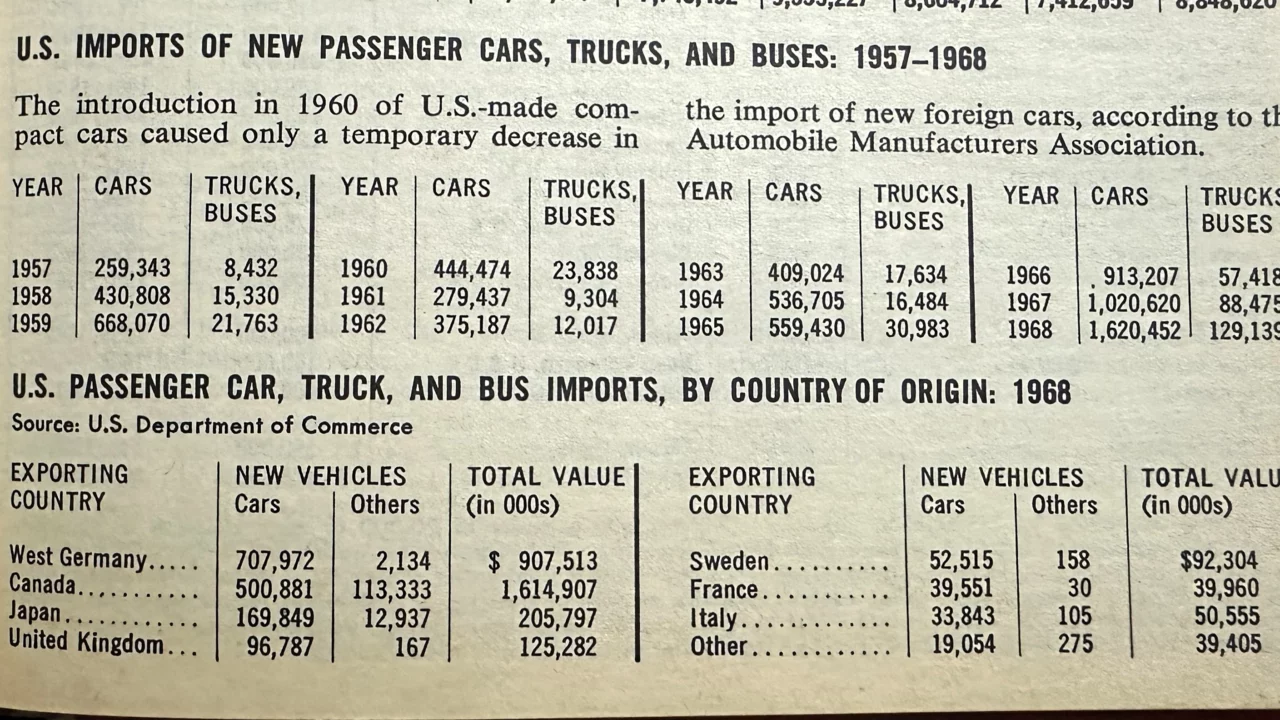
There is some data on imports by country of origin for 1968, with West Germany representing 707,972 cars. Japan was at 169,849, but Japanese imports would gain traction in the 1970s and 1980s. These days, the lines between domestics and imports are blurred somewhat. For example, BMW builds some of its cars in South Carolina, and Toyota builds Tundras in Texas. (Alliteration intended.)
From what I have been able to dig up, Reader’s Digest stopped publishing its annual almanac/yearbook in the mid-1980s. My Grandpa Rex has been gone since 1989, and all of this number-crunching makes me wonder what he would think about how our world has evolved over the last 40 years.