Do you know what a “shower thought” is? It’s a sudden epiphany many people have when they’re taking a shower. That makes sense because when you’re in the shower, you’re alone and relaxed, and you’re free of distractions. Things can come to you. Driving by yourself can also lead to clarity and understanding. Commuting in the 2026 Toyota C-HR XSE has led to an epiphany: Toyota’s small EV crossover is well-rounded and surprisingly enjoyable.
The C-HRonology
After being absent from the U.S. market for a few years, the Toyota C-HR is back as an all-new, electric-only model for 2026. Based on the e-TNGA battery electric vehicle platform, it combines two electric motors with a 74.7-kWh lithium-ion battery and all-wheel drive. Prices for the 2026 C-HR start at $37,000 for the base SE model and go up to $39,000 for the XSE, which comes with 20-inch wheels that play a part in reducing its range from the SE’s 287 miles to 273. Also standard are synthetic suede/SofTex seats with eight-way power in the front row, Panoramic View Monitor, Lane Change Assist, and Traffic Jam Assist. Our XSE test vehicle arrived with extras, such as a 9-speaker JBL audio system, panoramic roof, Tandoori and Midnight Black Metallic two-tone paint, and other small items that raised its as-tested price to $42,979.
Balanced Blend
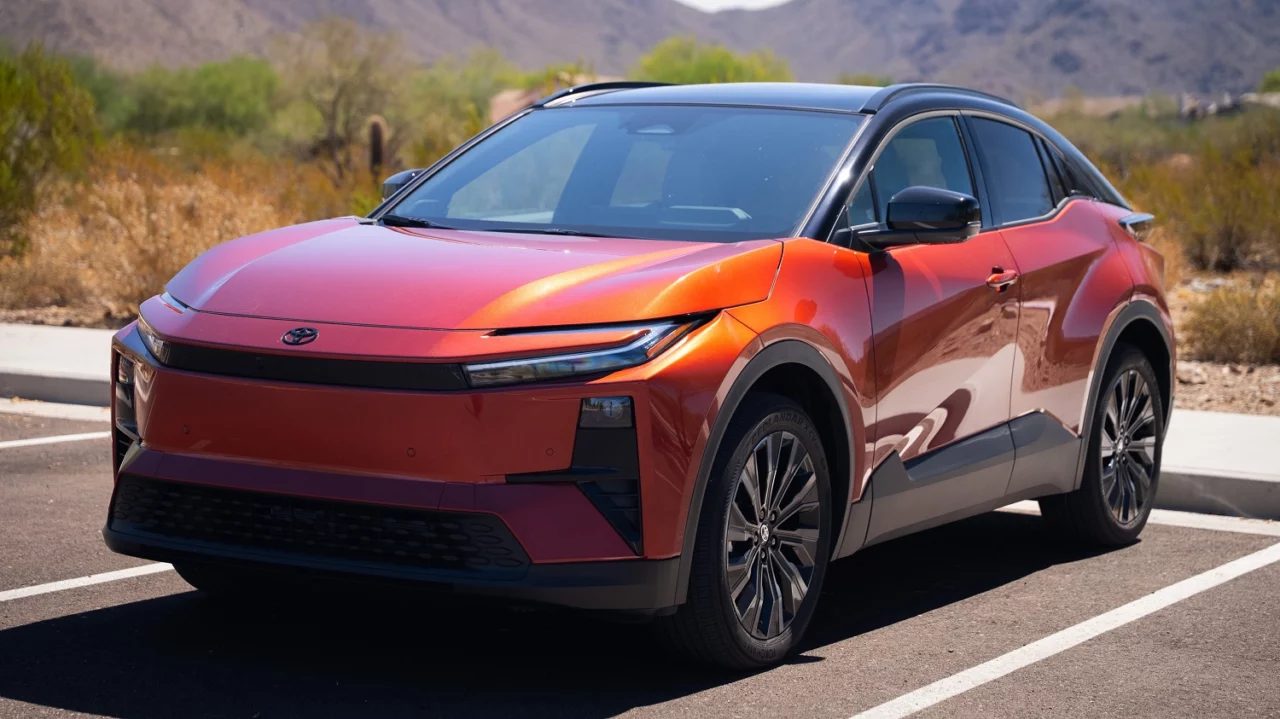
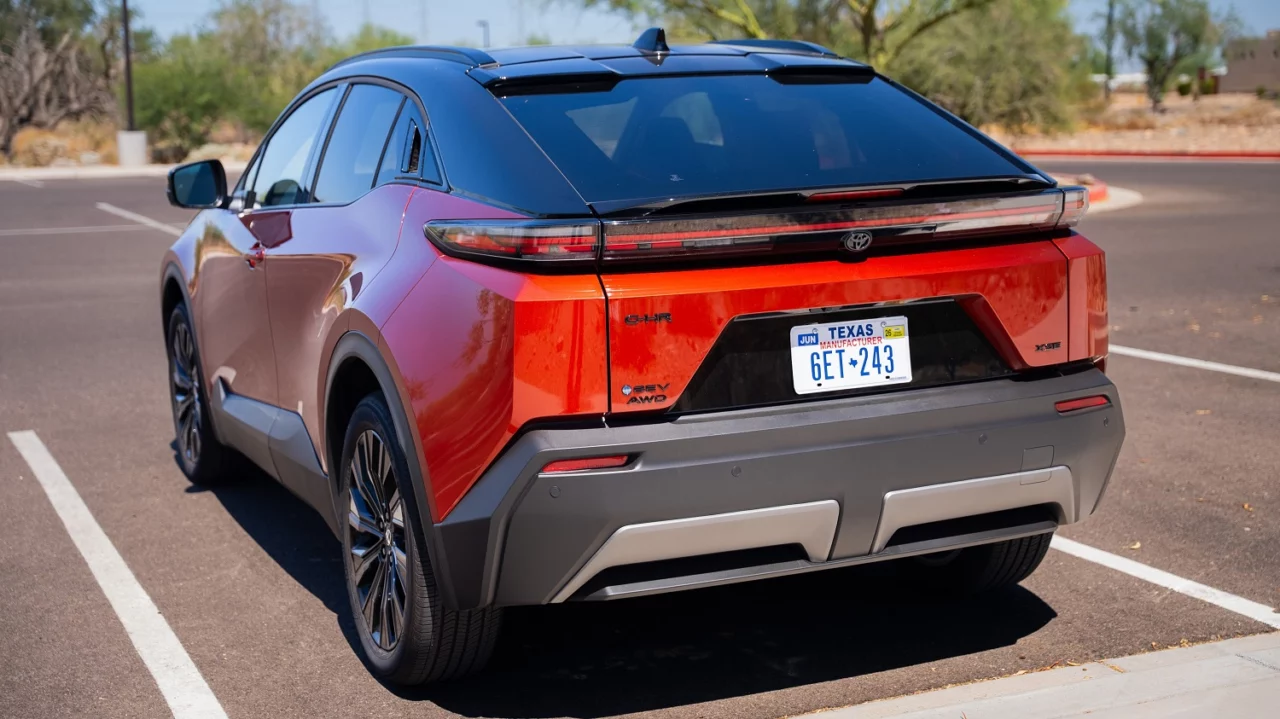
On paper, the C-HR has, as Toyota puts it, an “athletic coupe-like profile.” In real life, it’s much cooler — more like a lifted, sci-fi dune buggy. There’s a lot going on, but it all works because there’s a certain balance. Up front, the black vertical inserts that contain the fog lights offset the wide hammerhead look formed by the C-shaped headlights. On the sides, black plastic wheel arch trim and lower cladding implies a certain SUV-like ruggedness while the fast roofline brings a metal version of the Porsche 718 Spyder RS’s removable fabric top to mind. Roof-color rear door handles and roof and liftgate spoilers add to that sportiness while the taillights/light bar combo finish the sci-fi look started at the front.
A Little Off, Not Awful
If you’ve seen “Back to the Future” (who hasn’t?), you might remember that the 1955 version of Doc Brown was not used to the expressions and lingo that Marty McFly from 1985 used. Being in the C-HR was a similar experience because there were a few things that required a little adjustment. In most vehicles, setting the steering wheel at a distance and angle that allows you to reach it and the pedals comfortably, and see all the gauges easily is a quick process. In the C-HR, it took several test fits. The low placement of the center HVAC vents was also odd. Marty’s DeLorean might’ve had a flux capacitor, but its five-speed manual gearbox had a traditional shifter, not the C-HR’s Reverse/Neutral/Drive ring and separate Park button. Is that layout the way of the future? If so, that’s heavy.
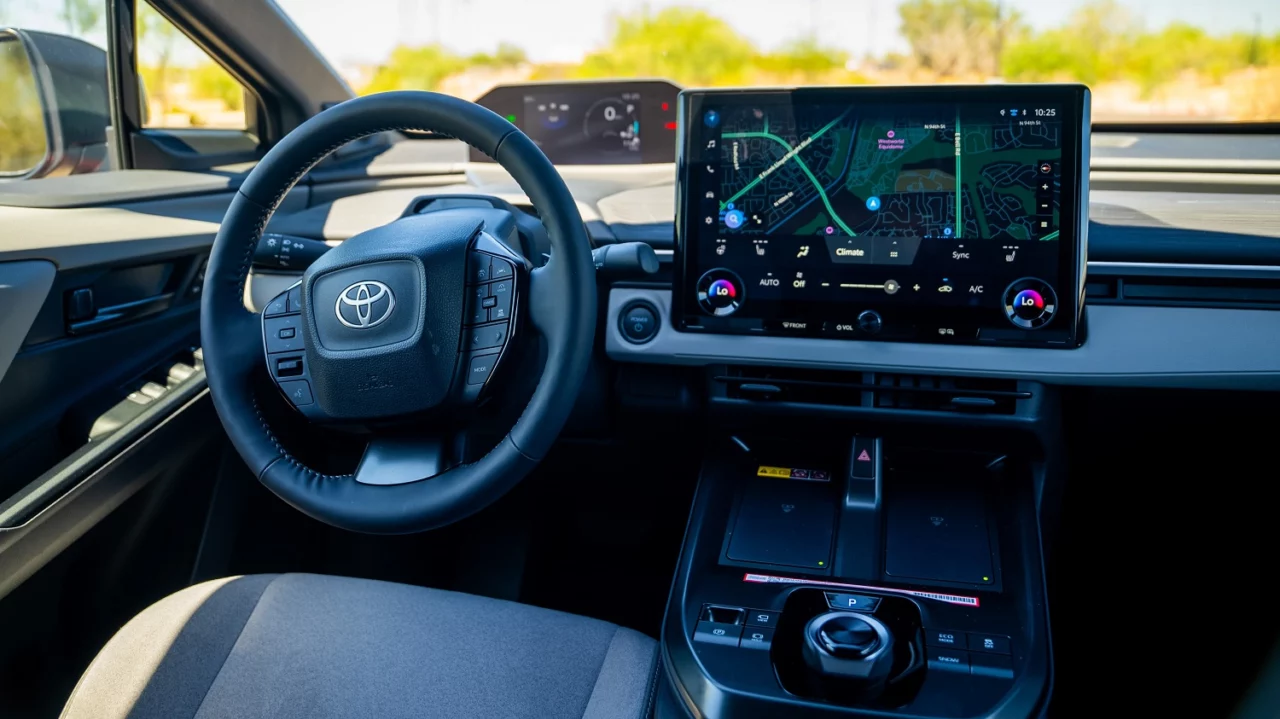
Quirks aside, the C-HR’s cabin was easy to like. There was plenty of tech, including the 7-inch digital gauge display, 14-inch infotainment touchscreen with wireless Apple CarPlay and Android Auto, and two wireless charging pads. The Toyota Safety Sense 3.0 bundle added the Pre-Collision System with Pedestrian Detection, Full-Speed Range Dynamic Radar Cruise Control, Lane Departure Alert with Steering Assist, Proactive Drive Assist, and several more features.
Downmarket black plastic was abundant, but there was one surprising material: finely grooved fabric that looked like wood trim on the dashboard. Our tester’s seats were covered in a color of synthetic suede and SofTex that Toyota calls “Boulder.” Translation: gray fabric flanked by gray and black SofTex accents. Sounds boring, right? By using mixed media and two slightly different shades of gray, Toyota somehow made all those neutrals positively cool — like the uppers to a pair of Nike Air Max throwbacks.
In the reclining second row, legroom was plentiful and so were the convenience features: HVAC vents, USB-C charging ports, and a fold-down center armrest with a pair of cup holders. Headroom was just adequate, but the panoramic roof made the back seat — and the entire cabin — feel a little more spacious.
Shocking Discovery
Toyota’s hybrid vehicles are typically easy to drive, but not especially satisfying to drive. With that in mind, it would be natural to assume the C-HR would be similarly bland and remarkably unremarkable. That was also wrong. In every major way, the C-HR was well-tuned and engaging. The 198 lb-ft of torque from the front electric motor, 125 from the rear unit, and the 338 total system horsepower was more than enough to make the C-HR feel lively (Toyota states that the C-HR can get to 60 mph in 4.9 seconds). Even when the throttle was floored, the all-wheel drive system delivered the C-HR’s output with composure. The steering was surprisingly responsive off-center and conveyed a sense of alertness. Even the brake pedal was dialed in well: It had a nice amount of feel and hit the sweet spot between too soft and too stiff. On the suburban streets and highways of the Phoenix metro area, the ride quality was on the firm side yet it was always comfortable.
Stop and Shop
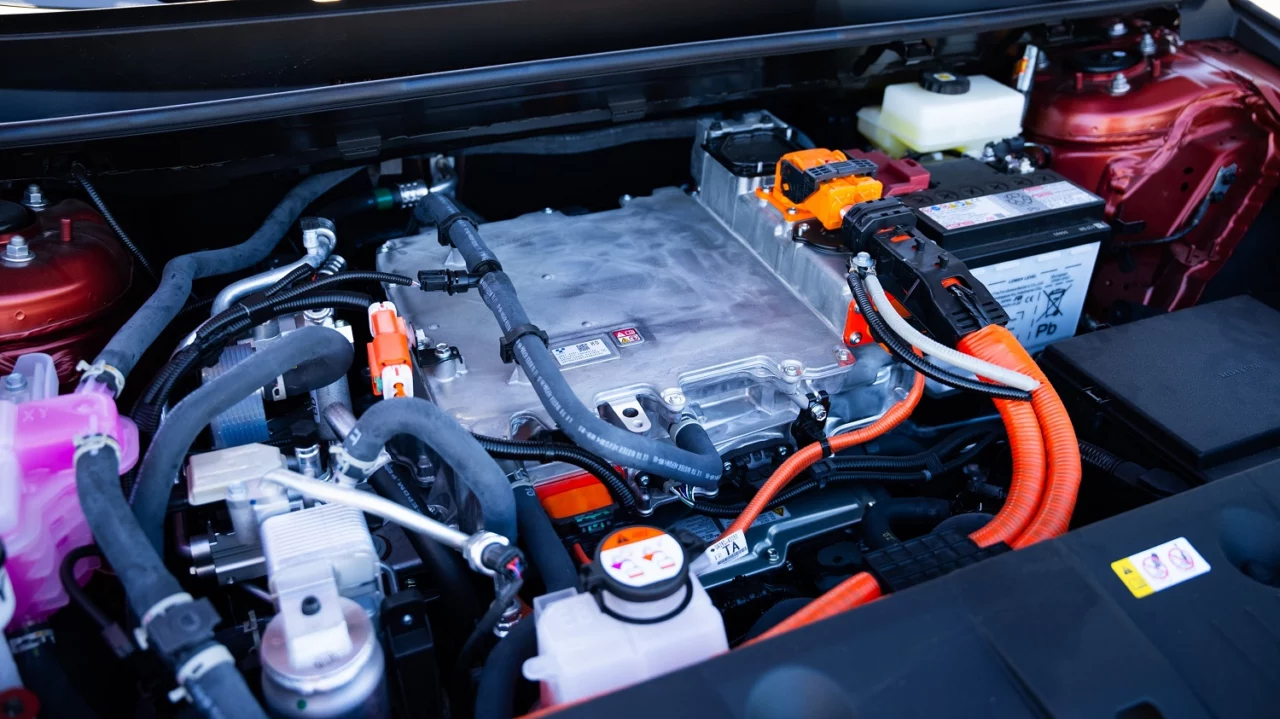
There’s an Electrify America station with 350-kw terminals 10 minutes from our office. The catch is that it uses a CCS (Combined Charging System) connector; the C-HR has an NACS (North American Charging Standard) plug. Fortunately, the cavity under the floor of the cargo area contained several adapters that allowed us to add juice to the C-HR’s battery. Toyota says 30 minutes of Level 3 fast charging can bump the battery up from 10 to 80 percent in 30 minutes. In less than 29 minutes (which I spent inside the air conditioning of a grocery store), the C-HR got 52 kWh of energy, taking the battery from 22 to 86 percent full (194 miles of range) for a total of $31.20. According to our tester’s window sticker, the C-HR was good for 122 MPGe in the city, 102 on the highway, 112 combined, and 30 kWh per 100 miles. After 115.4 miles of mixed driving, the onboard gauge showed the C-HR was averaging 3.8 miles per kWh.
EVolution
In a relatively short amount of time, electric vehicles have passed through several stages. Automakers have shown that they’re feasible (although that’s very different from the charging infrastructure doing the same). Many companies have proven that they can look sleek and attractive. Several have made stunningly fast sedans, crossovers, and even pickup trucks. But familiarity with the instant power of EVs means that the appeal of sheer acceleration isn’t as potent as it once was. These days, it’s not enough for an electric vehicle to just be fast because so many of them are. The other elements of the driving experience have become more important. Clearly, the 2026 Toyota C-HR XSE is the product of that EV evolution: It’s produced by a legacy automaker, eye-catching, zippy, and enjoyable to drive — even when the road ahead isn’t a straightaway.
My colleague Luke Lamendola also spent time in the 2026 Toyota C-HR XSE, so be sure to watch his video review below.
Click above to watch our full video review on YouTube!