From second to eighth grade, I attended what was considered one of the most prestigious schools in Delaware. Middle-class me was classmates with several folks who came from wealthy, storied families, but it was always a tacit distinction and never on our radar. However, among the station wagons during after-school pickup, one lucky classmate was sometimes picked up by his dad in this 1928 Mercedes-Benz S-Type.
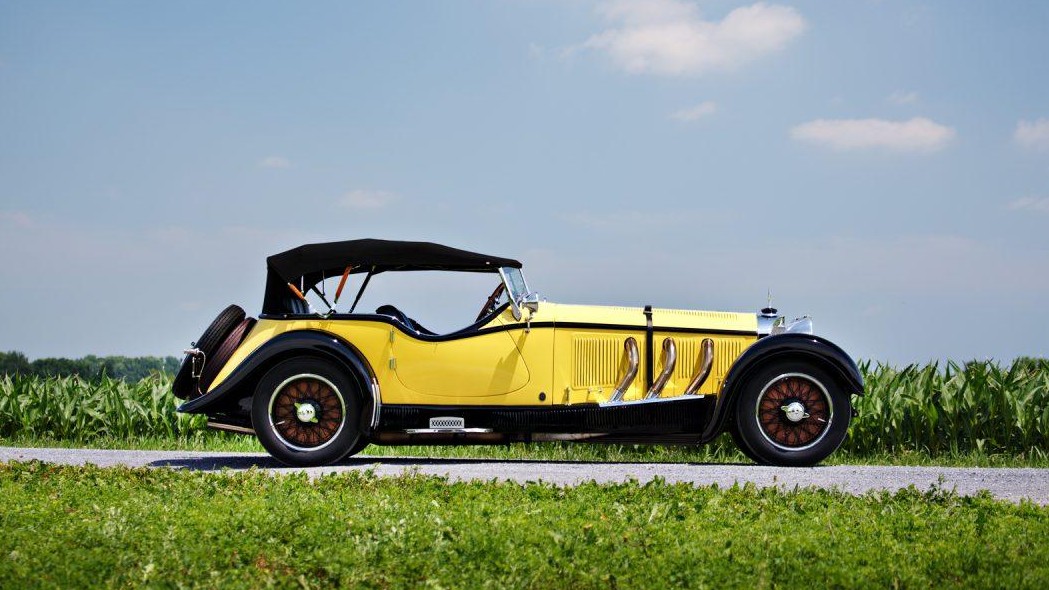 Image courtesy of Gooding
All I could remember was it was a late-1920s Mercedes roadster with pipes coming from the sides. I’d occasionally chat with my classmate’s father when he arrived, but honestly, it was well beyond my automotive understanding or interest — I was more into 1950s and late-model cars (this being the 1980s). I had nothing within my automotive education to understand the car’s significance, though in seventh grade I discovered a 1963 issue of Automobile Quarterly in the school library that featured a DuPont automobile that happened to be owned by my classmate’s uncle.
I thought I’d dig into the Internet and see if I could find this car I haven’t seen in 40 years. Equipped with a surname and an approximate model year, I conducted a search and immediately found several web pages discussing this very same car!
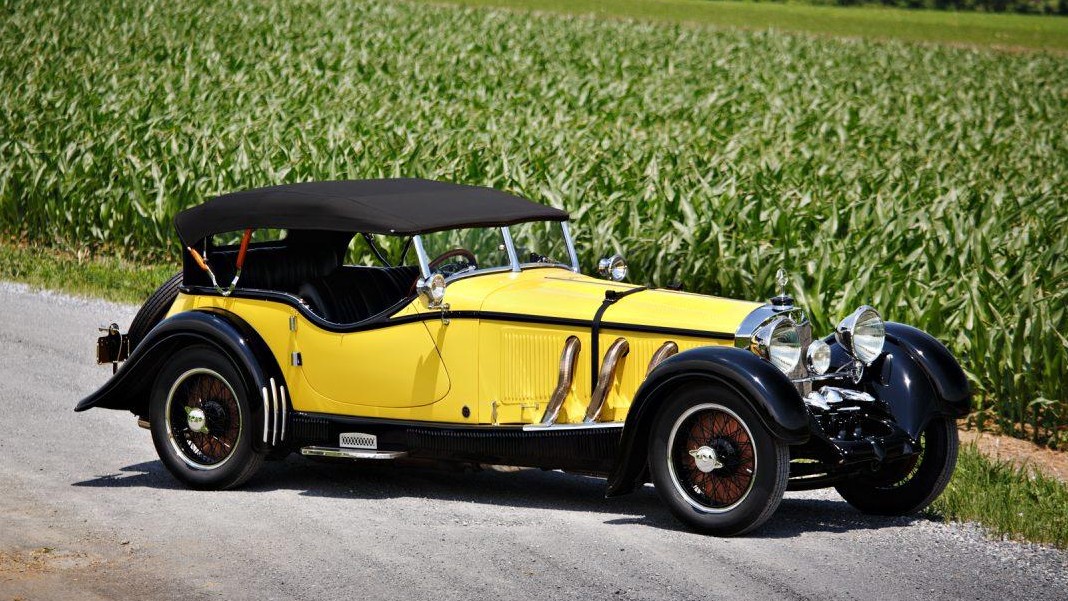 Image courtesy of Gooding
It turns out that this vehicle is part of the Mercedes-Benz W06 chassis series, one of 337 produced from 1927-33. Specifically, this is a 1928 S-Type Sports Tourer by Gläser, a sporting model (hence the “S”) that was powered by a supercharged 410ci SOHC six-cylinder producing 180 horsepower. Subsequent models included the SS (Super Sport) and SSK, an SS roadster with a shorter wheelbase and a more sporting nature for hill climbs. At the time, this car was in the running for the fastest in the world. Would it surprise you that Ferdinand Porsche had a hand in this vehicle?
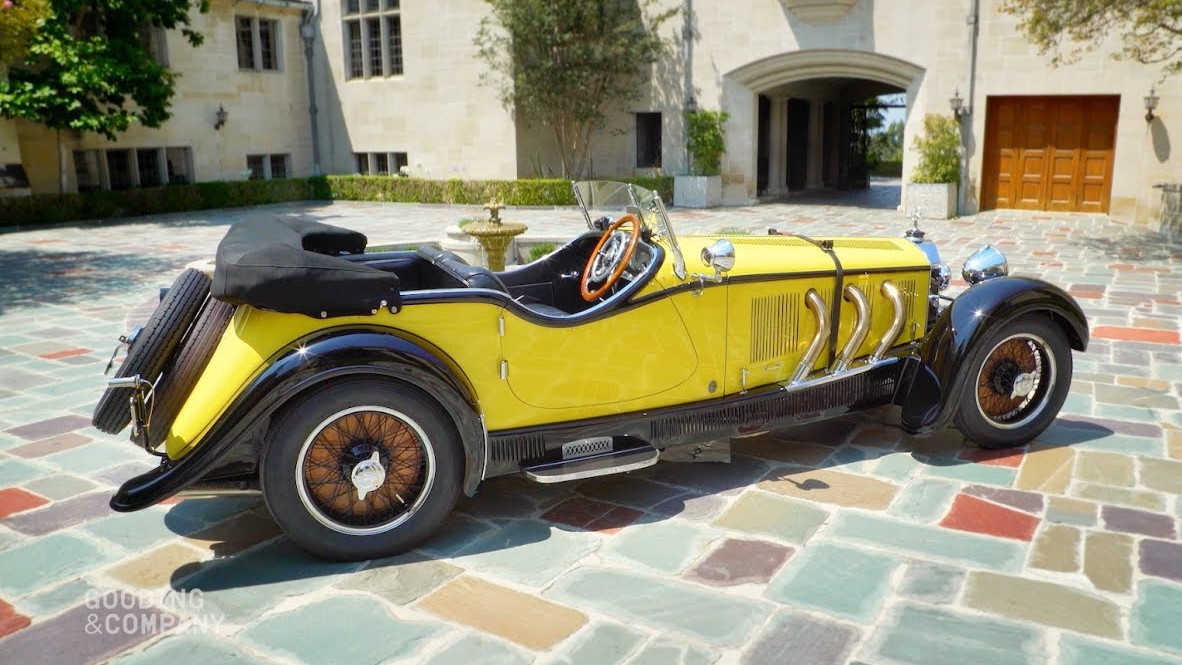 Image courtesy of Gooding
This 1928 S-Type was bought by my classmate’s father in 1964 while he was enlisted in the Navy. It actually was a sight-unseen purchase suggested by his brother (the one who owned the DuPont). At the time, it was white with a red interior, but a 1968 restoration changed things to yellow and black with a black interior. My classmate’s dad passed away in 2013, with the family selling it in 2021. In between those two years, the S-Type was repainted in raven-like black.
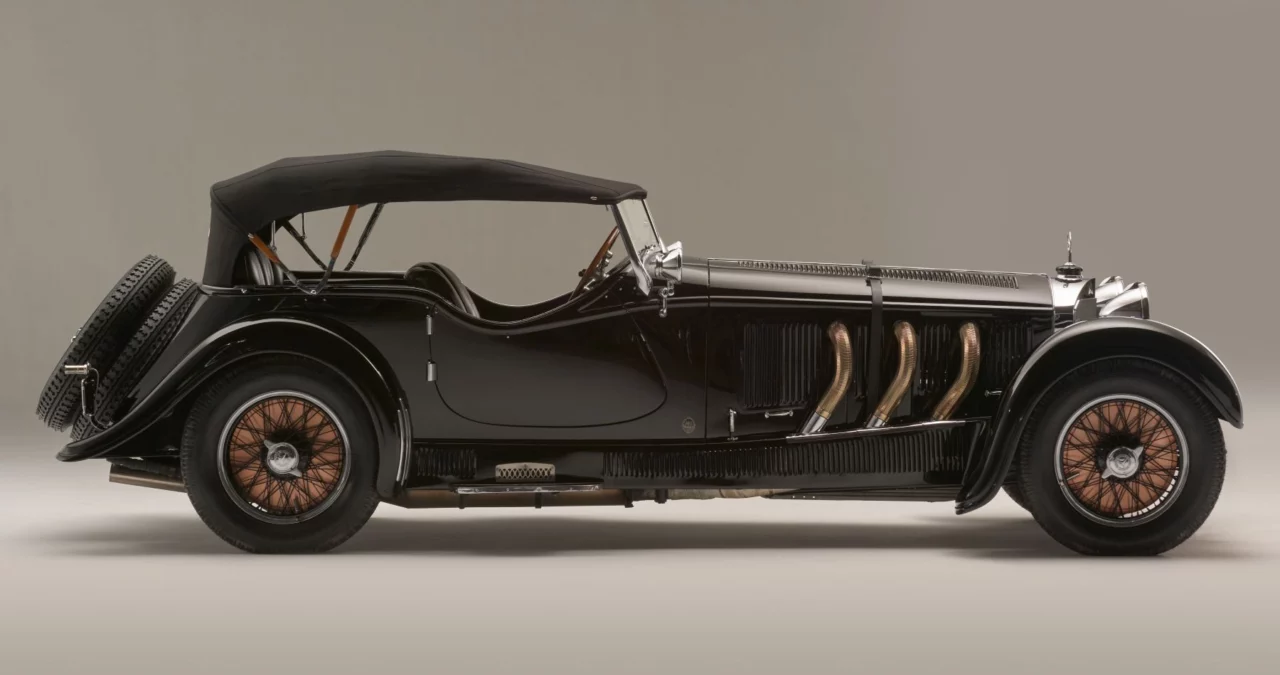 Image courtesy of Bonhams
The story of the coachbuilder is confusing. According to the Bonhams Quail Lodge Auction from 2021, “By [the 1950s] it wore a coachbuilder plate for Buhne Carosserie of Berlin, an anomaly which historians surmise is either owing to Louis Delling [a successful merchant based on the Kaiserstrasse in Dresden] having changed his mind and used a different coachbuilder when new, or that Buhne, who were a mere 120 miles north of Dresden may have carried out work on the car for Delling or its next German owner, and as coachbuilders sometimes did, took credit for their work. It is an aspect which the current owner’s father investigated at great length, but even a letter to Buhne themselves provided a response that they didn’t feel it was their work. It is not known to have worn any other coachwork. As a result of this when refurbished in the last decade, its owner chose to attribute the car to Gläser, and it is today badged as such.”
According to this article, the S-Type was used by my classmate’s dad “for daily transportation and to take his children to school.” You have me to confirm that this is 100 percent true.