While shooting videos of a Porsche 959 during Monterey Car Week, I glanced over to my right and saw none other than our own Andy Reid. A few minutes later, we met up with the Collector Car Network’s talented media supervisor Dustin W. Johnson. During a discussion of the events Dustin and I were going to cover, Andy suggested we go to the 2026 Concours d’Lemons, a show in Seaside designed to “Celebrate the Un-Best of the automotive world.” Given Andy’s expertise, I figured it was worth checking out. I’m glad I did because it showed me a different segment of the car enthusiast community.
Monterey Car Week is filled with flashy hypercars zooming along the Central Coast, multi-million-dollar vintage masterpieces, and millionaires/billionaires wearing Swiss watches that cost more than some houses. If you’re not a Count or the place you live in doesn’t have “wings,” I can see why it would be a little uncomfortable. But you don’t have to wear Brunello Cucinelli or a Richard Mille watch for the Concours d’Lemons — just show up ready to see something other than a 1-of-1 exotic made of unobtainium and powered by Instagram likes.
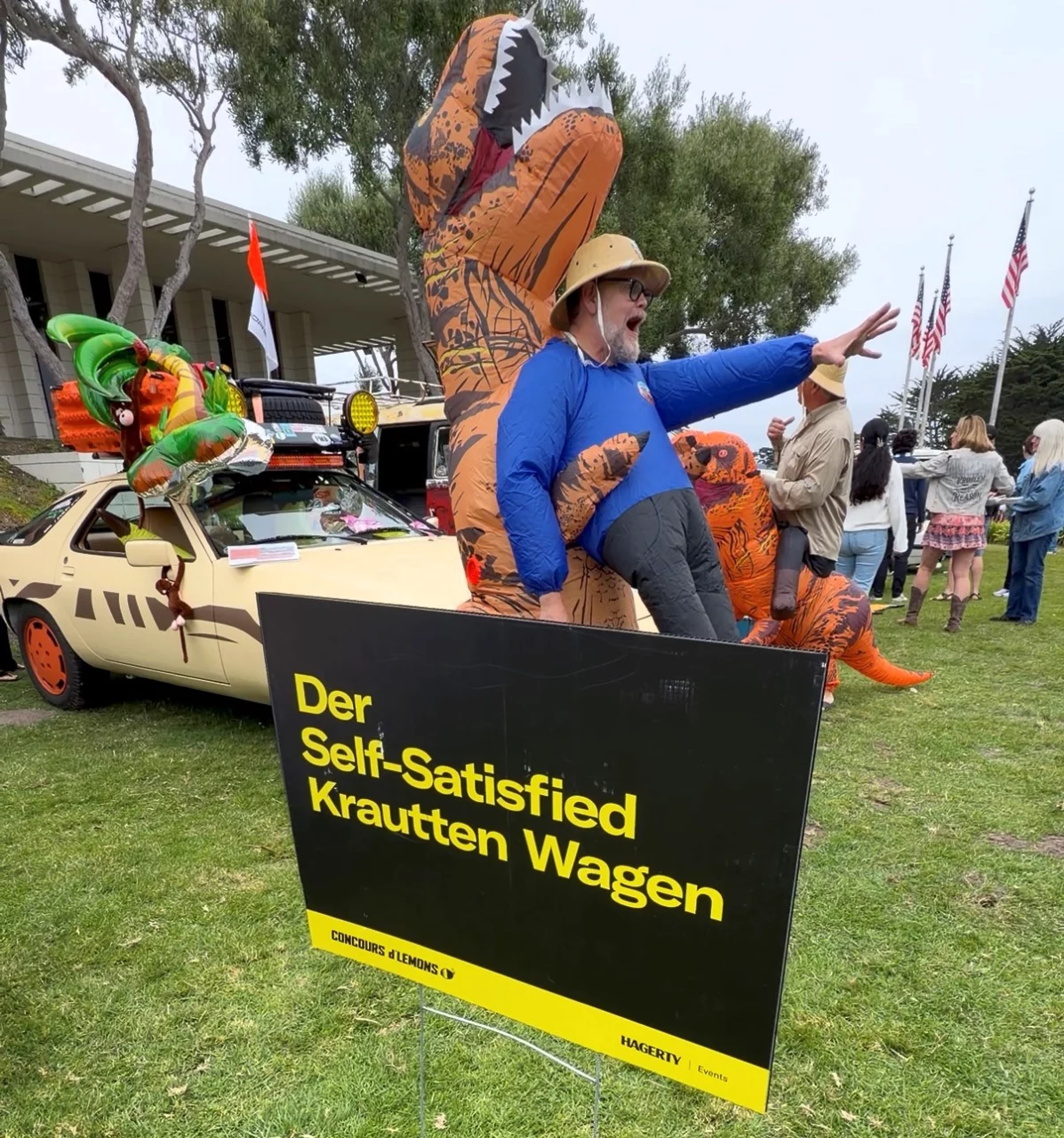
Let’s just say that the Concours d’Lemons takes being silly very seriously. Vehicles classes at this year’s show had names such as Rueful Britannia, Needlessly Complex Italian, Der Self-Satisfied Krautten Wagen, and Swedish Meatballs. As Andy has mentioned in his stories from Monterey Car Week, the judges gladly accept bribes, particularly liquor and food. When an entrant plies an official with the right incentive, his/her car earns a “Ribbon of Dishonor.” At one point, I saw someone wearing a makeshift hat that started life as a wheel cover. There were even guys running around in inflatable dinosaur costumes — fitting given that there was a Jurassic Park-themed JL Jeep Wrangler at the event.
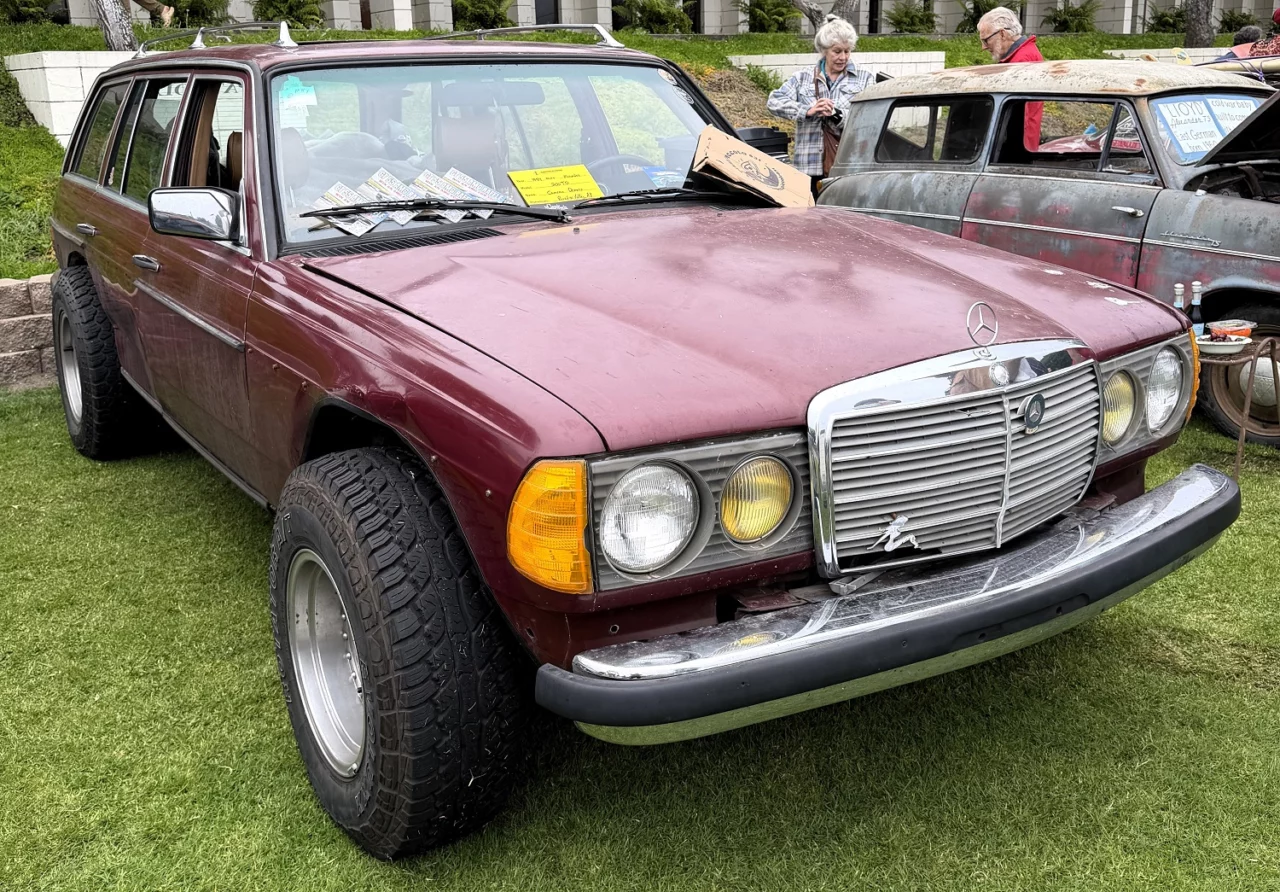
I wasn’t surprised to see a 1984 Mercedes-Benz 300TD wagon on the show lawn because so many W123s have aged into barely running condition or eccentricity. From what I could tell, this one was a little of both, its banged-up body riding above a set of all-terrain tires.
A few cars away was a total surprise: a 1956 Mercedes 190SL art car nicknamed “Celestial Carnival” (shown above). It’s been in Royce Carlson’s family since the mid-1970s. Over the last several decades, the roadster has received a new short block and a restoration, but it’s also gone through long periods of inactivity and storage. After getting the car running again, Carlson decided against a traditional restoration and turned to Arizona artist Bill Dambrova for its multiple layers of vivid swirls and flora.
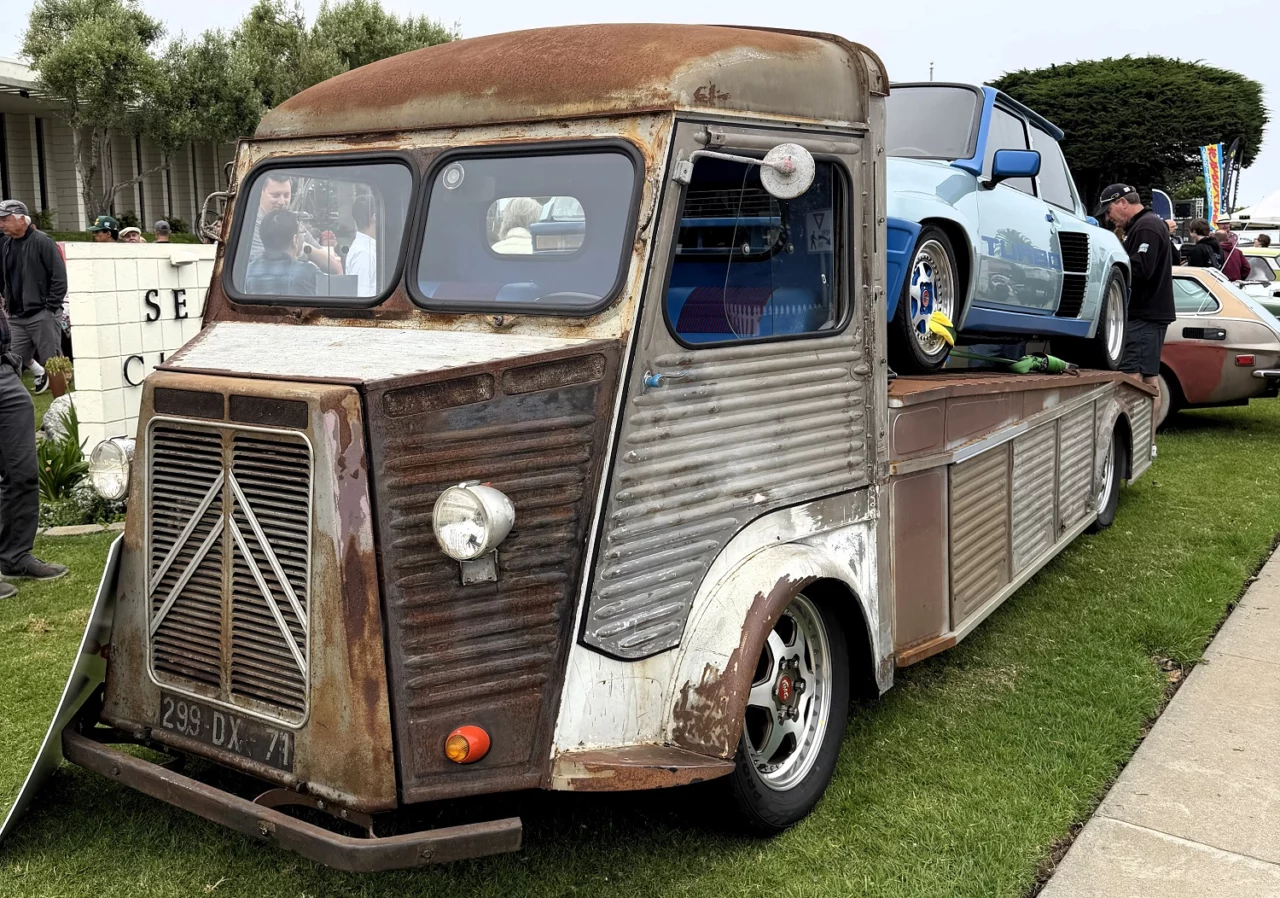
It was impossible to miss the 1959 Citroën HY ramp truck with a Renault 5 Turbo on the back. Not only had I never seen an HY before, but I had also never seen a ramp truck so close to the size of the vehicle it was carrying.
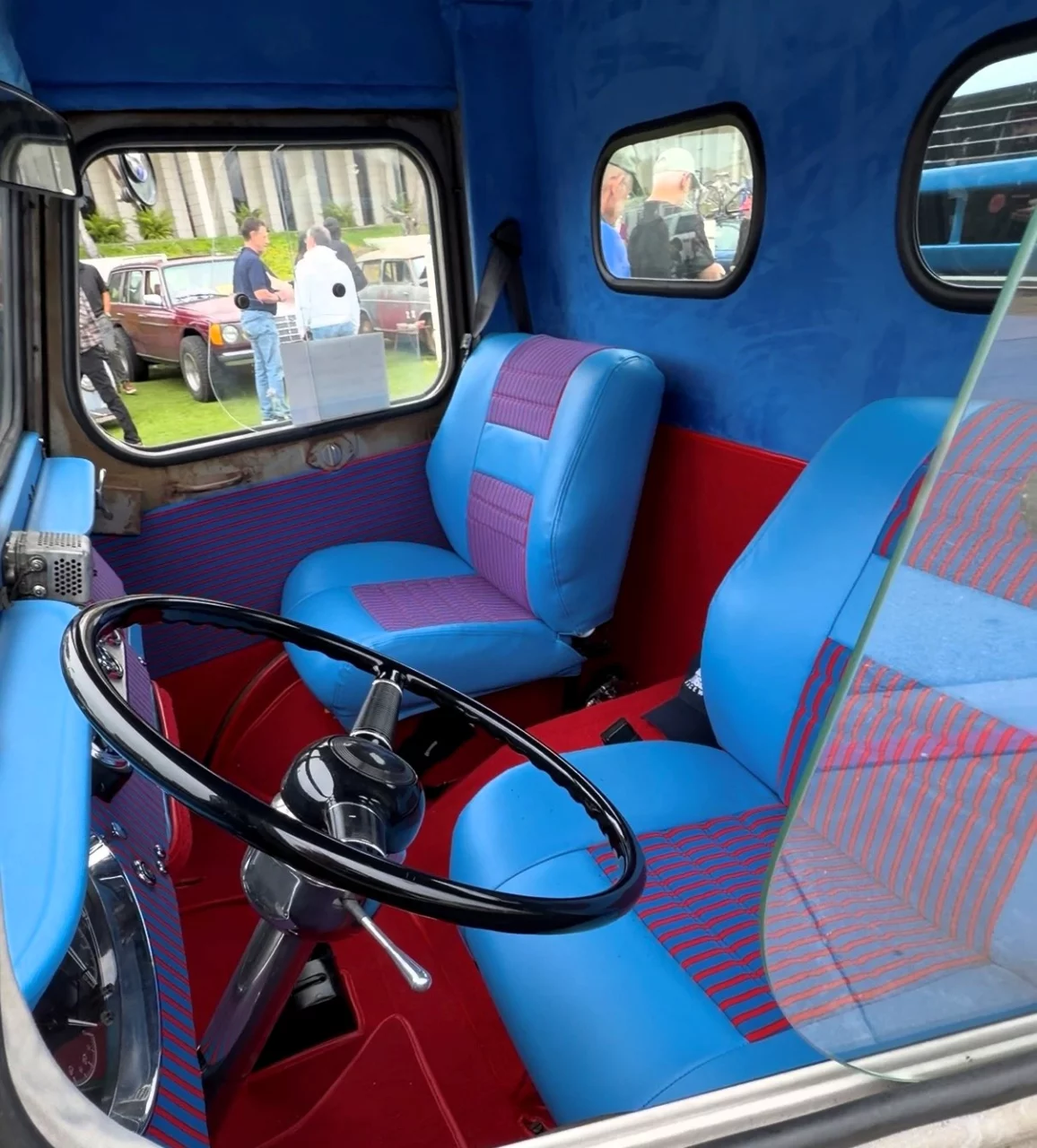
Despite its patina, the Citroën had plenty of newer parts, including a 519-horsepower Chevrolet 5.3-liter V-8, headers, 4L60E four-speed automatic, AccuAir Suspension, and even a custom interior designed to match the Renault hot hatch.
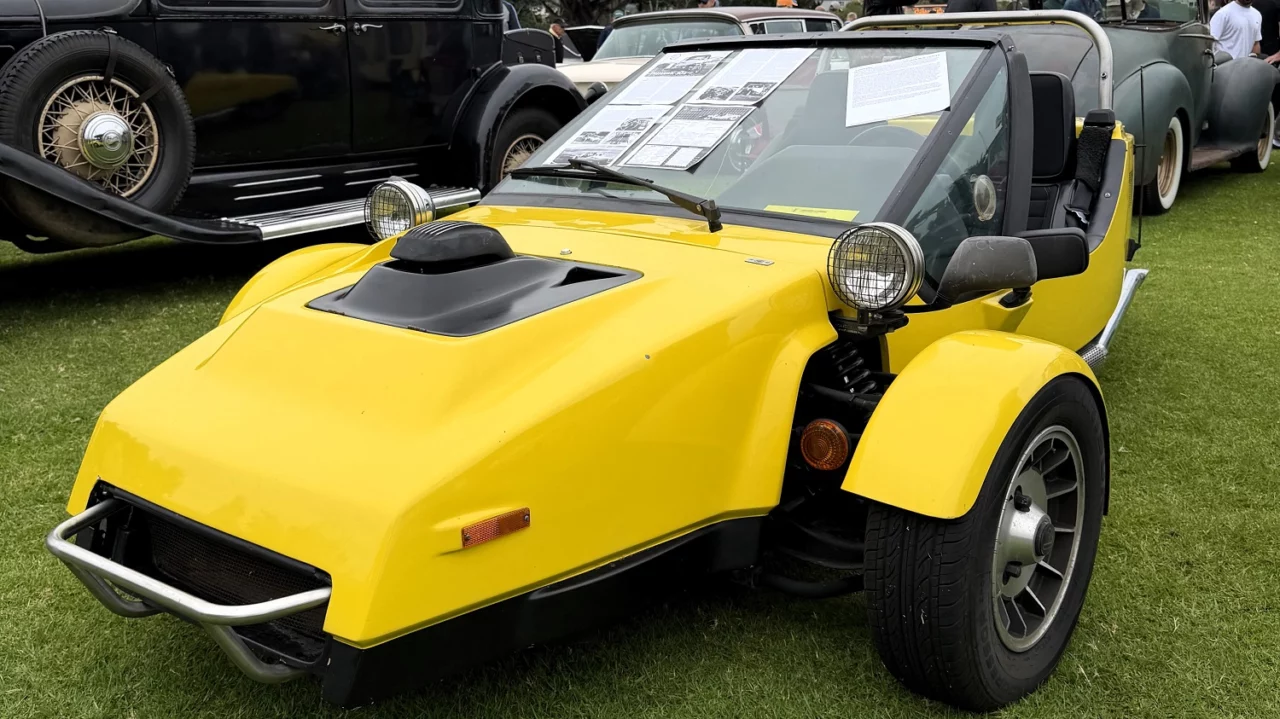
Another oddity I couldn’t help but check out was a bright yellow Trihawk 304. It may look like something out a late-1970s Roger Moore 007 movie, but it’s actually a real vehicle. According to the 1982 Road & Track article taped to the windshield, the three-wheeler was the product of a collaboration between Bob McKee (known in the Can-Am and Indy car worlds) and Lou Richards, whose company made equipment for forming meat patties. To skirt car regulations, the pair went with a more motorcycle-like (and less restricted) three-wheel layout. A 1.3-liter Citroën air-cooled flat-four sent power through a Citroën five-speed to the two front wheels.
Did I see any cars at the 2026 Concours d’Lemons that social media-savvy teens would dream of having? With the exception of one 14-year-old Lemons fan that introduced himself to me at the event, no. What I did see were unusual cars with passionate owners who were proud to show them off to the rest of the world, MSRP and condition be damned. You can call them rust-buckets, hoopties, or junkers (terms I’m sure some of their owners use), but I would never call them boring. They all stood out in their own ways, whether it’s because they’re rarely seen on the road these days, their obscurity, or their personalized touches.