When I went to Monterey Car Week, I didn’t just go to Exotics On Broadway, Concours d’Lemons, and the Pebble Beach Concours d’Elegance — I also fell down a deep rabbit hole: prewar cars. That led me to buying a book on the Cord 810/812, looking for Franklin Mint models of the Duesenberg “Twenty Grand,” and discovering the Pierce-Arrow line of Travelodge camping trailers.
In 1929, the same year the Great Depression started, luxury automaker Pierce-Arrow introduced a new line of vehicles powered by a new straight-8 engine: the 133 and 143, whose numbers denoted the length of the wheelbase in inches. According to the Pierce-Arrow Society, “The new Pierce-Arrows were long, low, and a great success, setting a new sales record of almost 10,000 cars in 1929.” The previous year, Studebaker purchased $5.7 million in Pierce-Arrow stock and not only provided the company money, but also a dealer network. Just five years later, Studebaker declared bankruptcy and sold Pierce-Arrow to a group of Buffalo businessmen, though that didn’t stop the downhill slide. The 1936 model year marked the last all-new Pierce-Arrow cars. It also brought the debut of the luxurious Pierce-Arrow Travelodge trailers. Based on an a steel frame and equipped with an aluminum body and vacuum-boosted hydraulic brakes, the Travelodge offered the comfort and convenience of a “birch and gum wooden interior [which] had a dining area, ice box, gas cook stove, wood heating stove, water tank and a sleeping arrangement.”
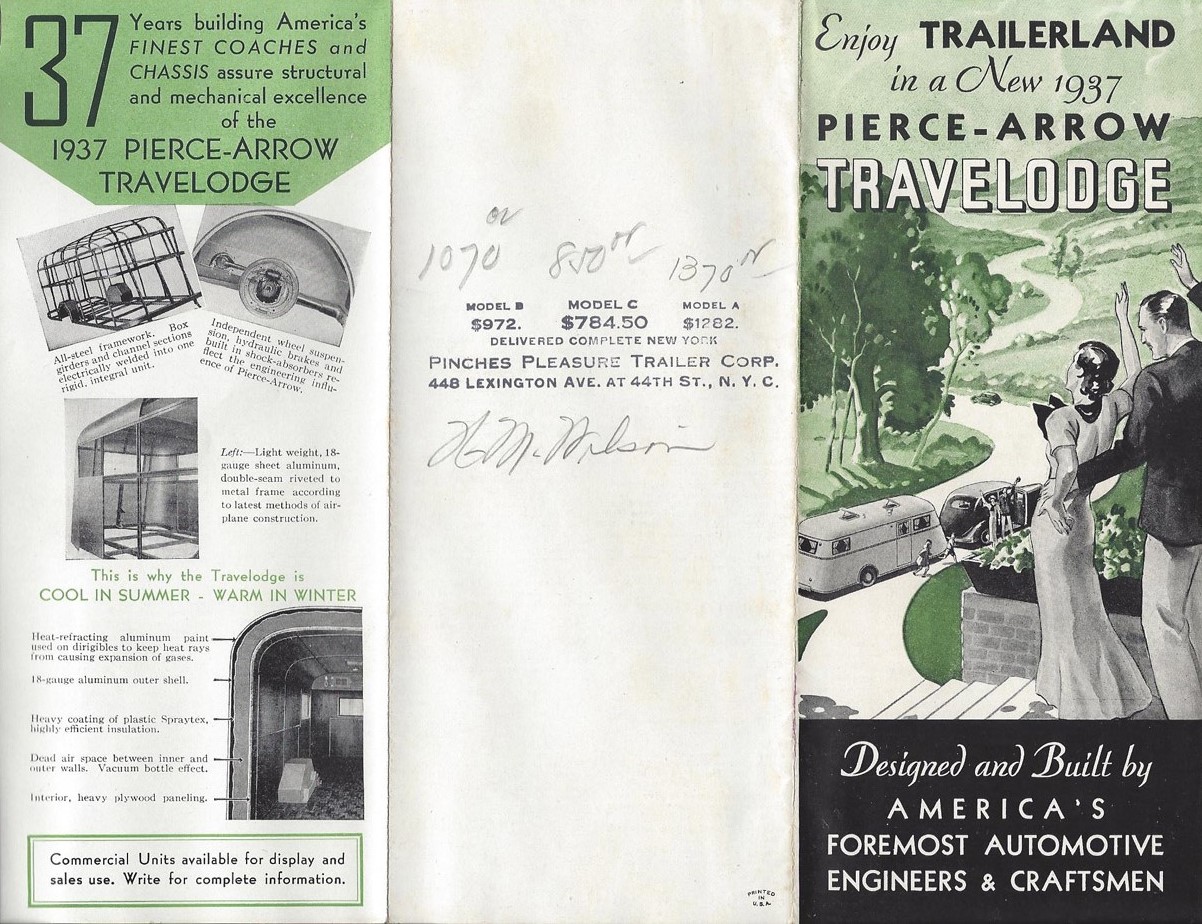
Thanks to a post on the Antique Automobile Club of America’s (AACA) forum, we can take a look at the 1937 Travelodge brochure. It shows there were three toaster-like models: the 19-foot Model A for $1,282, 16.5-foot Model B for $972, and 13-foot-seven-inch Model C for $784.50. All of them featured an 18-gauge aluminum shell coated with the same heat-refracting paint used on dirigibles and were insulated with plastic “Spraytex.” An air gap between the outer and inner surfaces provided an additional layer of separation from the unpleasant temperatures of the outside world.
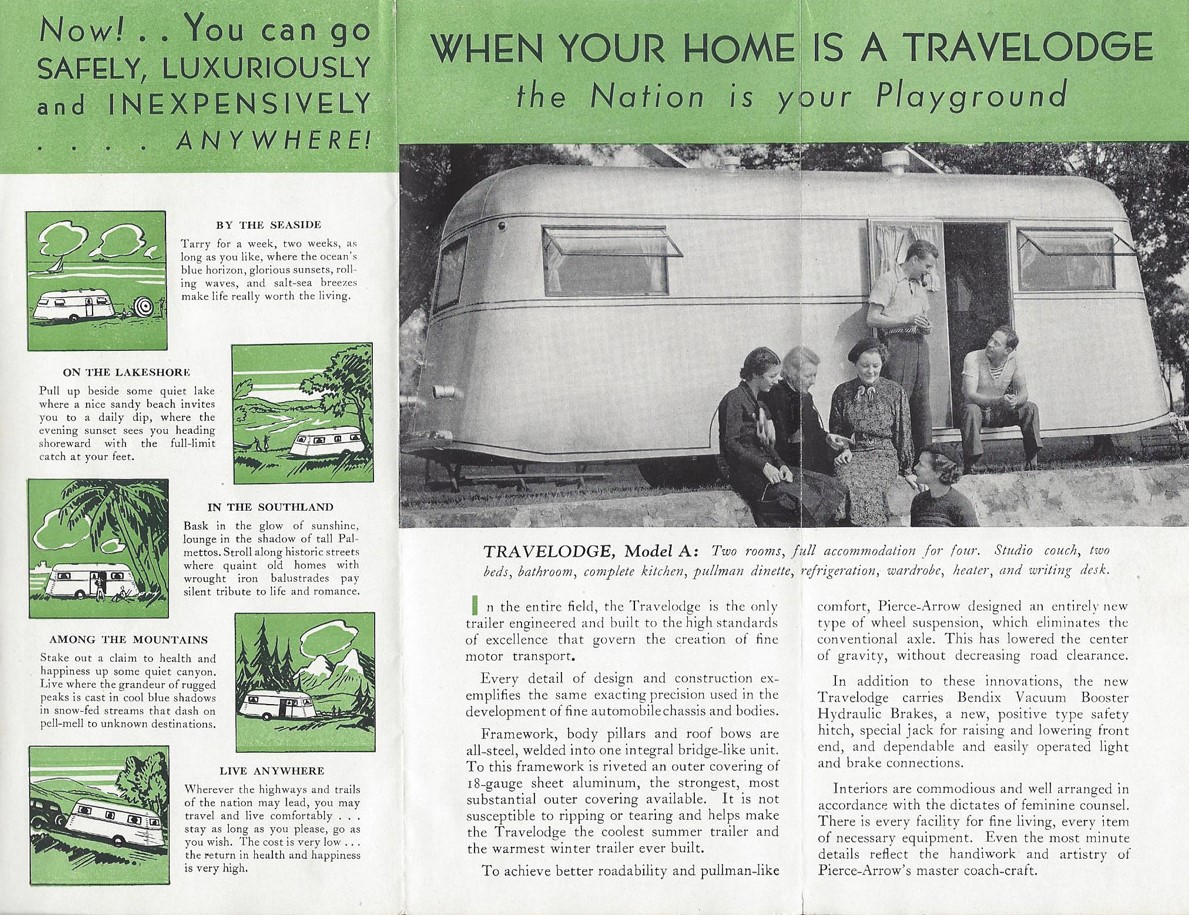
Although different lengths, the Model A and Model B came with similar features, which included eight windows, inlaid linoleum flooring, dinette seats and a couch that could be opened to form full-size double beds, two cupboards, a sink, two dressers, and a bathroom with a mirror, sink, and septic toilet.
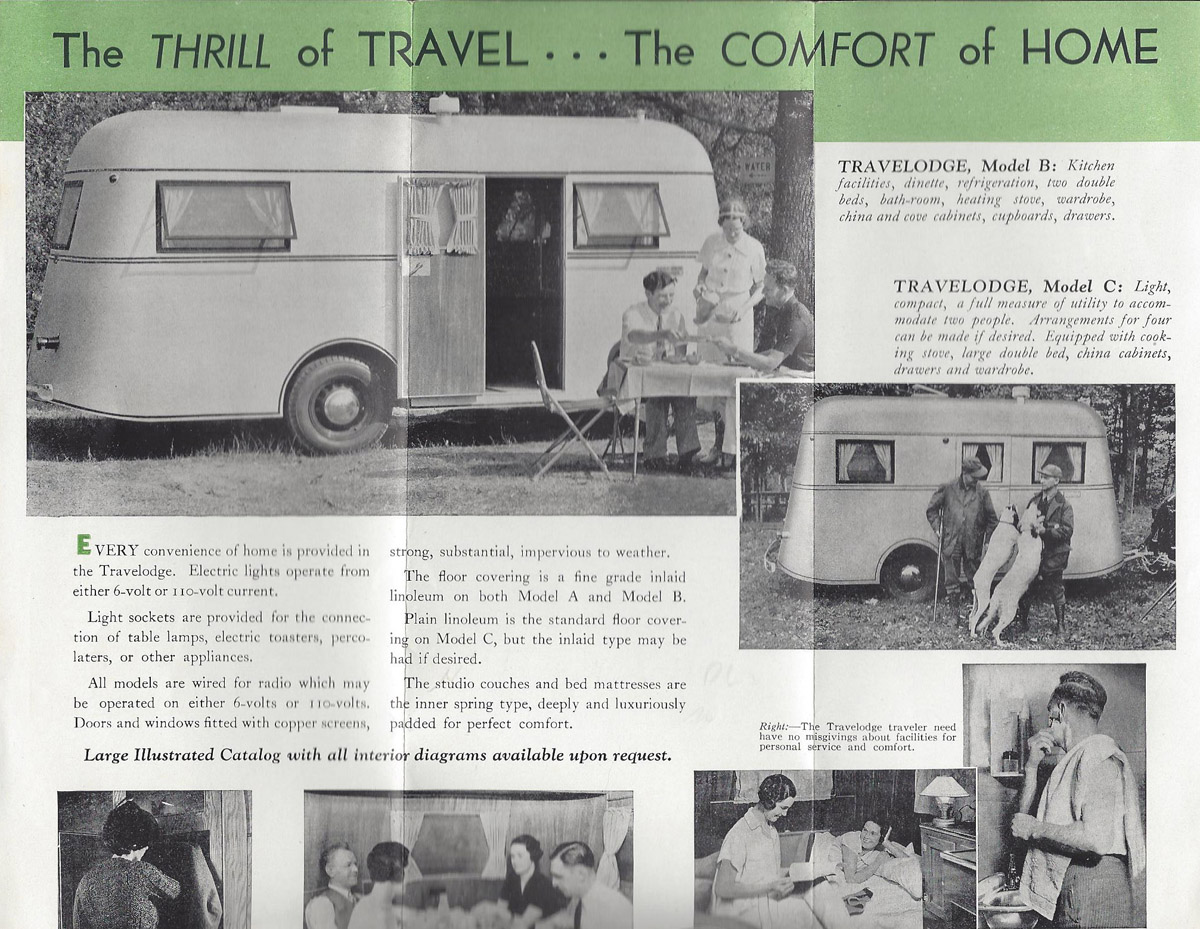
The Model C was equipped with seven windows and an interior fitted with plain linoleum, natural fir woodwork, a single bed, cupboards, stove, and sink, but no lavatory.
By 1938, Pierce-Arrow was liquidated, but it managed to produce about 450 Travelodges before its demise. From what I’ve seen, not many of them have survived. That’s a shame because I can imagine these were quite a treat back in the day. Even today, I fantasize about taking my family for a getaway in one — and towing it behind a Pierce-Arrow car, of course. Sure, it would take some getting used to, but how charming it would be to cook dinner together, step outside to soak up the nearby natural beauty, and say “Goodnight” in such an unusual artifact of 1930s luxury. Plus, the total absence of TVs would be perfect for getting away from it all. The following YouTube short really sells the fantasy: