Let’s roll back the clock about 50 years to the era of earth-tone colors, wood paneling, and shag carpet with a ride that was built in January 1977 and is still cruising the streets.
Ford’s famous (or infamous?) subcompact Pinto was developed under Lee Iacocca in just a 25-month timeframe, and it went on to be manufactured from model years 1971-80. Ford’s initial introduction called it “The Little Carefree Car.”
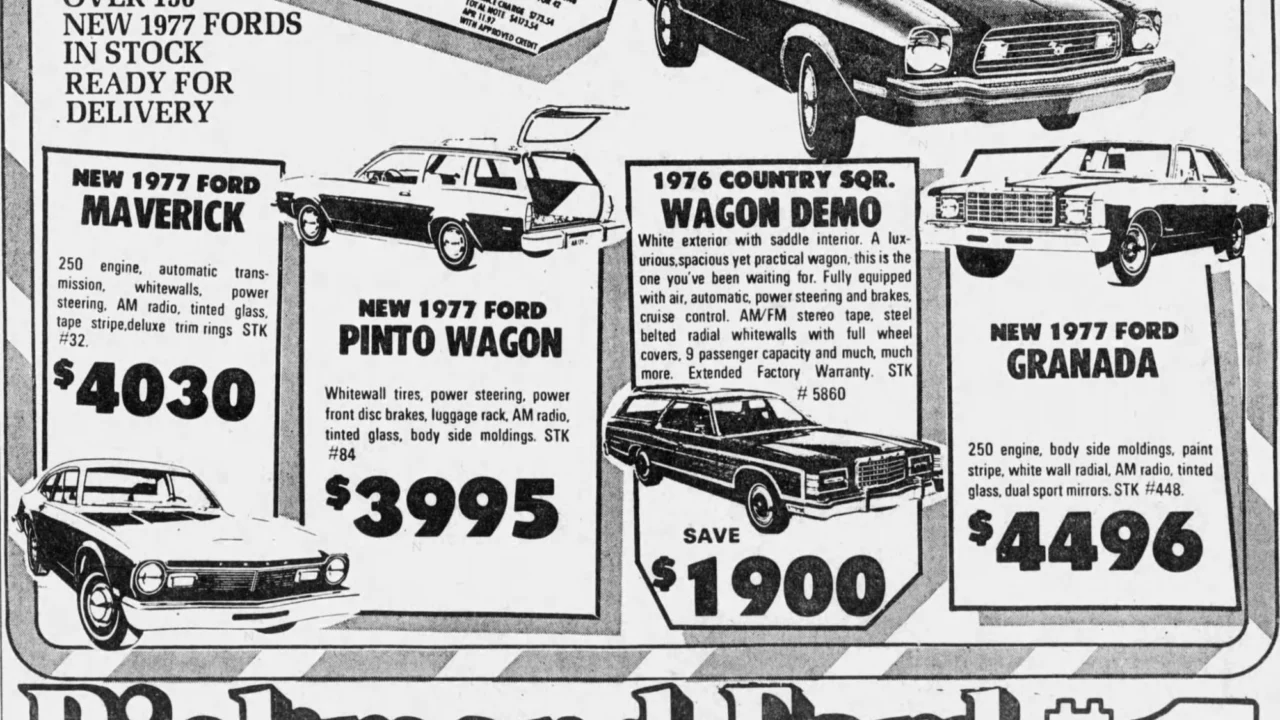
We talked a little about the Pinto in a story about my mom’s old 1978 Mercury Bobcat, which shared the same unibody platform. The Pinto was offered as a two-door sedan, three-door “runabout” (hatchback), and two-door station wagon.
Wagon models were marketed toward families and young buyers. Despite some controversy around safety concerns, most notably the gas tank design, the car was a sales success and sold over three million units.
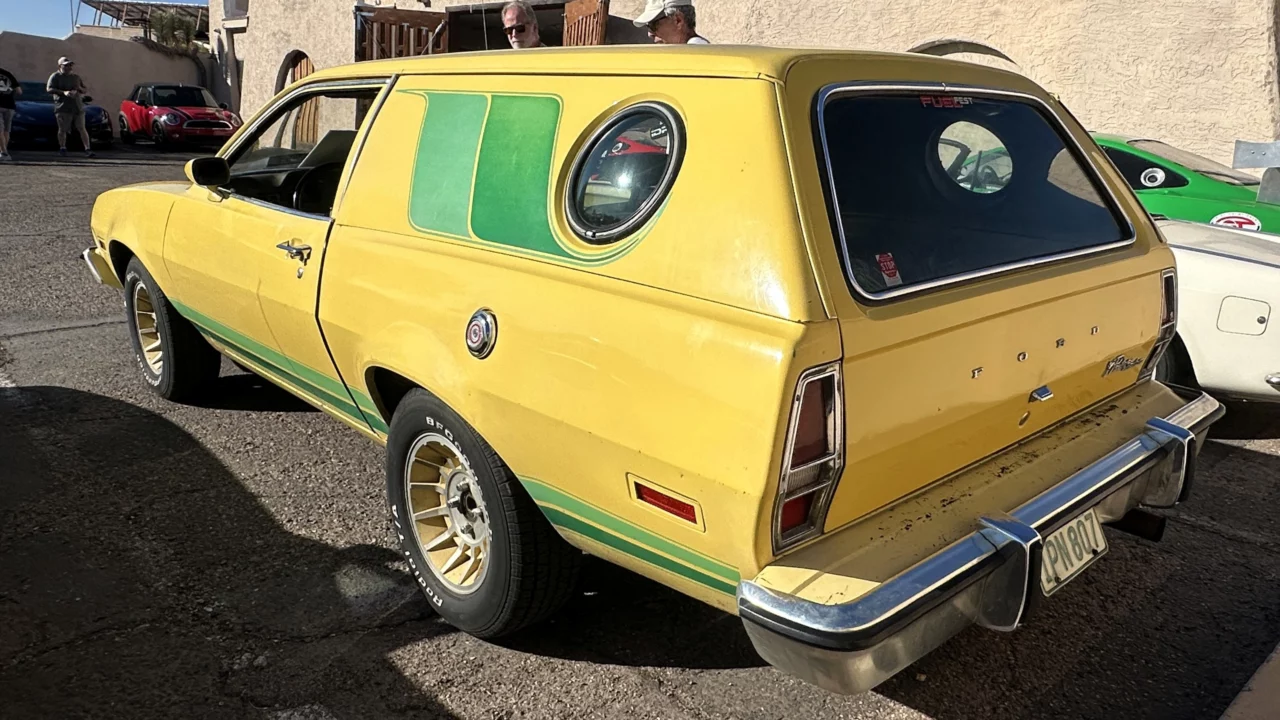
The owner of the Pinto you see here had a Marti report on display which offered some valuable information about the car: It was manufactured in January 18, 1977 in San Jose in Bright Yellow (code 6E) over Light Green cloth/vinyl low-back bucket seats (code G). There were just 32 cars produced for the year with those paint and trim codes. Features included A70x13 raised-white-letter tires, power steering, power disc brakes, Bumper Protection Group, Interior Decor Group, and front license plate bracket.
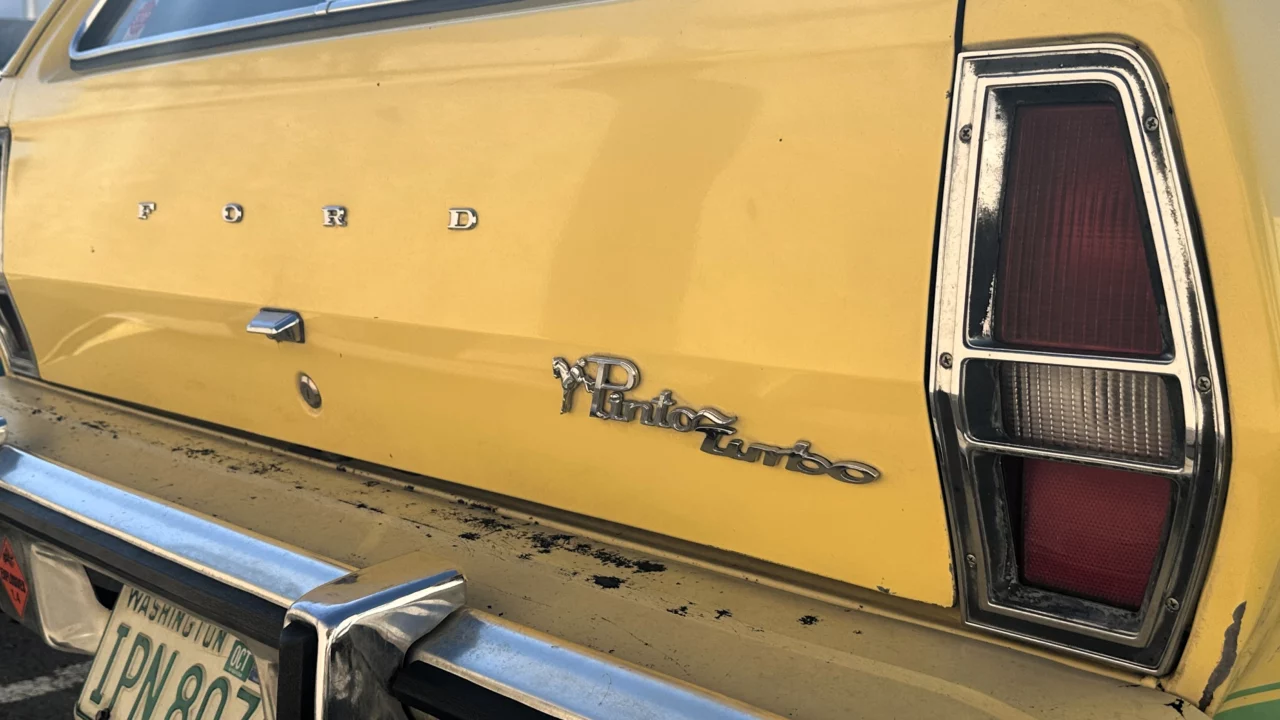
The car’s retail sale took place at Valley Ford Sales of Yakima, Washington on April 27, 1977. Despite being currently located in Arizona, the car was wearing period-correct Washington license plates.
The exterior featured chrome bumpers, fog lamps, custom hood scoop, color-matched side mirrors, and two-tone green accent striping. Even the mag aluminum wheels had yellow accents in the inserts. In place of the standard rear side windows were distinctive round “porthole” bubble-style windows. These were a key feature of the Cruising Wagon, a special edition of the Pinto inspired by the custom van craze that was produced for just a few model years toward the end of the car’s lifespan.
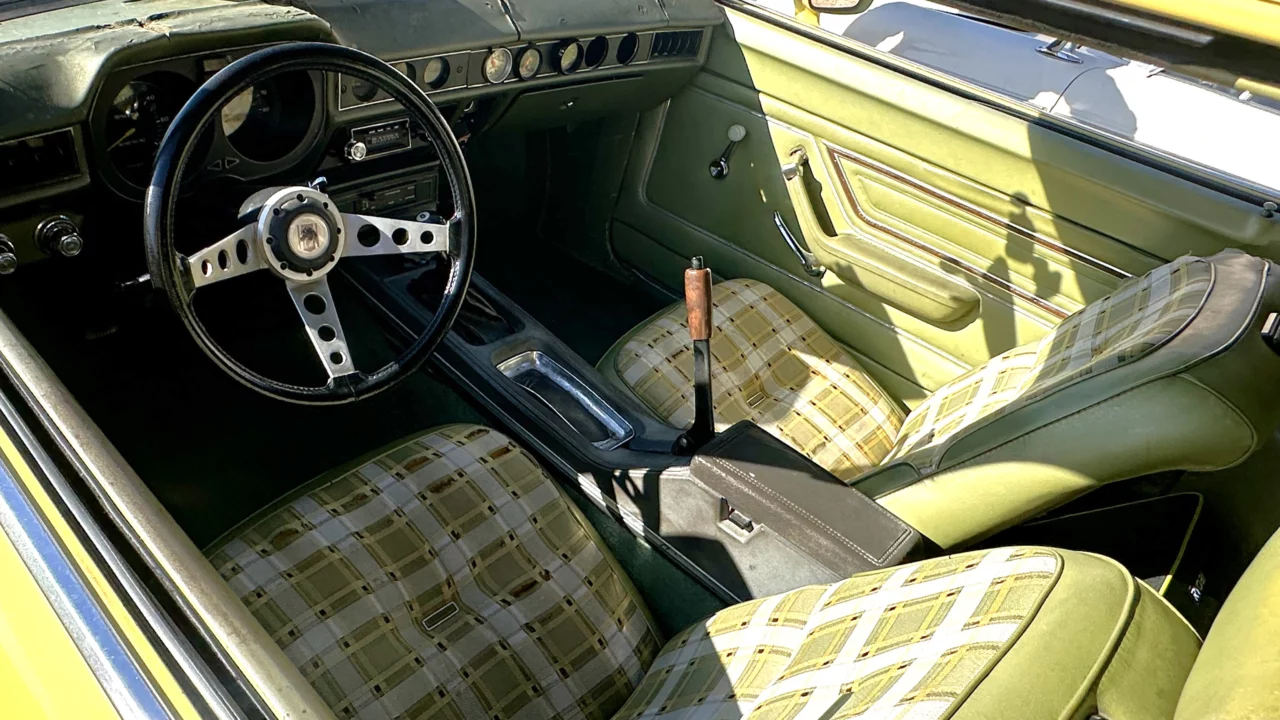
The interior was as eye-catching as the body, featuring plaid light green bucket seats, center console, radio, manual-crank windows, and three-spoke steering wheel. Take a look at the gearshift — this didn’t look like a traditional T-handle automatic shifter. According to the Marti report, the car was originally assembled with a 2.3-liter inline-four mated to a C3 three-speed automatic transmission. Based on the add-on “Turbo” badge on the tailgate, hood scoop, and manual transmission shift lever, it’s clear the car received a number of performance upgrades at some point.
In a world of supercars and muscle cars, the Bright Yellow Ford Pinto stood out with a unique identity. In fact, it garnered more comments from attendees than the Dodge Viper GTS parked a couple spots away. Bravo to the owner for preserving such a fun piece of automotive history.