The Volkswagen “Type 2” Bus, first entering production in 1949, was so much more than just a mode of transportation. It was (and remains) a pop-culture icon. Highly customizable and instantly-recognizable, it was known for a simple utilitarian design, airy interior, and fun-loving “hippie” vibes.
Volkswagen even drew inspiration from the vintage Type 2 for a modern, fully-electric successor called the Volkswagen ID. Buzz. In the U.S., it had been discontinued for 2026, but it will be back for 2027.
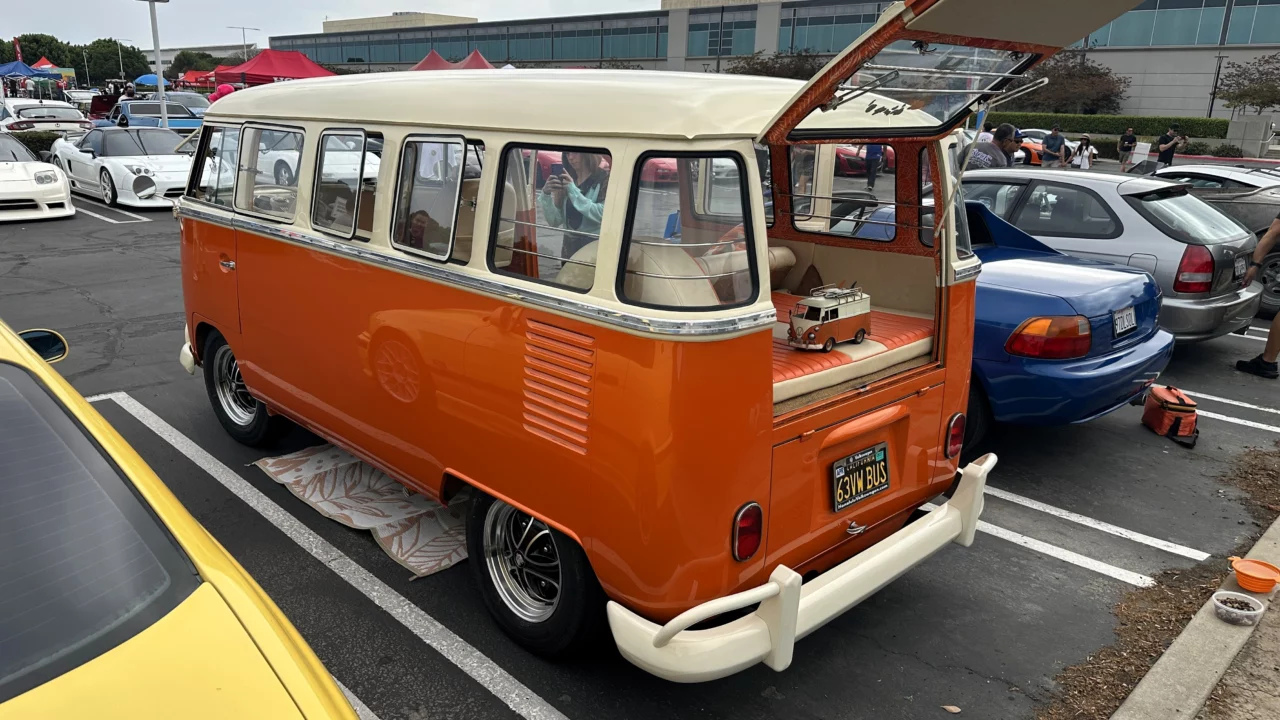
On display at a recent car show was an eye-catching, two-tone orange and cream-colored 1963 Bus with all the right ingredients for a drive down the California coast.
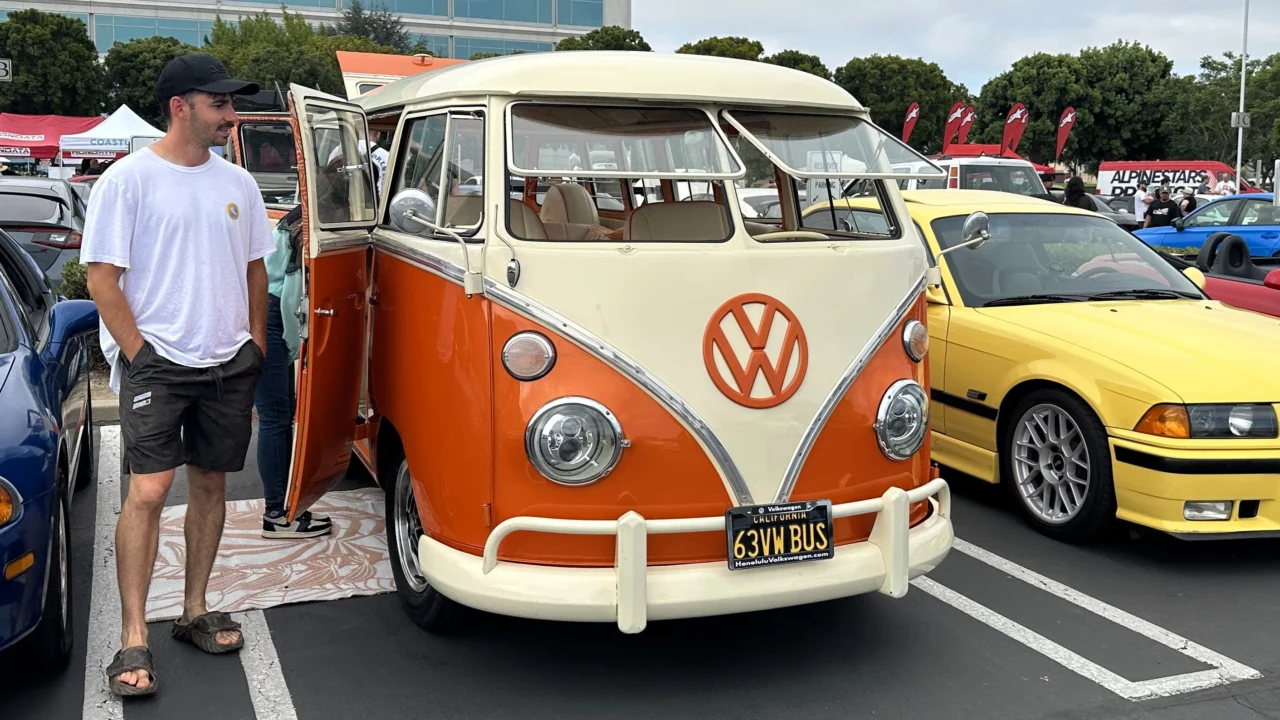
Exterior features included a predominant VW nose emblem, cream-colored bumpers with overriders, split fold-out windshield, dual side mirrors, body side moldings, and modern aftermarket wheels. I noticed that the license plate frames said Honolulu Volkswagen, a nod to the Bus’ notoriety as a popular ride for beach-goers and surfers.
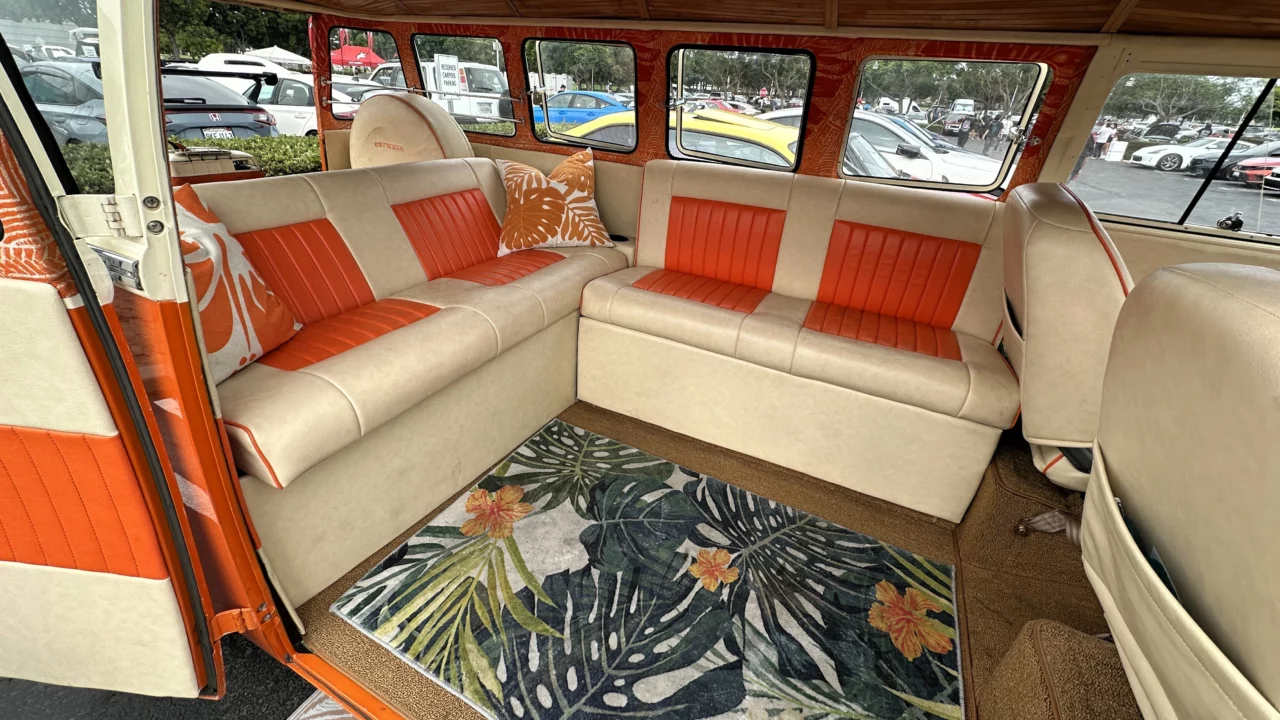
The interior continued the same color theme with vinyl bench-seat upholstery in a configuration that looked somewhat like a living room. There were even a couple of throw pillows and a rug added for a “home-y” sense of style.
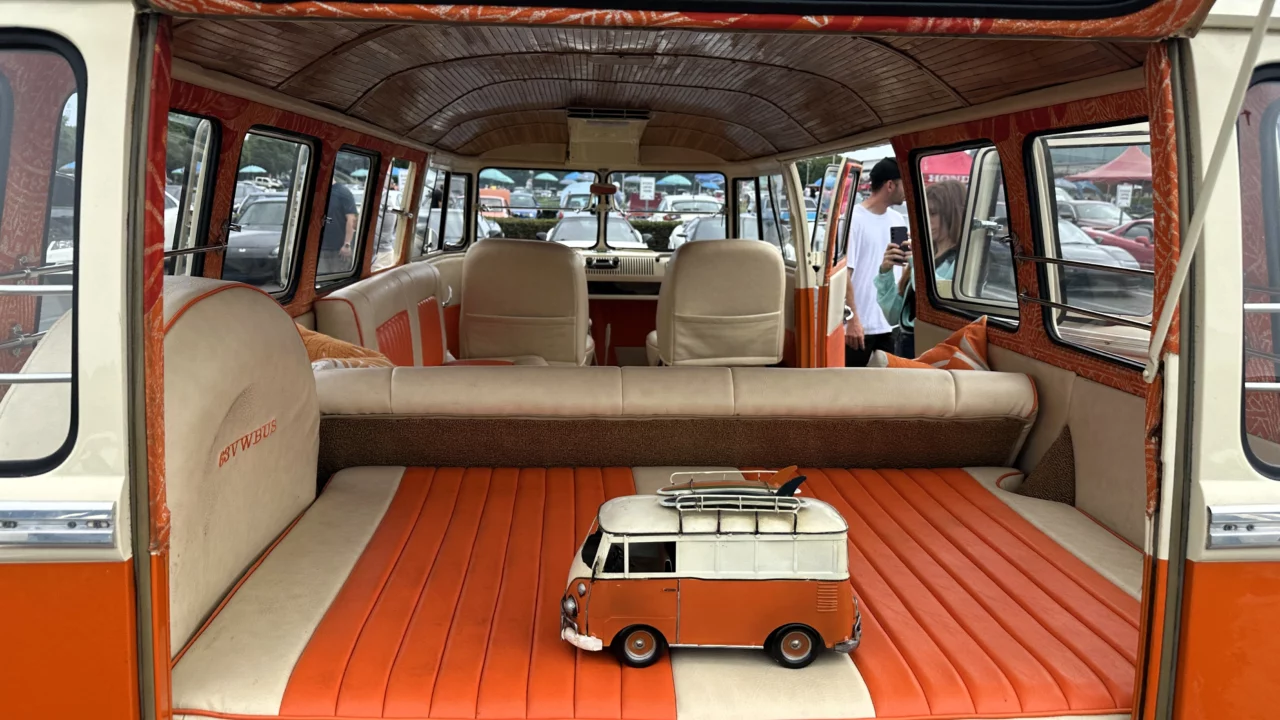
Out back, check out the matching, scaled-down diecast version of the Bus sitting inside the cargo compartment. And at the opposite end, for the driver and front passenger, amenities were spartan at best: banjo-style steering wheel, radio, and clock were the extent of the creature comforts.
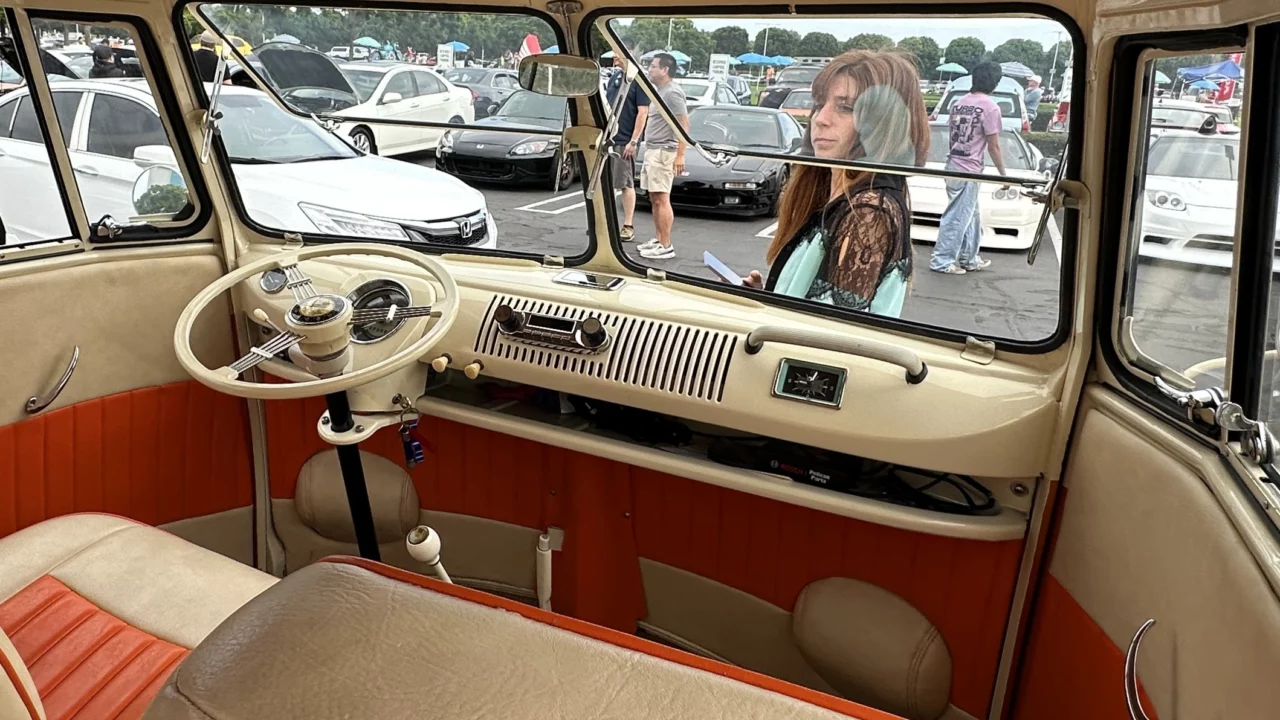
While the Type 2 was strong in fun and fashion, it was more of an economy vehicle that a speed demon. Power came from a rear-mounted, 50-horsepower (!) 1,493cc, air-cooled, horizontally-opposed flat-four. A four-speed manual transmission sends power to the rear wheels.
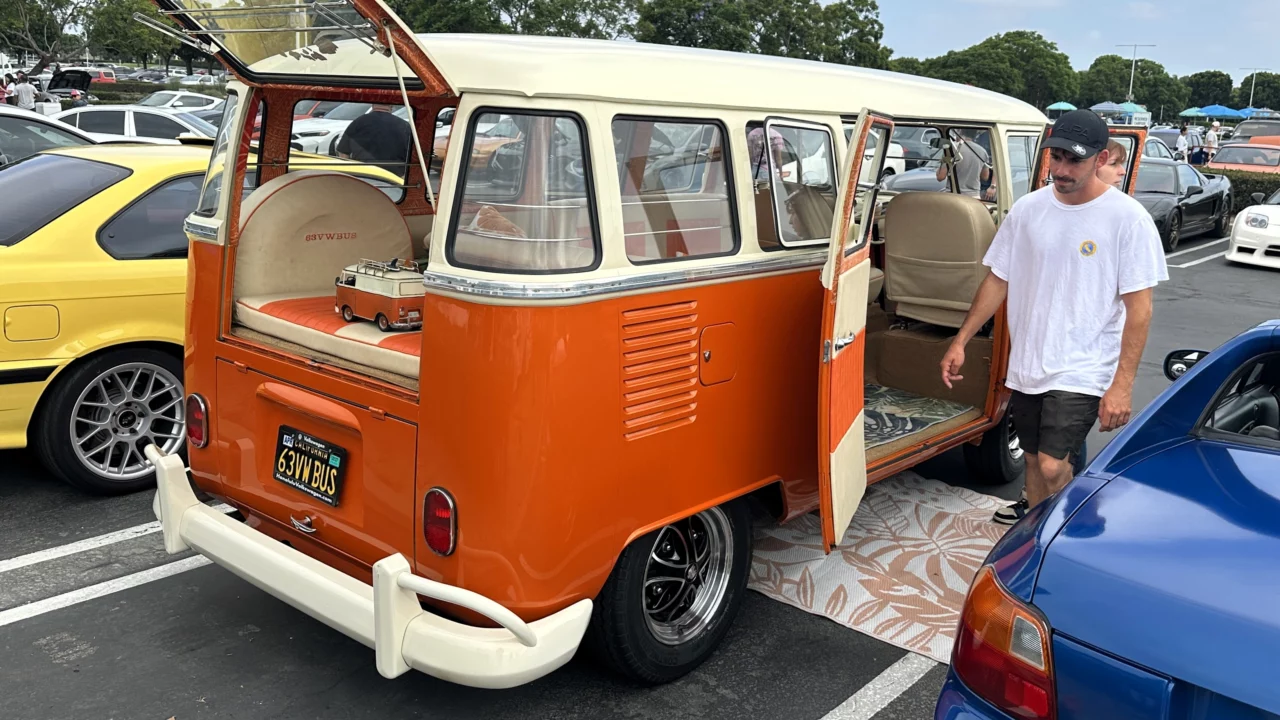
It’s been 76 years since the introduction of the Volkswagen Type 2 forever changed the automotive landscape, and its legacy lives on in nicely-restored example like this one. What’s your take on the original Bus’ reincarnation as the all-electric ID. Buzz?