On last week’s “Settle The Debate, we discussed which TV family had the more interesting vehicle: The Munsters or The Beverly Hillbillies. This week, Election Day has inspired me to ask for your vote on something else. In the late 1960s and early 1970s, there were a handful of muscle cars offered with stripes, spoilers, and and sometimes bright colors. Who did it the best? It’s up to you to make your voice heard!
1969 Pontiac GTO Judge — Powered by a standard 366-horsepower 400ci Ram Air V-8 (aka “Ram Air III”) mated to a standard three-speed manual transmission, this GTO with signature Carousel Red paint evokes nostalgia to all that cross its path. The loud-and-proud psychedelic exterior is paired nicely with a black grille, rear spoiler, and groovy multi-color graphics. When the 1969 model year was over, only 6,833 were produced, including 108 convertibles, then continued into 1970 largely intact before receiving a new 455 for 1971. As a car that was originally advertised as a muscle car full of surprises, the Judge cemented its place as one of the most recognizable and sought-after muscle cars from the era.
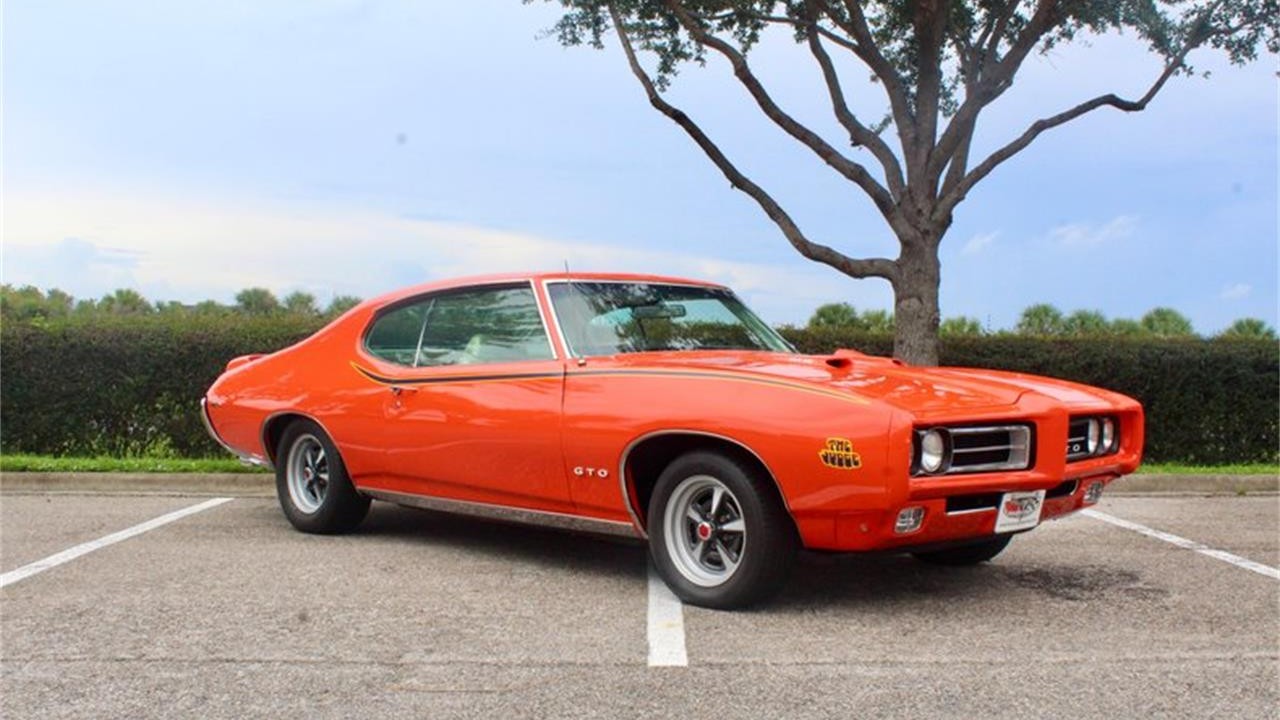 Click the above image to view this 1969 Pontiac GTO Judge for sale on ClassicCars.com
1969 Pontiac Trans Am — Introduced as “Pontiac’s new pony express,” the Trans Am was originally a special package meant to commemorate Pontiac’s entry in the SCCA series. While the rulebook limited an engine no larger than five liters, this Firebird halo car came with a 400 — the same that was standard for the GTO Judge though rated at 335 horsepower and 430 lb-ft of torque. Fifty-five people upgraded their Trans Am with the optional 345-horsepower 400ci Ram Air IV for a bit more gallop. Offered with power front disc brakes, power steering, upgraded suspension, air extractors, full-length blue stripes, and rear spoiler, Pontiac built just 697 Firebird Trans Ams (including eight convertibles) for the 1969 model year. For a vehicle that would eventually be known for the “Screaming Chicken” and a certain 1970s movie, the white with blue stripes feels understated.
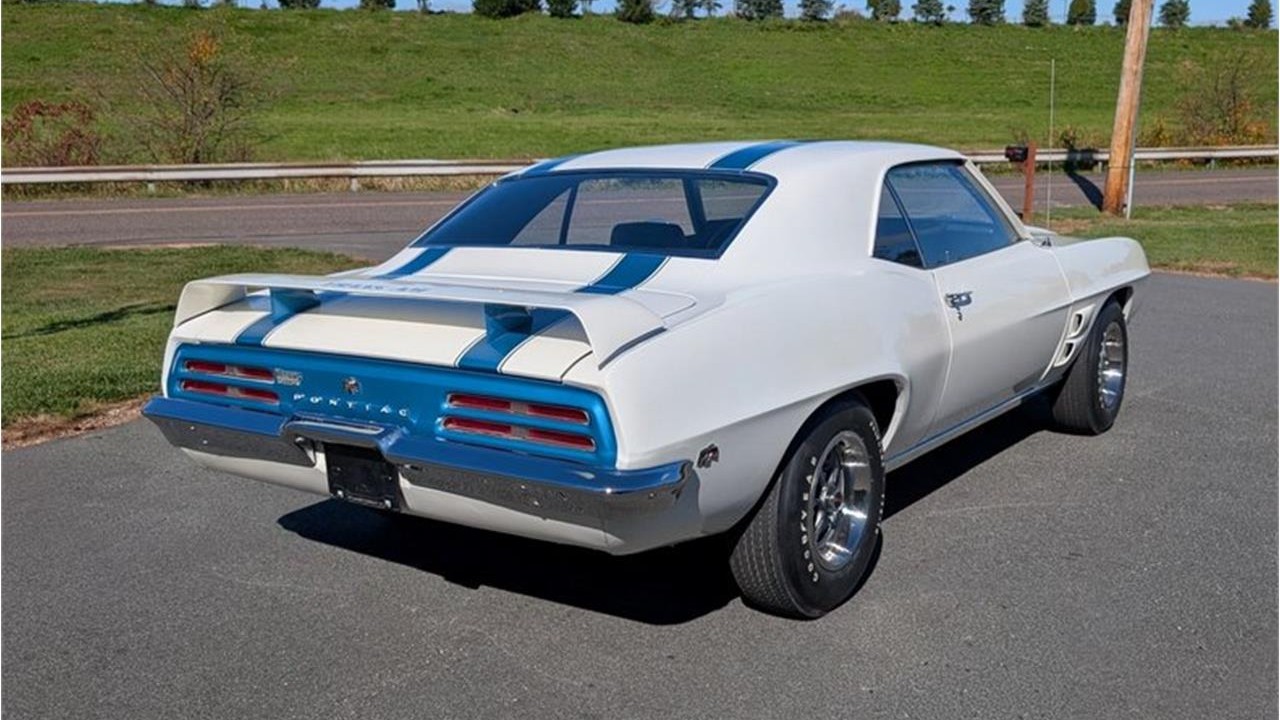 Click the above image to view this 1969 Pontiac Firebird Trans Am for sale on ClassicCars.com
1969 Hurst/Olds — When Hurst Performance Research and Oldsmobile continued building the limited-production Hurst/Olds for 1969, it was offered in a boisterous Cameo White with Hurst Fire Frost Gold stripes instead of the subdued silver and black from ’68. This modified 4-4-2 Holiday Coupe came with a 380 horsepower 455ci V-8 mated to a Hurst Dual/Gate-shifted Turbo Hydra-matic automatic. It also came equipped with a air-induction system with “mailbox” hood scoops, rear spoiler, and a limited-slip differential with 3.42 gears. Only 906 Hurst/Olds were built, though Hurst converted three convertibles for promotional use.
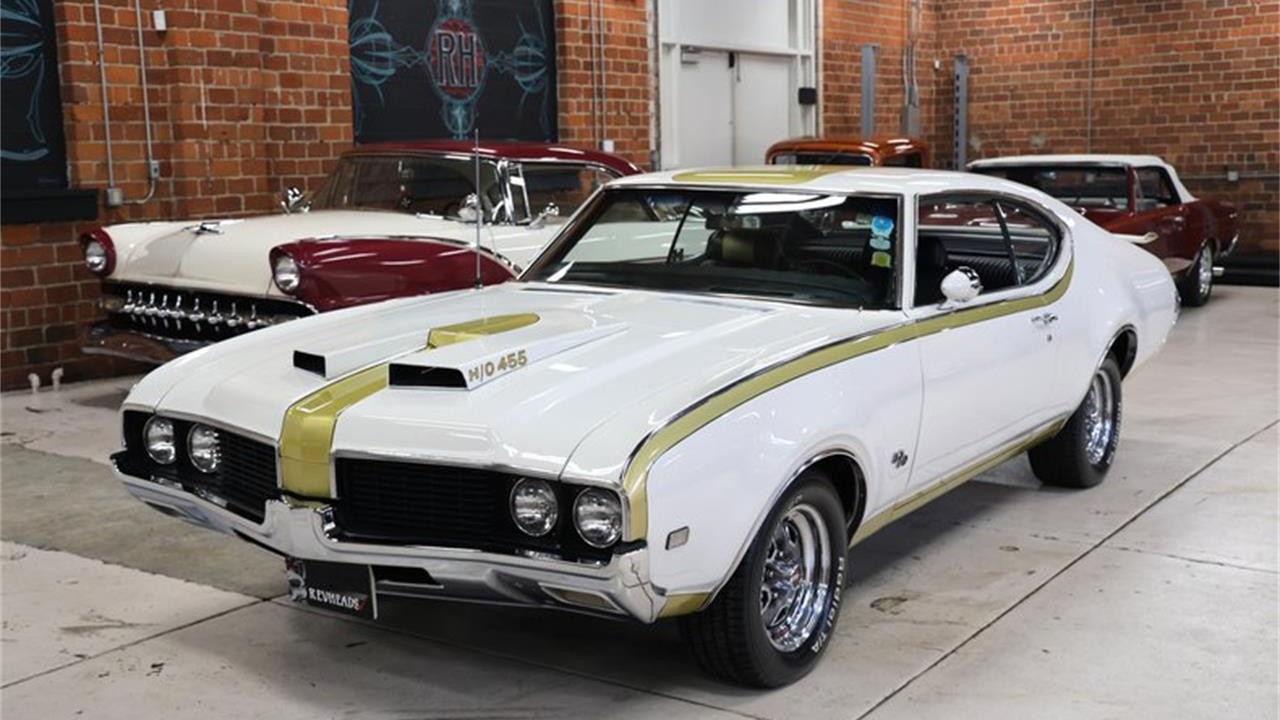 Click the above image to view this 1969 Hurst/Olds for sale on ClassicCars.com
1969 Mercury Cougar Eliminator — Mercury began Cougar Eliminator production in the spring of 1969, along with the mid-size Cyclone Spoiler. The first Eliminator was a SOHC 427 funny car driven by drag racing legend “Dyno” Don Nicholson. When the Eliminator package officially entered production, the standard engine was the new 351 Windsor V-8 (290 horsepower with a four-barrel), with 320-horse 390-4V, 428 Cobra Jet, and Boss 302 engines the only options available; if you wanted to make the standard hood scoop functional, you could only for the the 428. Also limited were the colors: White, Yellow, Competition Orange, or Bright Blue. For 1969, Mercury built 2,250 Eliminators, then continued it into 1970 with typical model-year changes though arguably a tougher look.
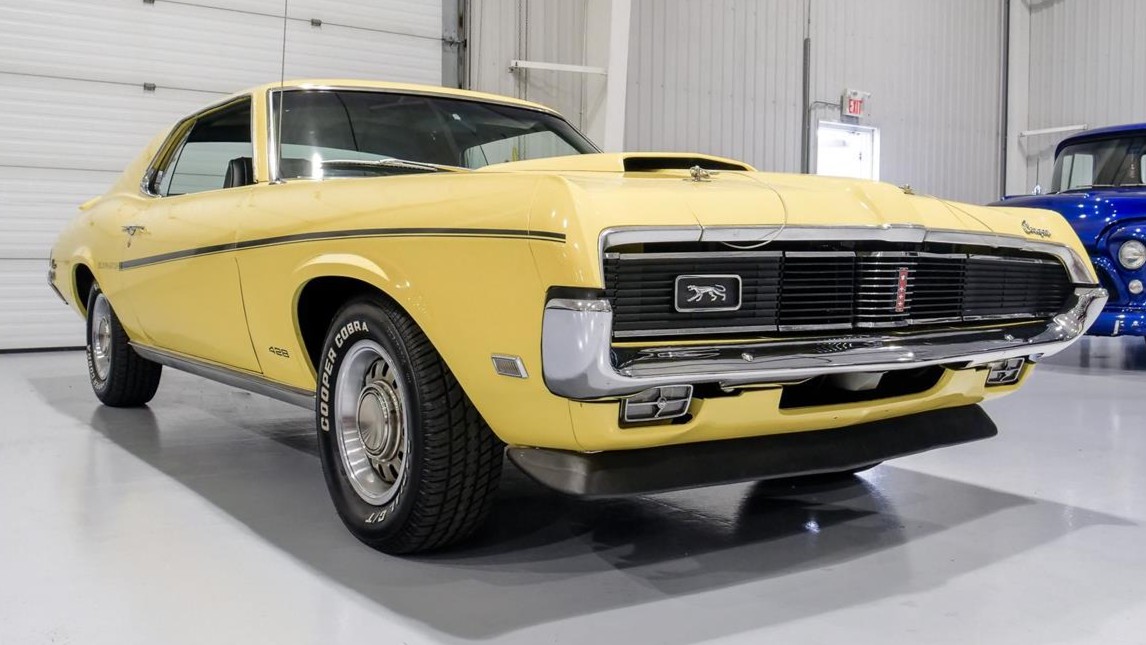 Click the above image to view this 1969 Mercury Cougar Eliminator for sale on ClassicCars.com
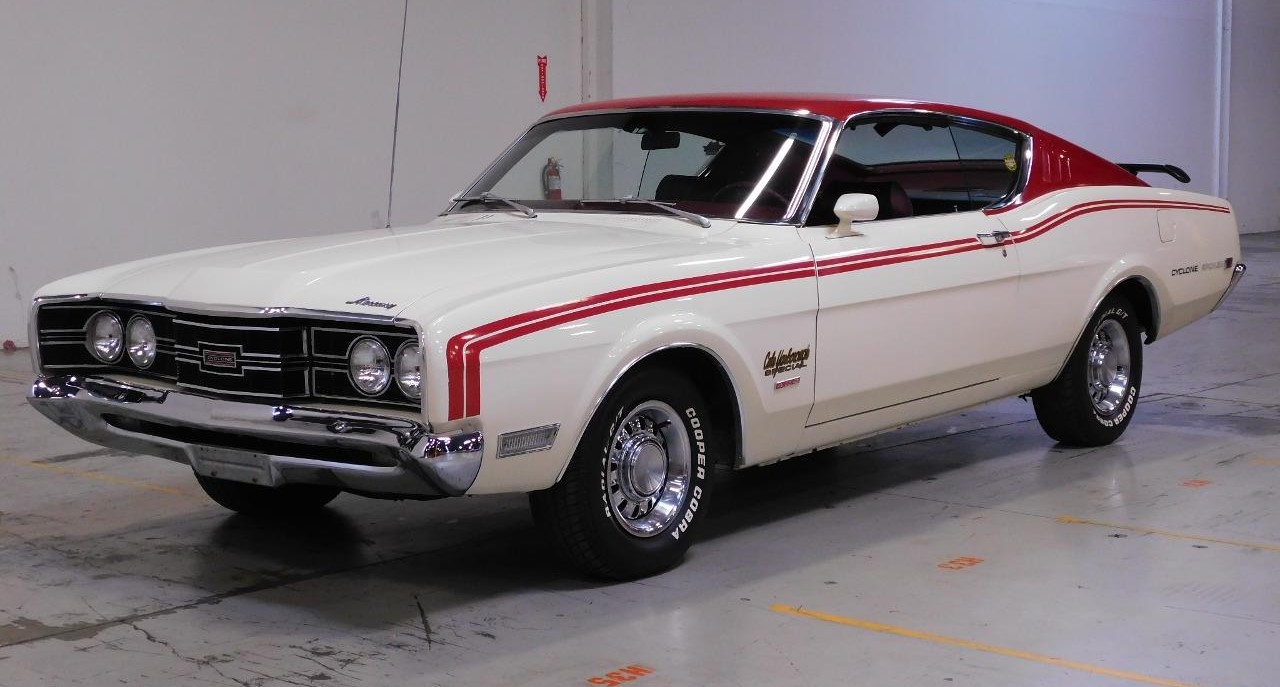
1969 Mercury Cyclone Spoiler — Like the Eliminator, the Spoiler was a package based on a regular model, in this case the Cyclone. Unlike the base Cyclone, the Spoiler package upgraded the standard engine to the 351-4V, with the 390 and two 428 Cobra Jets as options. There were two Spoilers available: one a homage to Cale Yarborough (white/red), the other to Dan Gurney (white/blue). There also was an aerodynamic version to homologate for NASCAR; called the Spoiler Sports Special (sometimes “Spoiler II”), it was only available with the 351. The Spoiler returned as an official model for the redesigned ’70s, including a standard 429 Cobra Jet, though the ’71 received a 351 Cleveland standard.
1970 AMC Rebel “The Machine” — This patriotic muscle car featured a 340-horsepower 390ci V-8 mated to a Hurst-shifted four-speed close-ratio manual. On the outside it includes special reflective racing stripes and a unique hood featuring a bolted-on ram air scoop with an integrated 8,000-rpm tachometer. Initially offered in the white with red, white, and blue stripes, the Rebel Machine eventually became available on all standard Rebel colors though it lacked the side stripes and the hood was blacked-out. AMC built between 1,936 and 2,326 of these two-door hardtops for the 1970 model year, depending on who you ask. Sure, it may lack a spoiler, but the Rebel Machine was created in the same vein as the above vehicles.
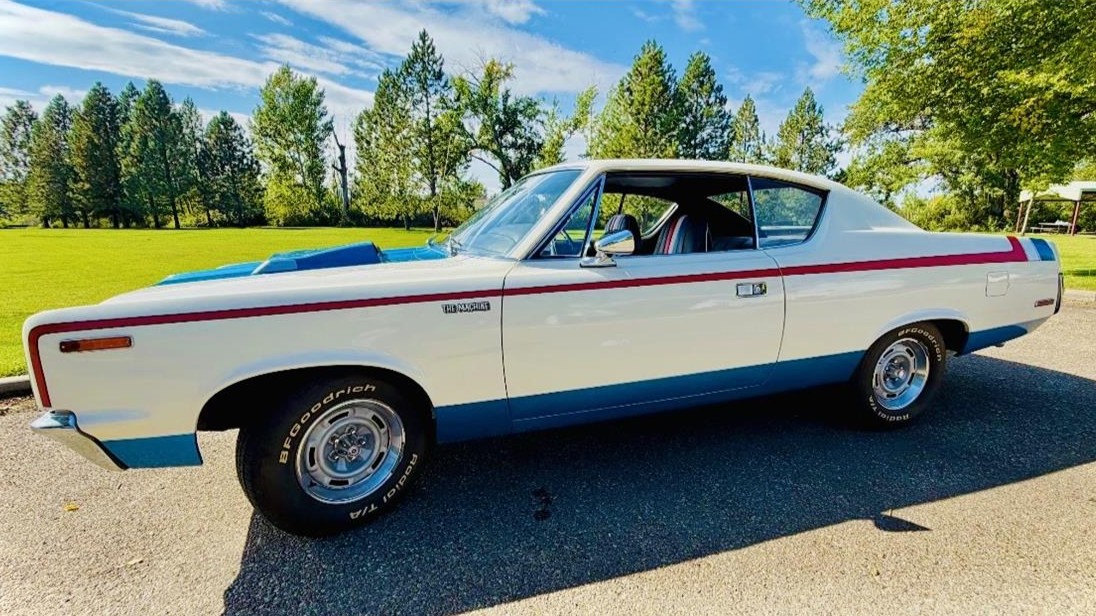 Click the above image above to view this 1970 AMC Rebel “The Machine” for sale on ClassicCars.com
1970 Buick GSX — When Buick first introduced the Gran Sport for the 1965 Skylark, it was powered by a 325-horsepower 401ci V-8. By 1970, Buick had introduced a 455, and it was this GS 455 on which the all-new GSX package was based. This limited-production muscle car came standard with a 350-horsepower 455ci mated to a four-speed manual transmission. If you wanted, you could opt for the Stage 1 455ci V-8. No matter which engine you chose, the GSX came standard with a rear deck spoiler, ram air hood with hood-mounted 8,000-rpm tachometer, stylish graphics, special suspension, and a Positive Traction rear end with 3.64 gears. The automaker from Flint, Michigan built only 678 GSXs: 491 in Saturn Yellow and 187 in Apollo White. The package would continue through 1972 though the standard engine was a 350 starting in 1971.
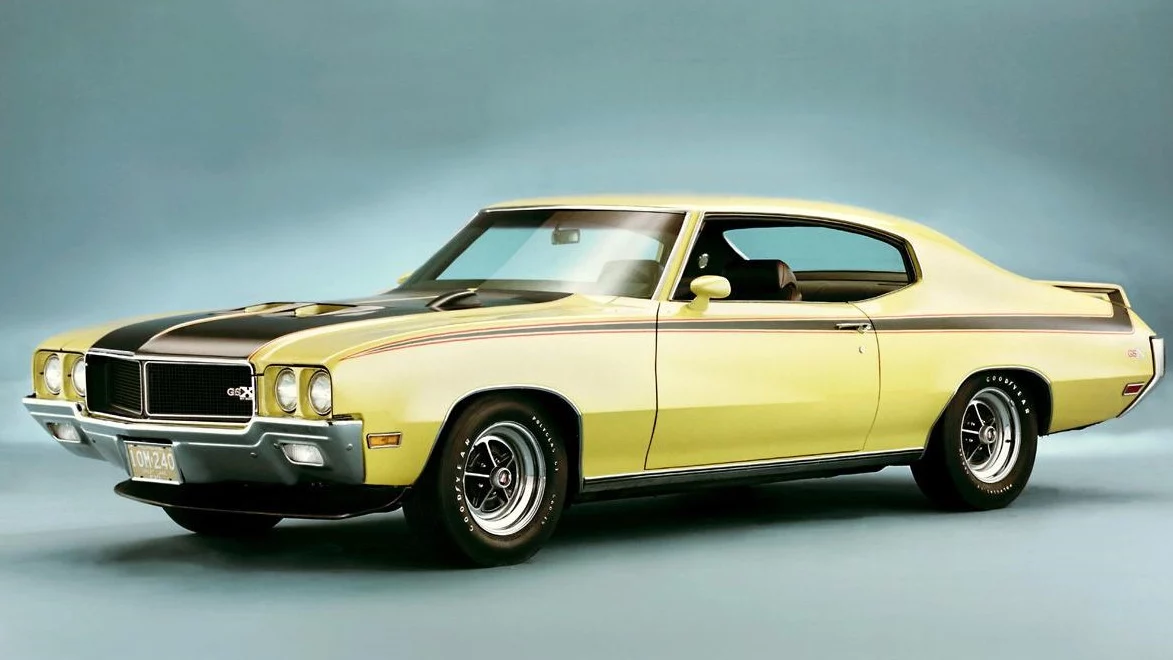
Which striped and spoilered performance car do you think did it best? Tell us in the Comments section below.