I enjoy having my mind blown. Learning something that isn’t on your radar of knowledge is an awesome feeling, no different than being the proverbial Aesop bird discovering that adding pebbles to a bottle will make the water level rise. How can I automotively blow your mind without you turning on? Let’s talk Mercury!
In our contemporary world of silvers, whites, and blacks, it goes without saying that color can make or break the desirability of a vehicle. Certainly, some greens from the 1960s haven’t aged well to modern eyes, but there are plenty of color combinations that may pull you, even if you are not into a particular vehicle. This is how I feel about the 1969-70 Mercury Marauder.
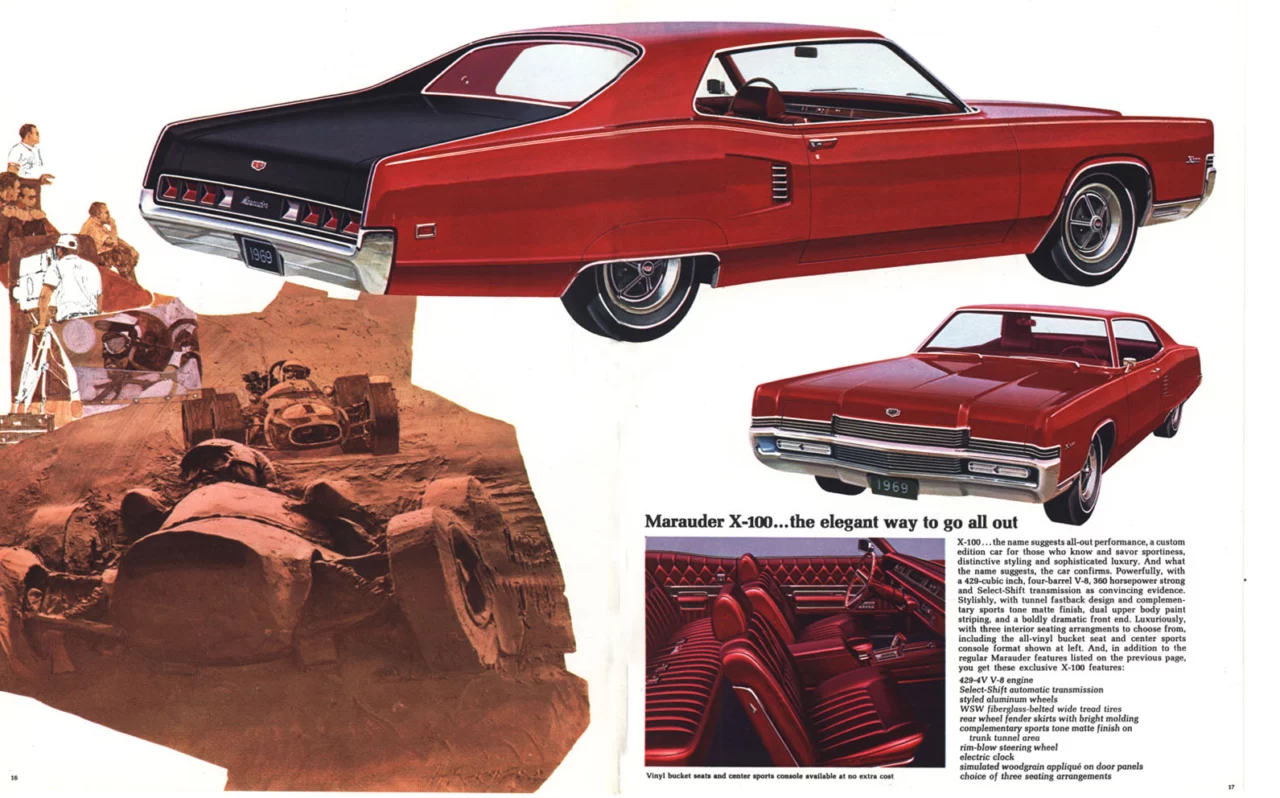
The Marauder was a new full-size series for 1969, sharing a body with the Ford Galaxie 500 and XL SportsRoofs. The Marauder was available in two models: base and X-100. The former featured “sports car style with a luxury look” and included a two-barrel 390, column-shifted three-speed manual, and cloth and vinyl bench seat. The X-100 included a standard 360-horsepower 429 with an automatic transmission, “styled” aluminum wheels, fender skirts, and leather and vinyl bench seat, among other equipment. Most noticeable was the standard “complementary sports tone matte finish” for the “trunk lid, upper back panel, and tunnel area inboard of the moldings.” This paint scheme was available optionally for the regular Marauder.
It’s common to think that the Marauder X-100’s rear two-toning was matte black. This stands to reason, as most promotional pictures feature a red 1969 Marauder X-100 with a matte black finish (interestingly, the matte paint was deleted when equipped with a vinyl top or when specified by the buyer). However, you may be surprised to learn that black was not the only contrasting color available.
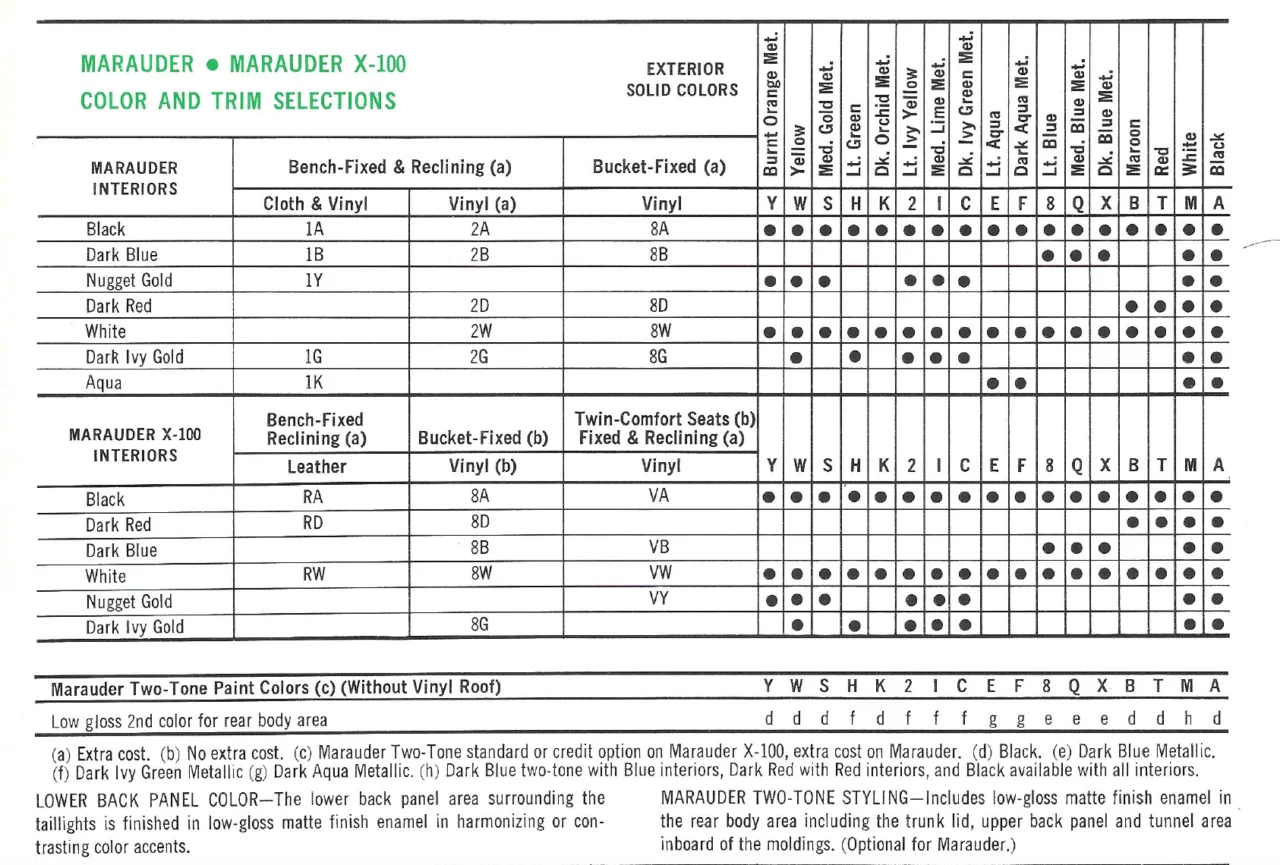
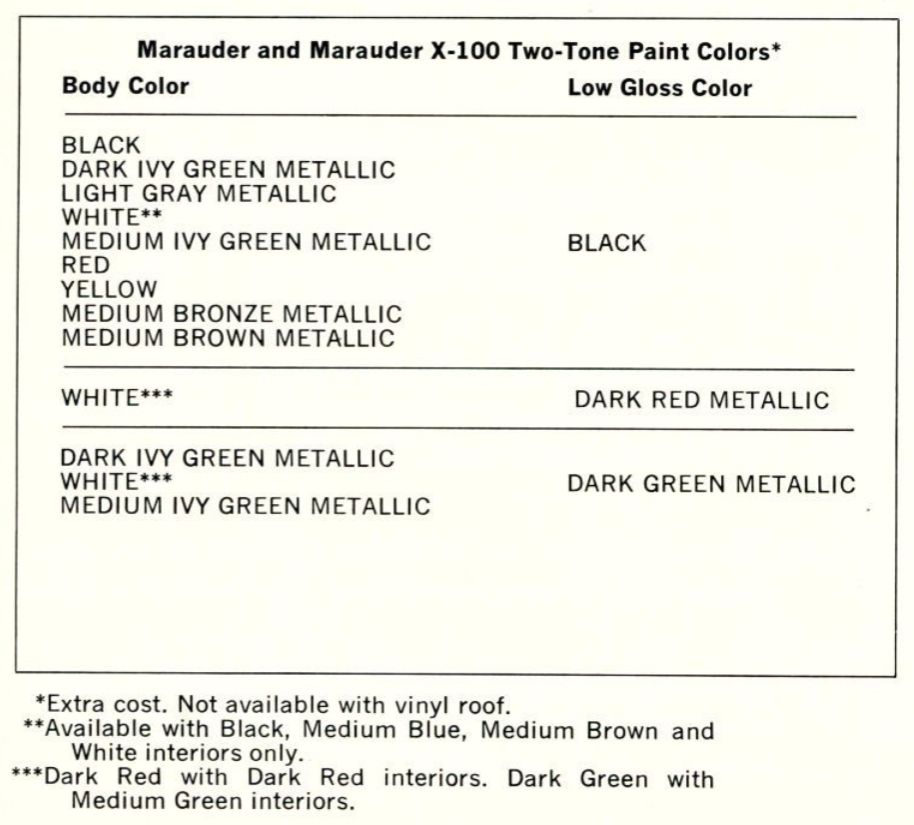
Glance at the above 1969 Mercury dealer item and you’ll notice several matte finish choices depending on the exterior color of the vehicle:
- Black
- Dark Blue
- Dark Ivy Green
- Dark Aqua (click here to view example)
- Dark Red
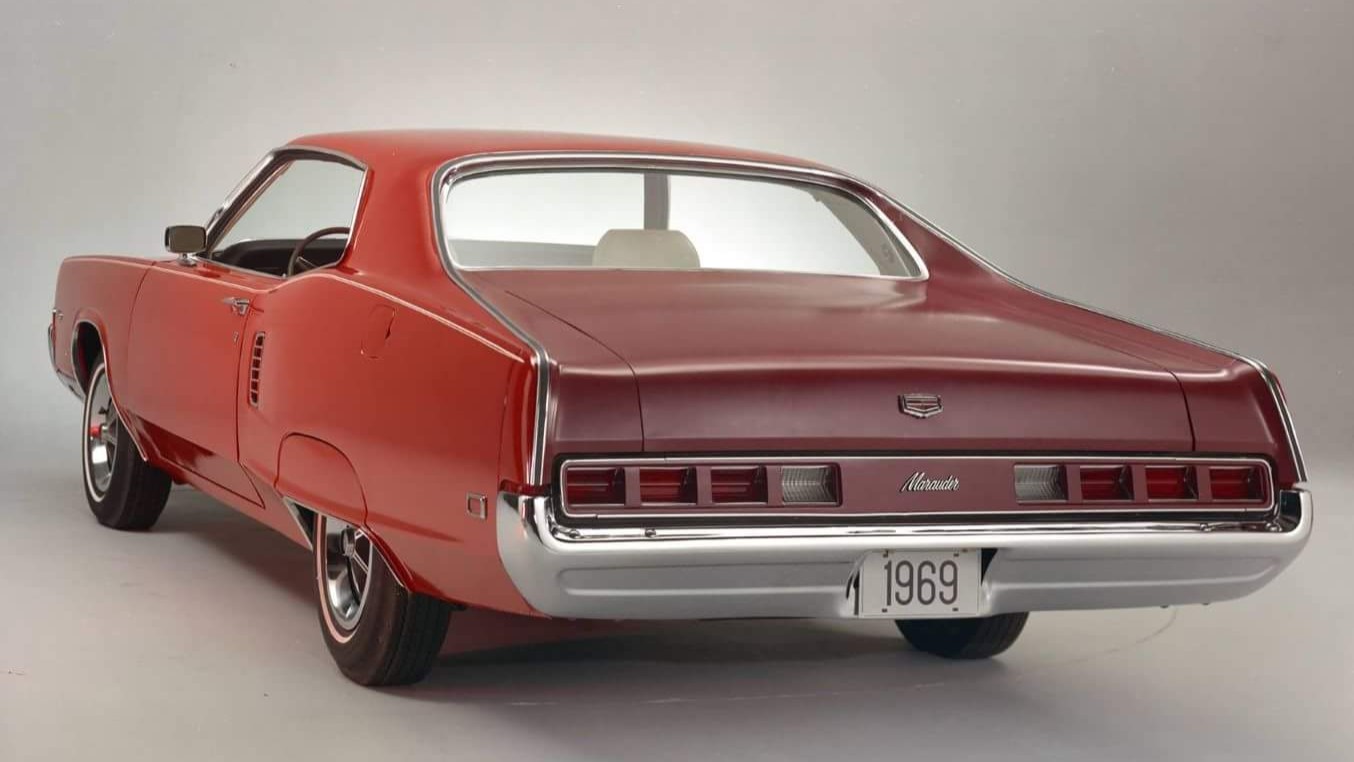 Note that this promo car features matte Red on Red, which was not a suggested combination in the above chart though clearly it works.
For 1970, both the Marauder and Marauder X-100 returned, although the latter model was noticeably decontented — both the low-gloss two-tone paint and styled aluminum wheels were now optional. Possible seating configurations were reduced to two, with the Twin-Comfort Lounge Seats becoming standard and the leather-trimmed bench relegated to history.
Interestingly, the 1969-70 Marauder is not the only sporty Mercury to suffer from what I’ll call “two-tone misinformation,” as most articles I’ve read appear to make the same mistake with the 1970-71 Cyclone GT.
Redesigned for 1970, the Cyclone line was reshuffled and featured three “Action Car” models:
- Cyclone: Replacing the Cyclone CJ as Mercury’s Road Runner-esque performer, the base Cyclone featured a new 360-horsepower 429 standard.
- Cyclone GT: After a small hiatus, the GT returned as a full-fledged model, now as Mercury’s sophisticated image car. Standard was a two-barrel 351.
- Cyclone Spoiler: After a mid-year introduction for 1969, the Spoiler became a complete performance package replete with a standard 370-horse 429 Cobra Jet and ram air.
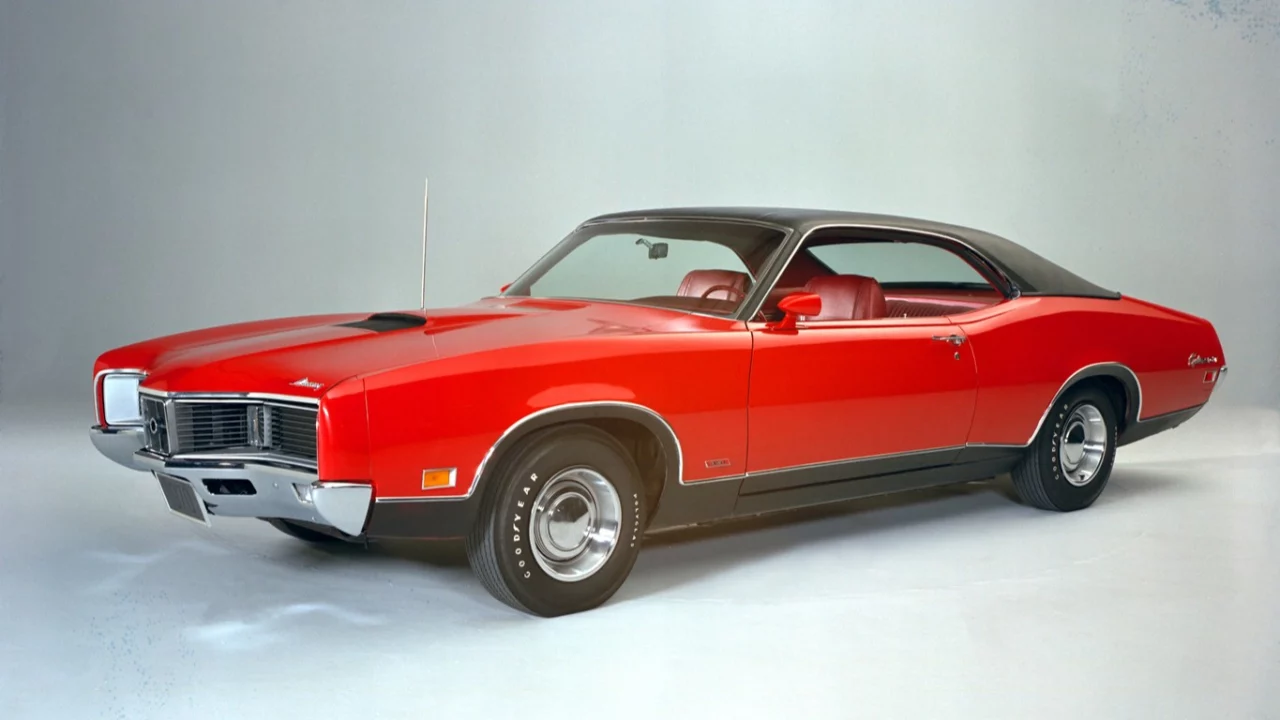 Image courtesy of the Ford Heritage Vault
Promotional pictures show a Cyclone GT complemented by lower-body longitudinal trim with black “tone-on-tone” body side paint. All magazine references I’ve seen, from back-in-the-day articles to later retrospectives and features, mention black two-toning and nothing else.
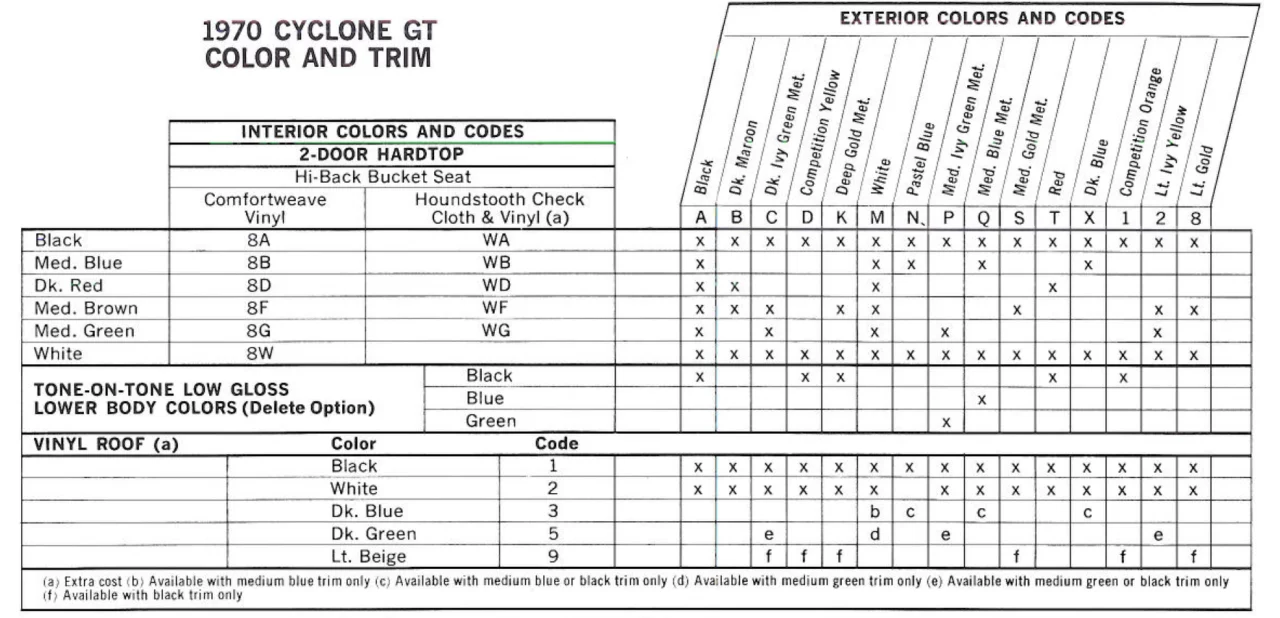
But look at the above dealer item and you’ll find the following information on low-gloss tone-on-tone trim:
- Black: Standard on Black, Competition Yellow, Deep Gold, Red, and Competition Orange Cyclone GTs
- Blue: Standard on Medium Blue Cyclone GTs
- Green: Standard on Ivy Green Cyclone GTs
The above two-toning could be deleted; likewise, the other available colors not mentioned above received the longitudinal trim without contrasting paint.
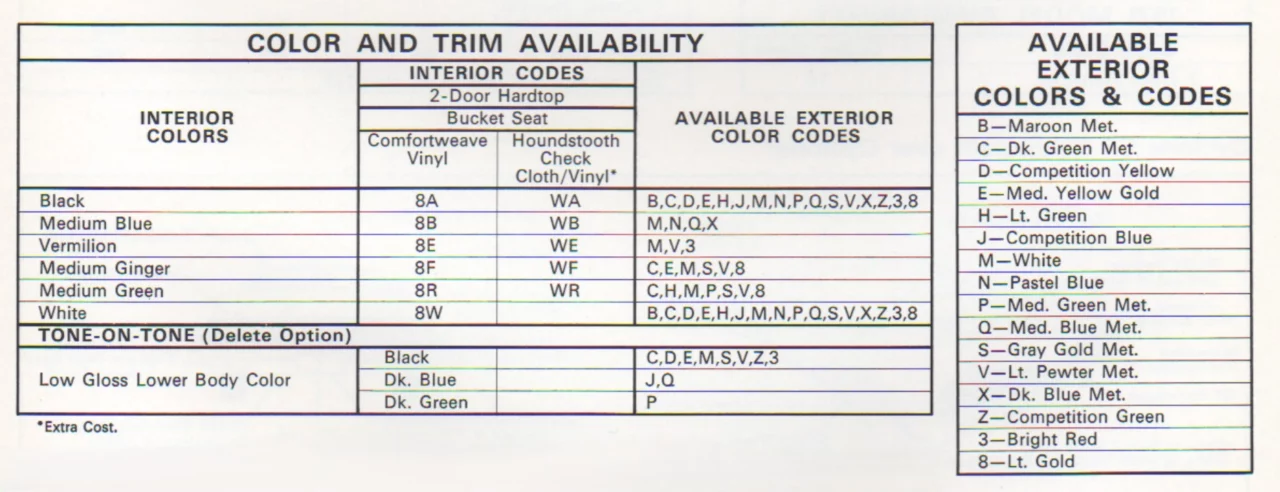
For 1971, the colors were shuffled:
- Black: Standard on Dark Green, Competition Yellow, Medium Yellow Gold, White, Gray Gold, Light Pewter, Competition Green, and Bright Red cars
- Dark Blue: Standard on Competition Blue and Medium Blue cars
- Dark Green: Standard on Medium Green cars
Enthusiasts tend to have a passive interest in colors, often favoring red, black, or (let’s say) Plum Crazy. To me, color means everything, carrying a weight perhaps only surpassed by that of the engine and transmission. With the a la carte order forms back in the day, it’s likely that there were more unique color combinations built — of any car, really — than what we normally see at shows and on the street.