Measuring nearly 230 inches in length and weighing in at 5,200 pounds, the 1969 Imperial LeBaron two-door hardtop was an imposing vehicle that oozed with road presence. After all, it was engineered to go head-to-head against luxury market leaders like Cadillac and Lincoln. Riding on the Chrysler C-platform, it became famous for its smooth torsion-bar suspension, massive trunk space, and overall refinement.
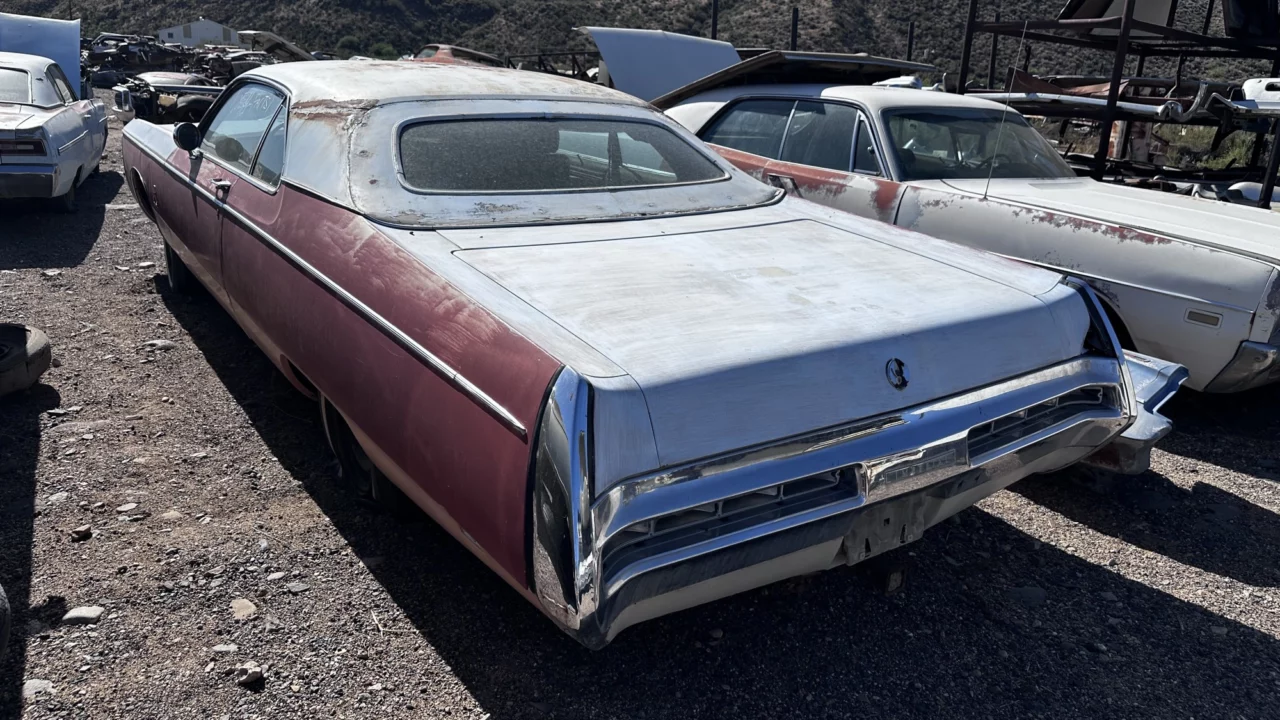
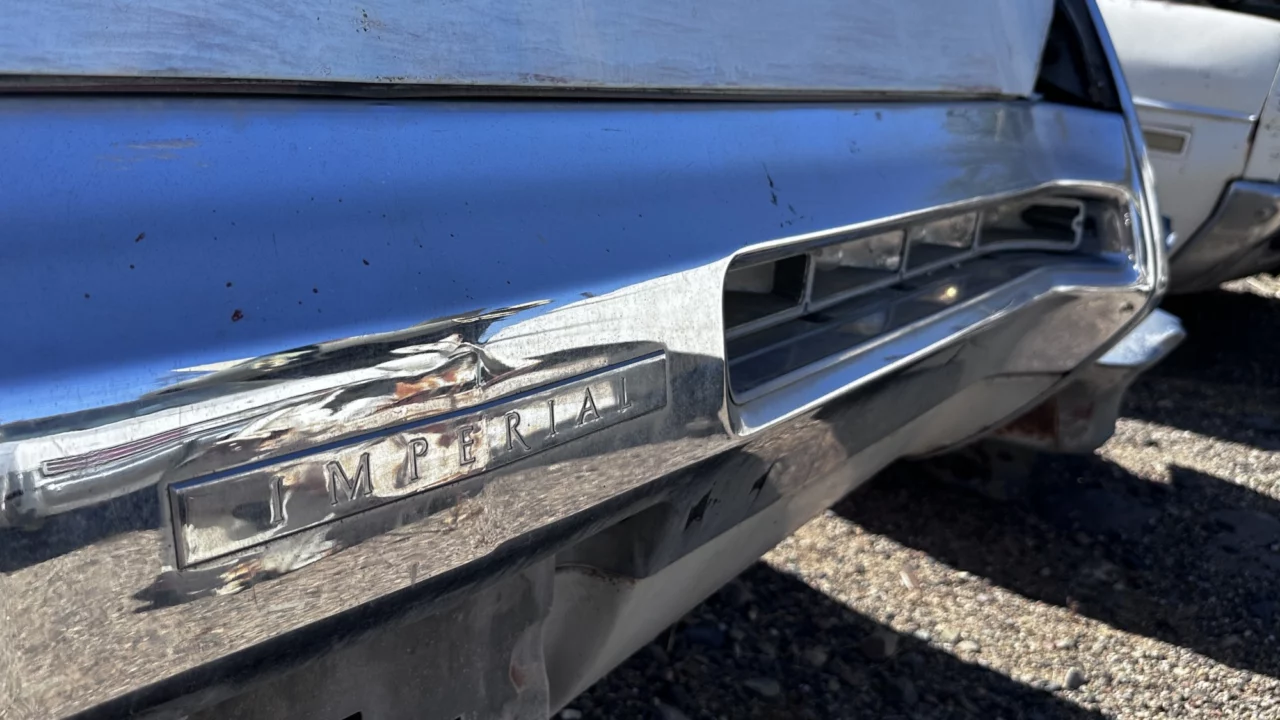
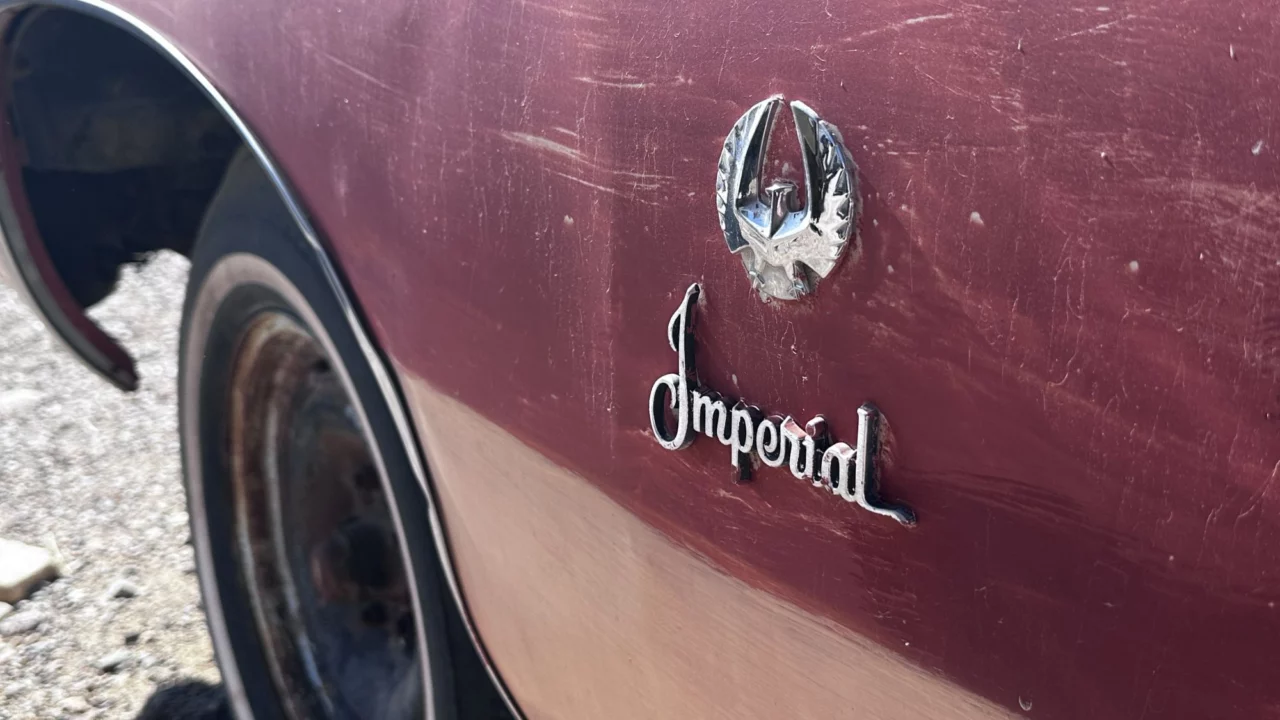
One of the vehicles that stood out to me on a recent visit to Desert Valley Auto Parts was an Imperial two-door hardtop that, despite being sun-baked and put to pasture, still looked like a status symbol even at 57 years old.
The Imperial brand served as Chrysler’s flagship luxury division from 1955 through 1975, then had a brief return from 1981-83 under Lee Iacocca. Starting with the 1969 models, Imperials (and other full-size Chrysler Corporation series) used what became known as “fuselage-style” design.
The DVAP LeBaron appeared to have been repainted (perhaps even with a paint brush, based on the way the patina looked) in two-tone red and white. The sleek front end had a full-width grille with hideaway headlights, and features included chrome bumpers, body side moldings, and driver-side mirror.
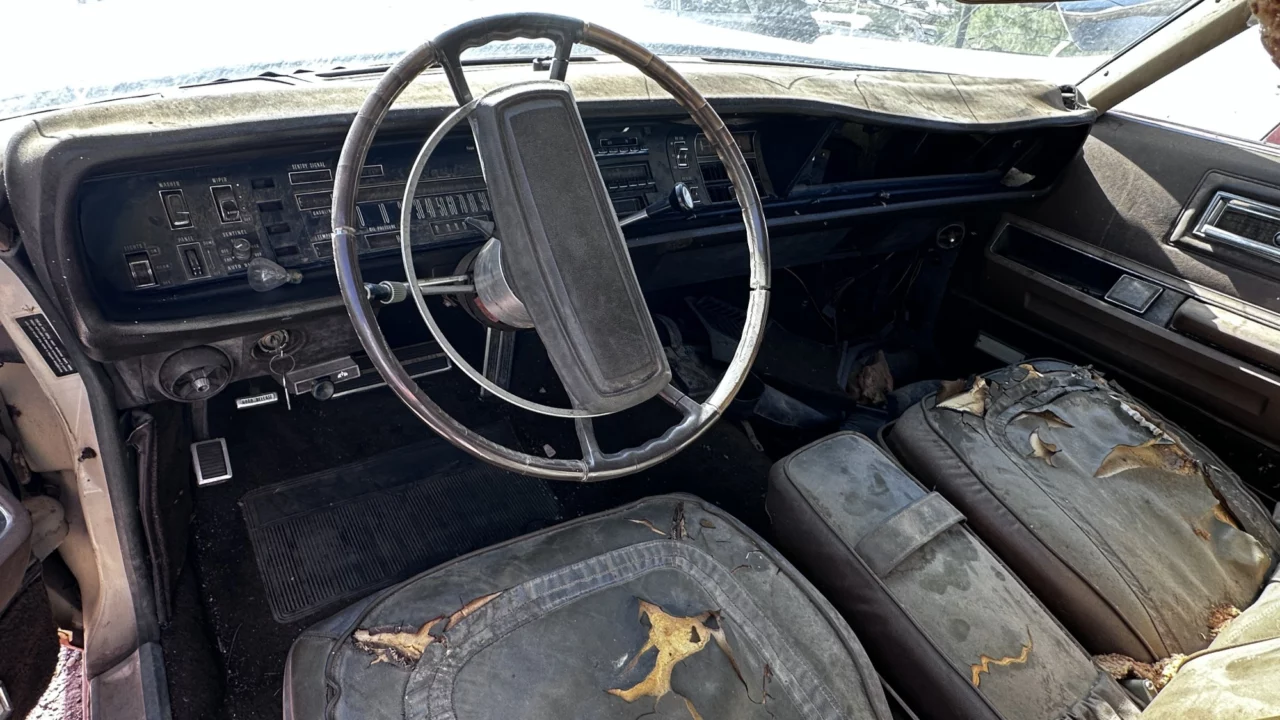
The interior had some thoughtful touches for its time. I liked how the instrument panel sat at an angle for visibility and reach. Amenities included power windows, power seat, and power steering.
Did you know? Imperial was ahead of its time with climate control, as some cars came equipped with separate heating and air conditioning units for the front and rear compartments. Think of it as early “dual-zone” climate control. Also, when equipped with bucket seats, the passenger seat could recline to just about any degree. Incidentally, I didn’t notice until going through my pictures, but the key was still dangling from the ignition in the photo above.
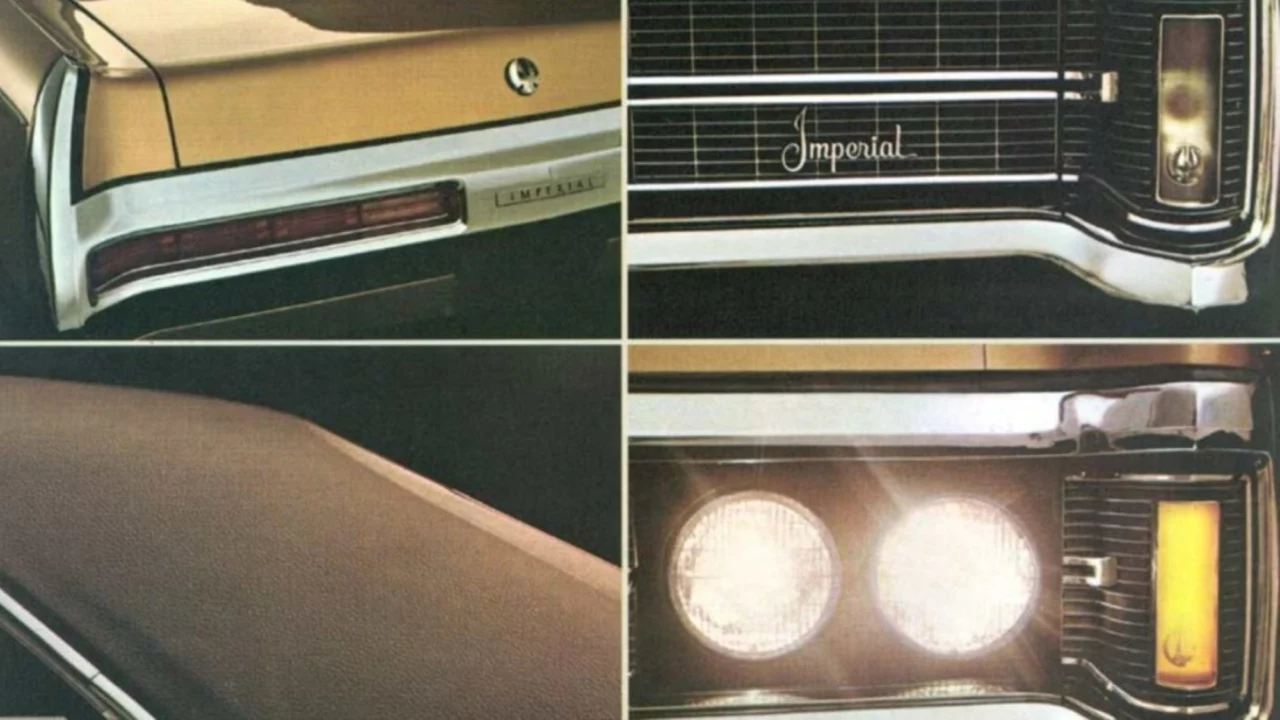
It took a beefy engine to move a 5,000-pound luxo-car. A magazine ad said, “You should know that we’ve equipped Imperial with the largest passenger-car engine Chrysler has ever built.” Under the hood was a 440ci V-8 that was rated at 350 horsepower. A Torqueflite 727 three-speed automatic transmission sent power to the rear wheels.
Given its size and heft, driving a 1960s LeBaron takes some getting used to, especially when compared to the driving dynamics of newer cars. Casey Wright from Out Motorsports said, “The steering is massively over-boosted and numb, the brakes equally so. It’s impossible to parallel park. Driving the Chrysler C-body is like waltzing. You find the groove and follow the Imperial’s pace.”
Even though its engine had already been harvested (the front end had “No Motor” written on the leading edge), the DVAP car was otherwise complete and looked like it could make a relatively straightforward restoration candidate. Just don’t try to park one downtown in one of those “compact” spaces.