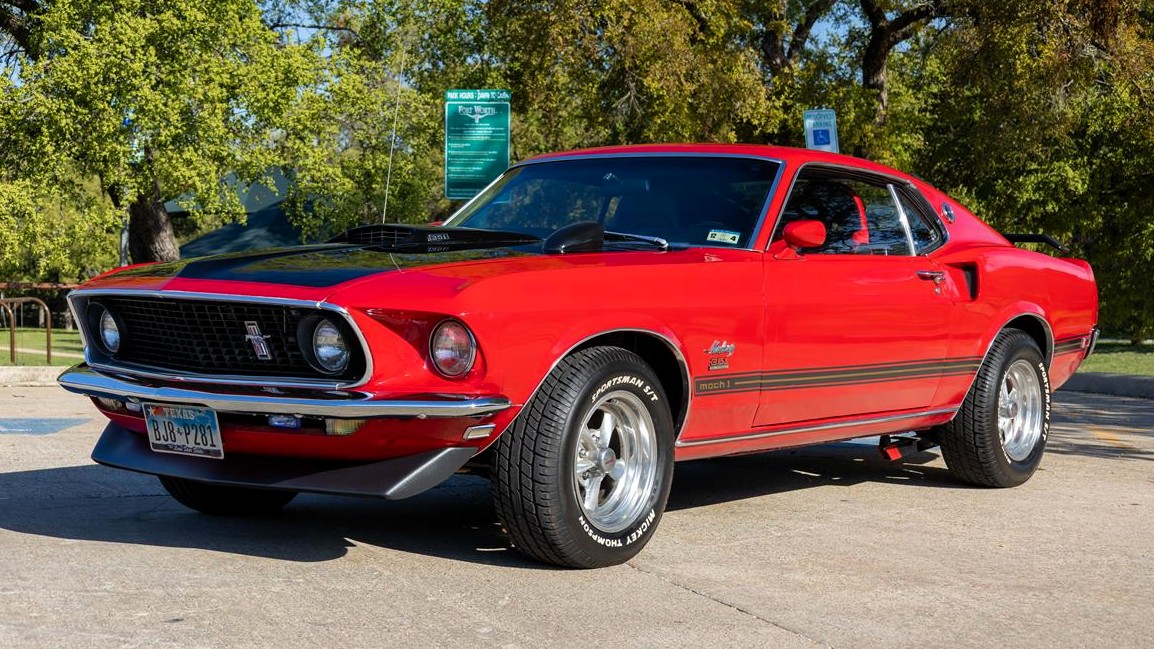
Ford’s performance image on the racetrack was beyond reproach in the Total Performance years, but its image on the street left a lot to be desired. Ford introduced our Pick of the Day to improve its standing with the performance crowd, but it suffered from a quirk particular to the marque that no other brand had. This 1969 Ford Mustang Mach I SportsRoof is listed for sale on ClassicCars.com by a private seller in Fort Worth, Texas.
Nineteen sixty-seven was the year that Ford realized it was not competing in the performance market on equal terms with its cross-town rivals. For one thing, the 390 V-8 had trouble keeping up with the 396s, 400s, and 440s available from competitors. Tasca Ford in Rhode Island brought this to Ford’s attention, which resulted in the 428 Cobra Jet that helped improve Ford’s reputation on the street.
Another issue Ford had was the level of engines available to performance enthusiasts. Looking at Chevrolet’s 1967 roster, there was a 302, 275-horsepower 327, a 350, three 396s, and several 427s; over at Ford, there was a Hi-Po 289, a 390, a pair of 427s that Ford seemed to promise but rarely followed through on, and a 428 for the Shelby GT500. These large cubic-inch gaps gave Ford enthusiasts few choices.
A third issue — arguable, admittedly — had to do with how Ford equipped its sporty models. While the 1966 Fairlane GT came standard with the 390-4V, the 1967 version was downgraded to a standard two-barrel 289. This would be common throughout many Ford and Mercury models during the era, including Ford’s biggest image car of the decade: the 1969 Mustang Mach I.
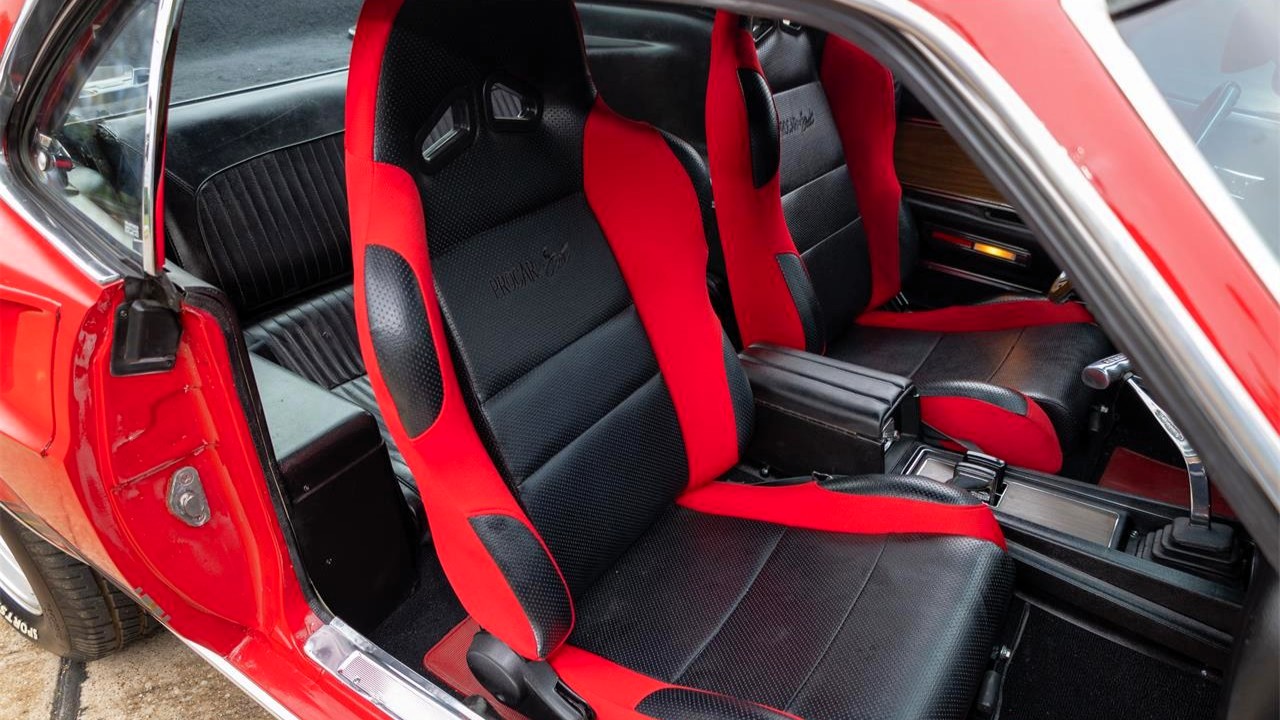
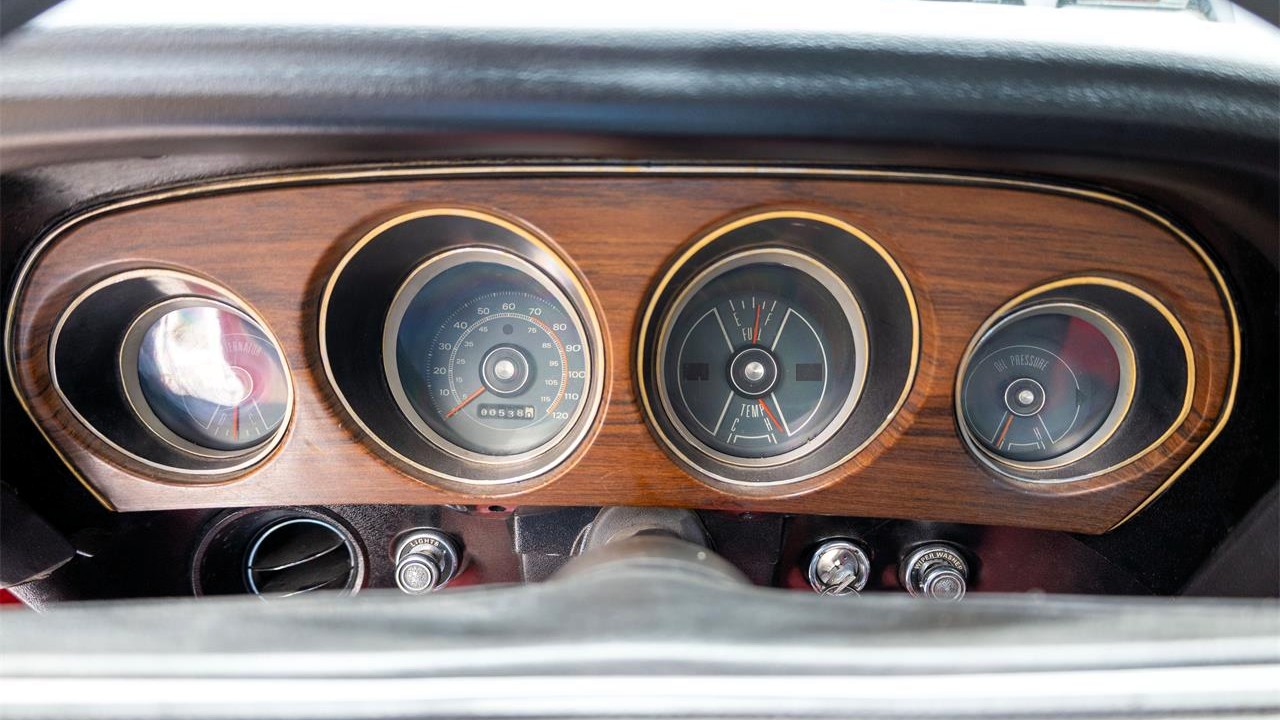
Though the Mustang could survive on its image alone, the muscle car market was demanding more than just GTs. For that reason, Ford introduced the Fairlane-based Cobra and the Mustang Mach I SportsRoof. The latter featured Wide Ovals wrapped around chrome styled steel wheels, non-functional hood scoop on a blacked-out hood, hood pins, Competition shocks, springs, and stabilizer bar, high-back bucket seats, a pair of racing mirrors, Rim-Blow steering wheel, console, clock, “teak-toned” interior highlights, and pedal trim. A Mach I stripe ran from the rear side-marker to the rear of the front wheel, plus another on the rear panel. The standard engine was a 351-2V — hardly muscle, and not helpful when creating an image car — but there was also a 351-4V, 390, and a pair of 428 Cobra Jets.
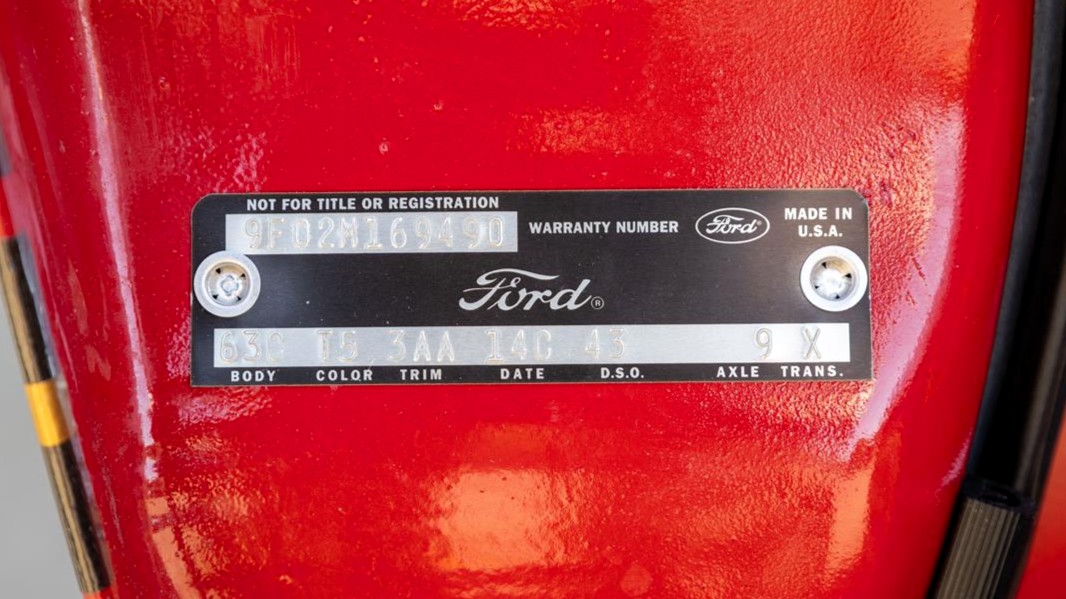
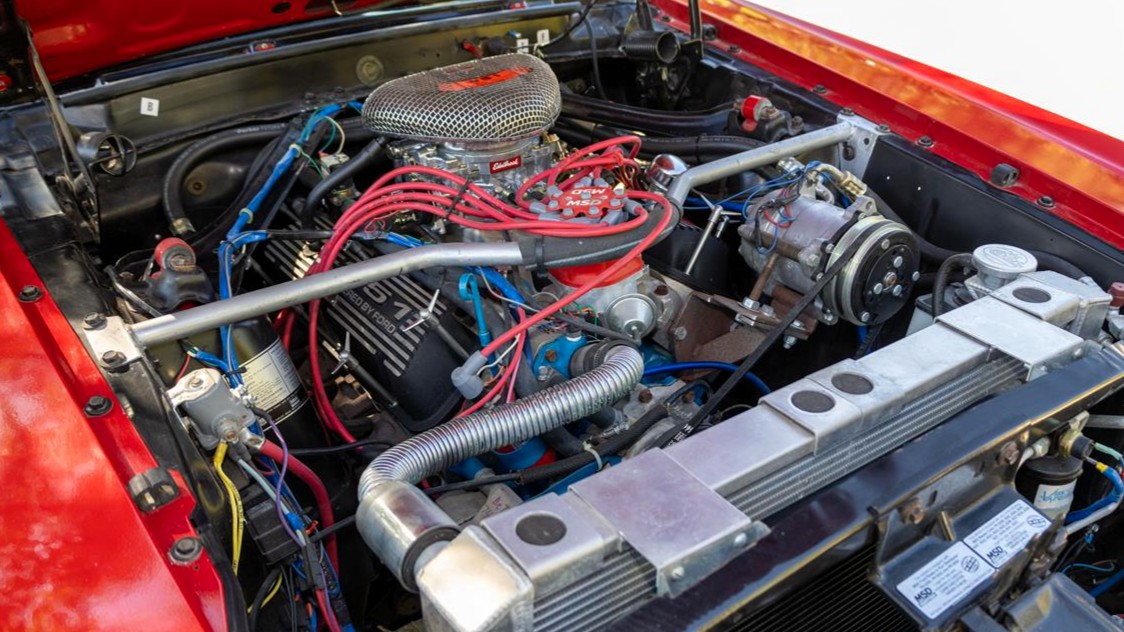
This 1969 Ford Mustang Mach I SportsRoof features the “M-code” 351-4V, which was the first legitimate performance engine available. The Windsor engine was rated at 290 horsepower, making it competitive with the Camaro SS’s 350/300. As far as Mach Is go, this one was built only with the upgraded 351, F70 x 14 whitewalls, power steering, and Deluxe belts with warning light per the Marti Report, but in 2012 it was transformed into something better by the seller, an ASE-certified mechanic: the 351 (rebuilt by Accurate Engines) is now hooked up to a Tremec 5-speed and is topped by an Edelbrock Performer Air-Gap intake and heads, with Scat crankshafts handling the rotating assembly. A Be Cool four-core radiator with dual electric fans ensures the engine can take the heat. Underneath, the Mustang has been treated to an upgraded Global West front suspension with Edelbrock Performer IAS shocks. Other features include reinforced frame connectors, and Competition Engineering traction bars. Inside, you’ll find a Vintage Air climate control system and a custom sound system with four Kenwood three-way speakers.
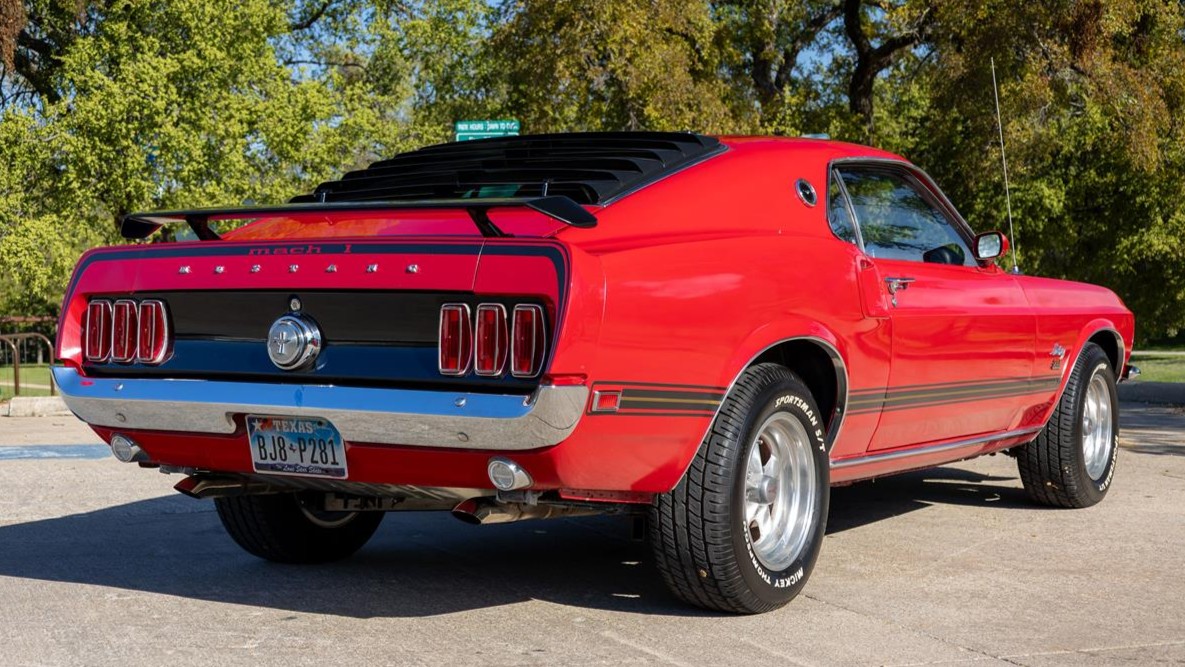
Visually, the rear-window louvers and 15-inch one-piece Rocket Racing aluminum wheels set everything off. Says the seller, “There is nothing that I feel needs immediate attention.” We won’t argue, but perhaps that’s because the original owner made the corrective measure of opting for the performance engine. For $95,000 (OBO), neither should you.
Click here to view this Pick of the Day on ClassicCars.com