One of my favorite forms of “retail therapy” is shopping for automobile literature on eBay. I recently came across a small pamphlet that was published in 1979 by General Motors as a guide to help people document and articulate mechanical issues for easier conversations with repair facilities. It was called the Service Signals Booklet.
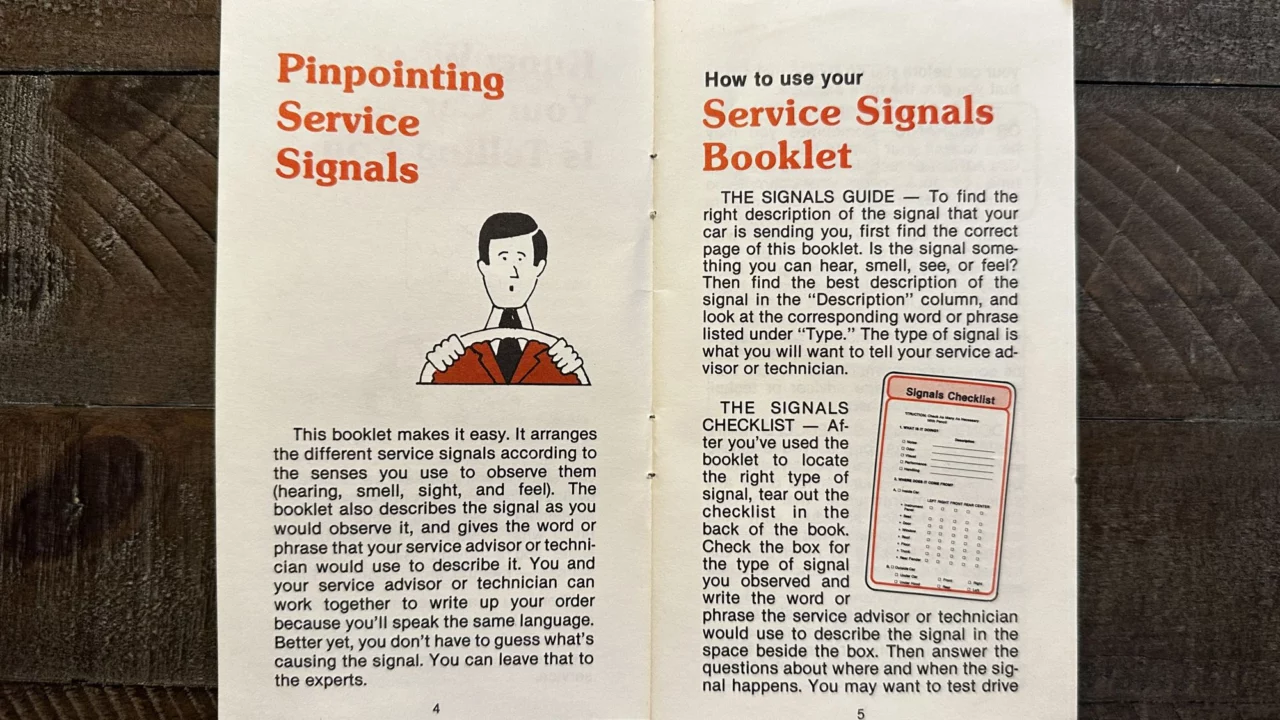
The opening page said, “You road-test your car every day. When you get right down to it, you know your car better than anyone. Because you drive it every day, you know how it acts when it’s running right. And you’re the first one to notice things that are different from its normal feel. These differences are service signals.”
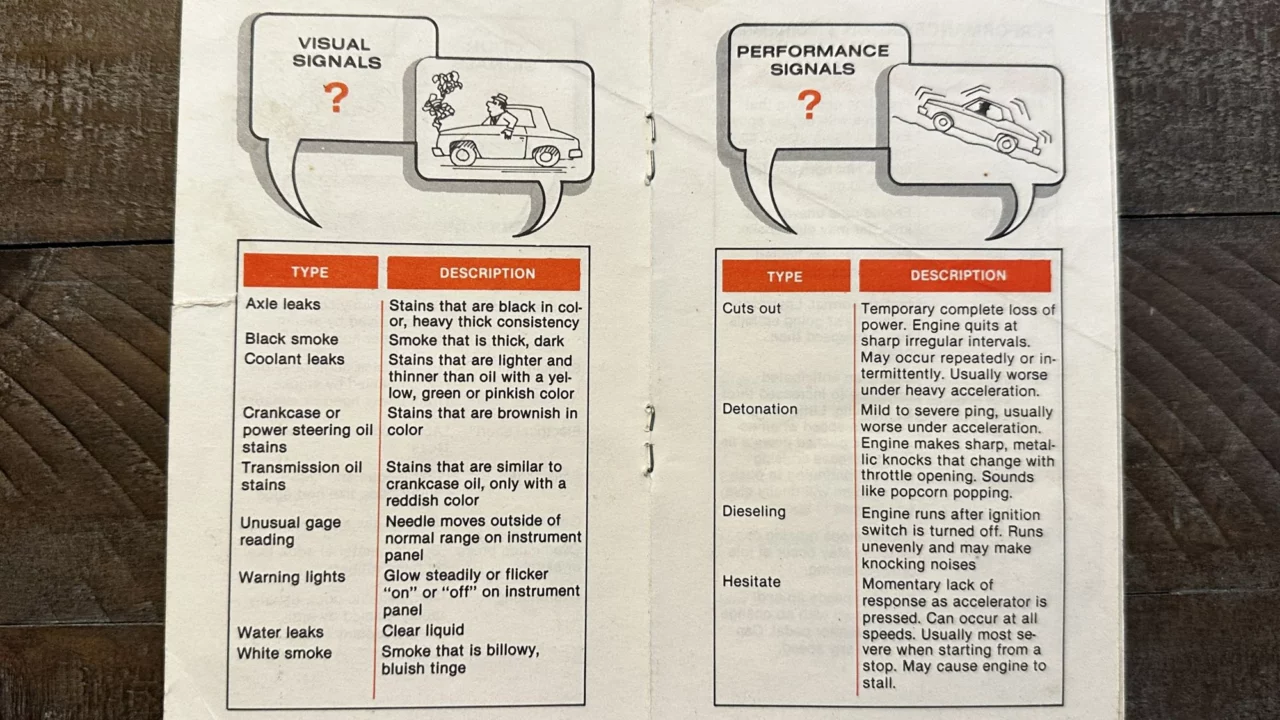
The subsequent pages contained tables that helped drivers classify different types of noises, such as boom, click, clunk, grind, growl, hiss, knock, and rattle. Then it outlined different types of odors and what they might be compared to, followed by visual signals, performance signals, and handling signals. At one point or another, most of us who drive old cars can relate to words like “hesitation,” “miss,” “stall,” or “surge.”
All of this struck me as pretty elementary (and maybe even a little cheesy), but the last couple pages of the booklet were actually useful. The guide provided a “Signals Checklist” that acted as a questionnaire where someone could log observations.
These days, modern cars use electronics diagnostics equipment to read and interpret error codes, but there is still a huge benefit to keeping track of a vehicle’s actual behavior when it comes to getting it fixed correctly.
I recently observed a coolant leak on my 1989 Honda Prelude. I took note of exactly when it was happening, and I noticed that the car would only leak for a couple of minutes after a drive, not while the engine was running, always in the same location, and always the same amount. I took a picture of exactly where in reference to the engine bay I saw it happening. That way, the technician was able to narrow the scope to just that area and quickly find out that the culprit was a faulty thermostat gasket.
Many of our readers are do-it-yourself types, which is great, and a checklist (whether written or logged mentally) can enable more thorough/targeted troubleshooting.
What’s your go-to method for documenting car troubles?