To pull back the proverbial curtain, I sometimes write about one topic and, during the research process, I’ll stumble upon something that sends me down a rabbit hole. In gathering information about the 2027 Cadillac Escalade-V 125th Anniversary Collector Series SUV, I came across Cadillac’s first brochure on the GM Heritage Archive’s website, and a few things struck me about it.
First, it reads like a collection of essays. Brochures are generally picture-heavy, with images meant to evoke some sort of emotion that can make the reader dream about the vehicle. Not this one, as on the very first page is a three-paragraph essay titled “The Automobile That Solves The Problem.” As I flipped through, I noticed that most of the remaining pages were dominated by text. It’s as if the catalog was written to be read in front of crowds as opposed to in a more personal tone.
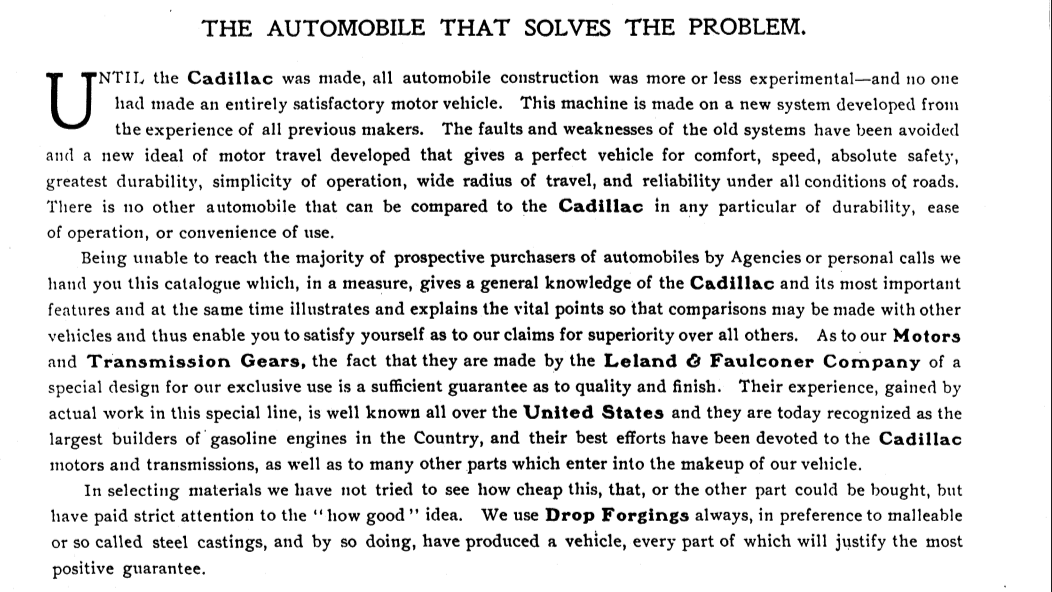 Image courtesy of GM Heritage Archive
Second, the language is not fluffy — it struck me as rather cold and technical. The voice and prose reminds me more of a shop manual, something found in a book from Chilton or Haynes. In comparison, advertisements today have plenty of fluff and not a lot of the nitty gritty technical stuff. It’s more about selling a reality in which the customer can’t live without the product instead of showcasing why the product he or she needs is a quality one.
Note this sentence from the shaft bearings section: “In the old way the motor must be removed from the frame, the old bearings taken out with hammer and cold chisel and the shaft firmly fixed after the old alignment is determined; then one must have a forge, ladle and babbit with which the bearings are re-cast into place.” Nowadays, to get that level of detail, it wouldn’t be from a catalog or brochure — it would come after a $199 diagnostic fee and an hour in the customer’s lounge at your local dealership.
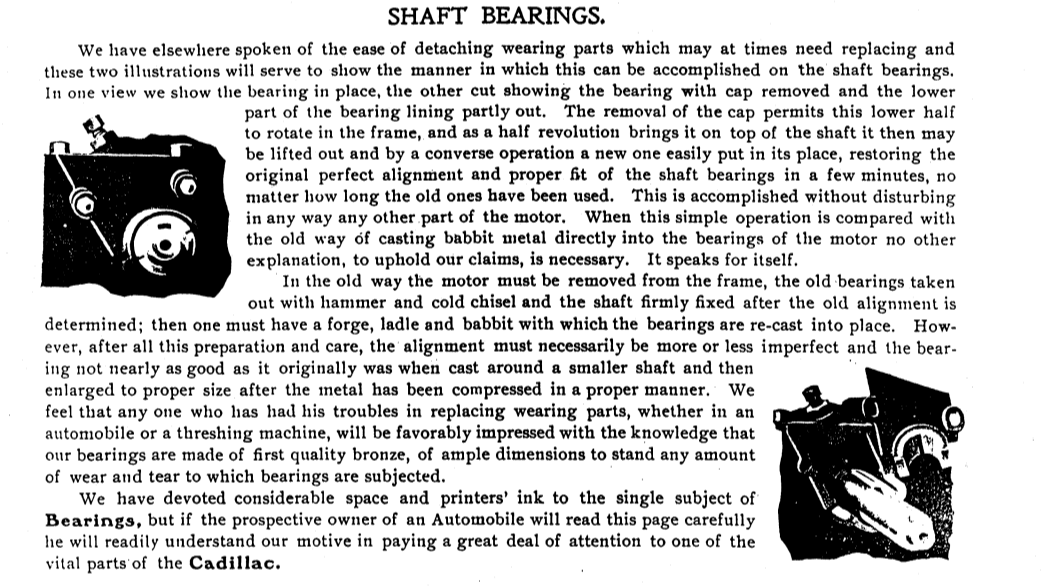 Image courtesy of GM Heritage Archive
Third, it could never be produced today. This is less about anything inappropriate or “cancellable” being present in this ad. Outside of some sentences that might sound a little condescending, it’s fine. The reason it could not be made today is because it isn’t image-focused. According to the American Psychological Association, our attention spans have gone from around two-and-a-half minutes in 2004, to about 47 seconds. The first page of this catalog is laid out like a large envelope without much in the way of design. That may have worked well for the time, but today most people would see the wall of text on the second page and toss it.
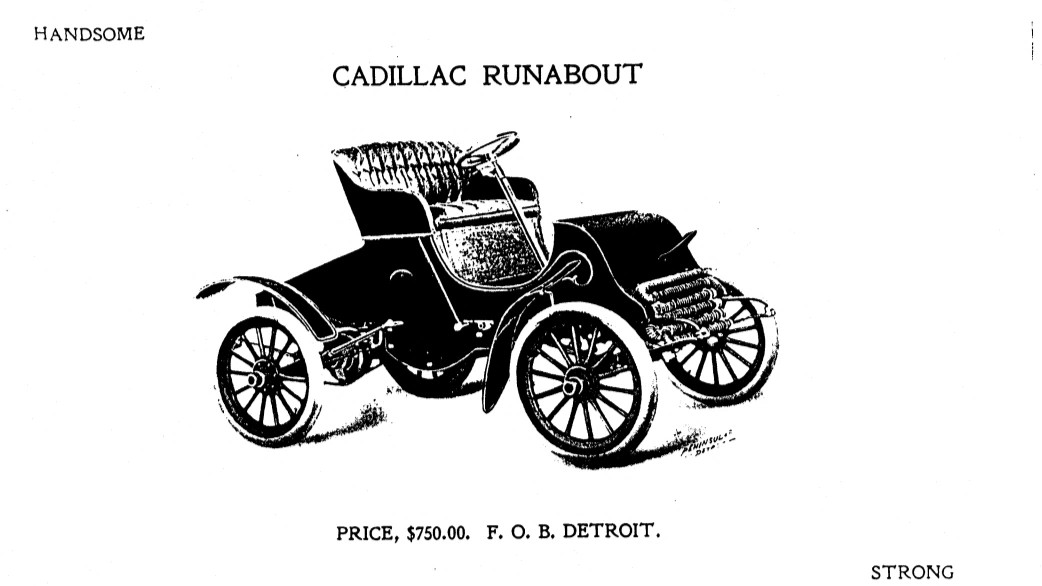 Image courtesy of GM Heritage Archive
As a nation, we’ve come a long way since 1902. At that point in time, the United States only had 45 states — the next addition (Oklahoma) would not be granted statehood until 1907. Suffice it to say, the USA has grown aplenty in 125 years. However, looking backward can remind us of ways that we can improve. If catalogs today were written like this 1902 example and designed using modern principles, I think consumer trust would increase … that is, if they would actually read the dang thing.