American Motors Corporation had a tongue-in-cheek tagline that read, “If you had to compete with GM, Ford and Chrysler, what would you do?” One answer that could be given is, “Produce two Trans-Am cars for the street!” Our Pick of the Day is one of those cars, though, truth be told, it’s not. This 1970 AMC Trans-Am Javelin is listed for sale on ClassicCars.com by a private seller in Belpre, Ohio.
When American Motors decided to meet the Big Three toe-to-toe, it seemed like a natural to produce a pony car. After all, pony cars were the hottest segment out of Detroit within several years of AMC’s about-face. The Detroit-based automaker (after the 1954 merger between Nash and Hudson, the Kenosha, Wisconsin headquarters had moved to Michigan) started working on the Javelin pony cars in 1966, with Dick Teague’s design studio producing two AMX-themed show cars to gauge public reaction.
The production Javelin that debuted at the end of the summer of 1967 was built on the Rambler American chassis. Aside from fine styling, the Javelin also boasted better measurements than its market competition, including rear-seat and trunk room. Two trim levels were available: base and SST (Super Sports Touring). Available with a straight-six or several V-8s up to a 315-horsepower 390, the Javelin was well-equipped to handle the competition aside from the most powerful rivals. And even though the Javelin was only available as a swoopy two-door coupe, a short-wheelbase version called the AMX upped AMC’s image in spades — something a convertible could never do.
Updates for 1969 were minimal, with AMC solidifying its position in the marketplace with fancy, youth-oriented features including Big Bad colors, new stripes and spoilers, and even a partnership with Hurst to produce an AMX for Super/Stock. But for 1970, AMC gave the Javelin a facelift to keep it fresh, including a new grille and parking lights, optional air induction system (part of the Go Package), and taillights. Engines were updated as well, with the mid-range 343 V-8 upped to 360ci, and the 390 receiving a 10-horsepower bump.
During this era, AMC was a competitor in SCCA’s Trans-Am circuit, having contracted Kaplan Engineering in 1968. For 1970, AMC worked with Roger Penske, with whom Mark Donohue handled research and driving duties. In response, a homologation special called the Mark Donohue Javelin SST was introduced to certify AMC’s entry in the Trans-Am circuit. Included with the package was the 360 four-barrel, Go Package, C-stripe, and unique ducktail rear spoiler designed by Donohue himself — it even featured his signature. It is believed 2,501 were built.
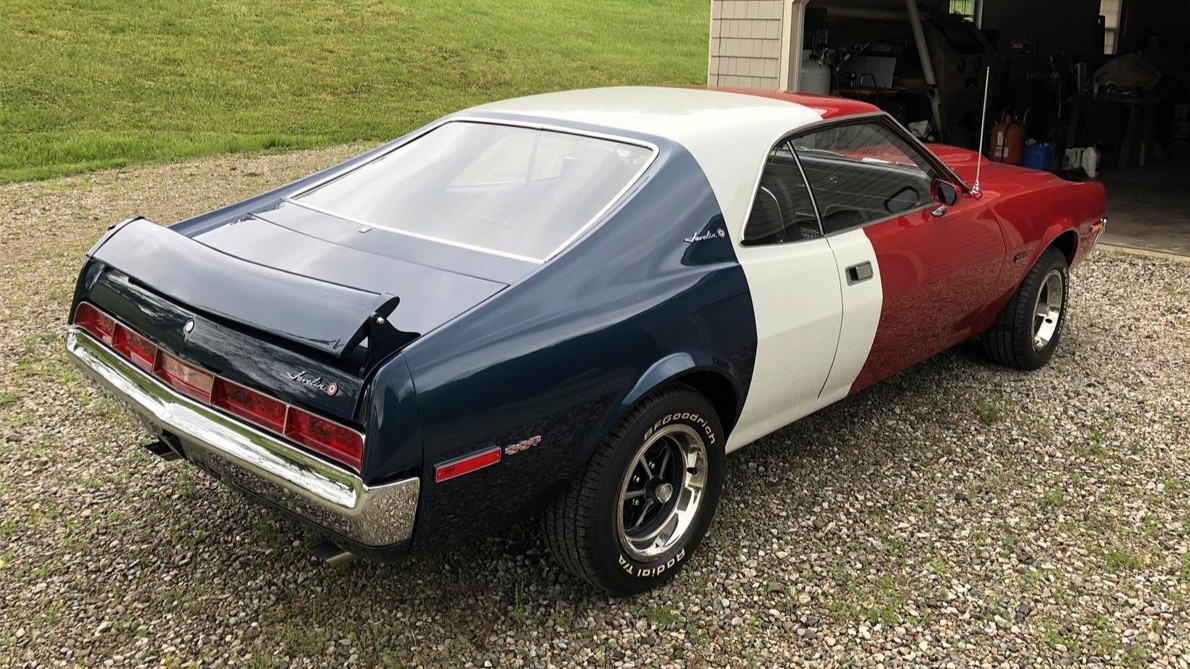
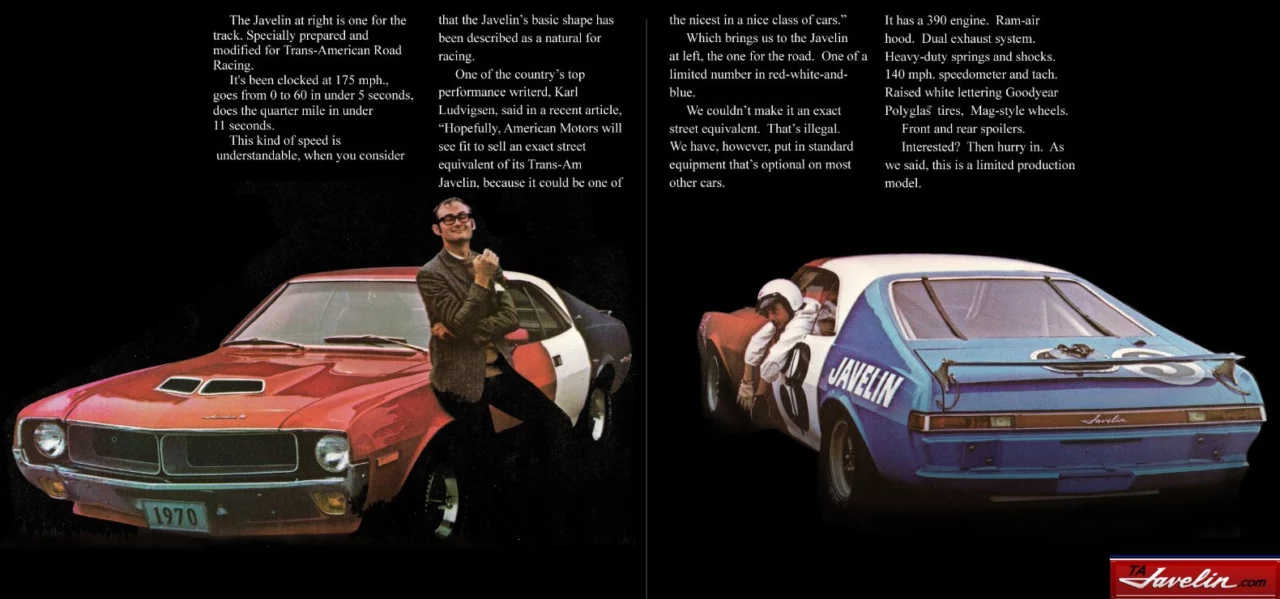
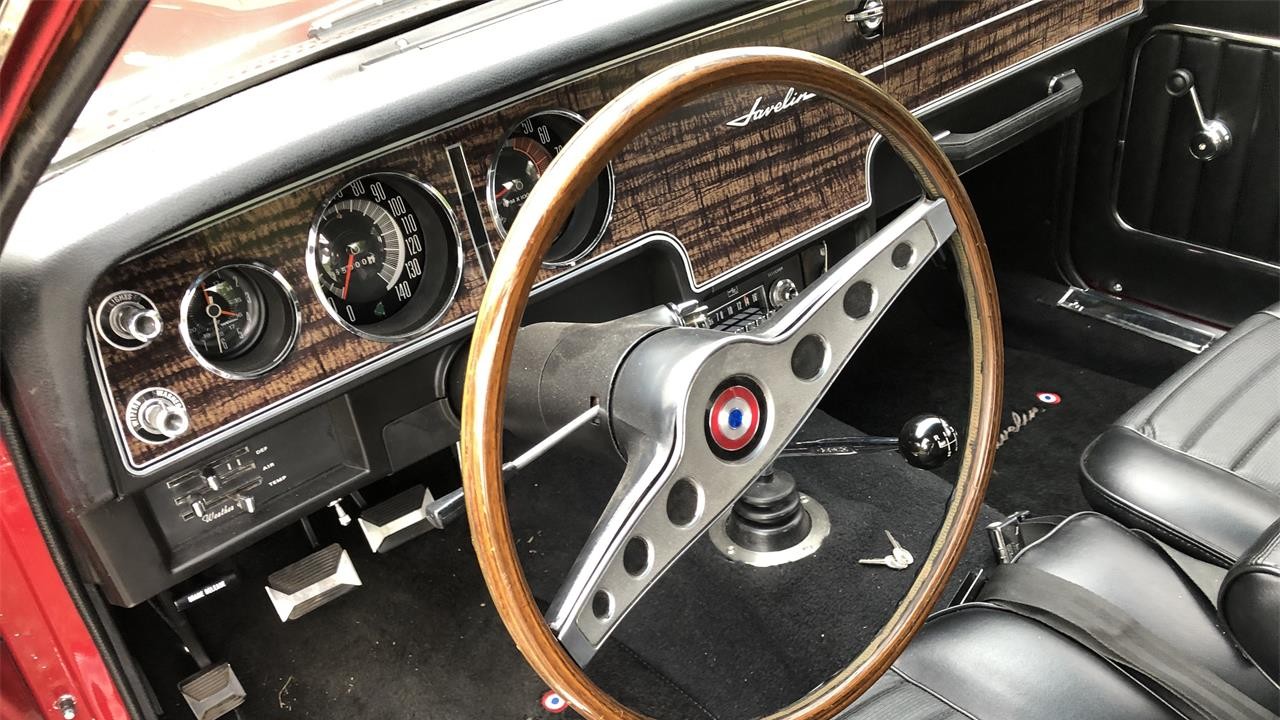
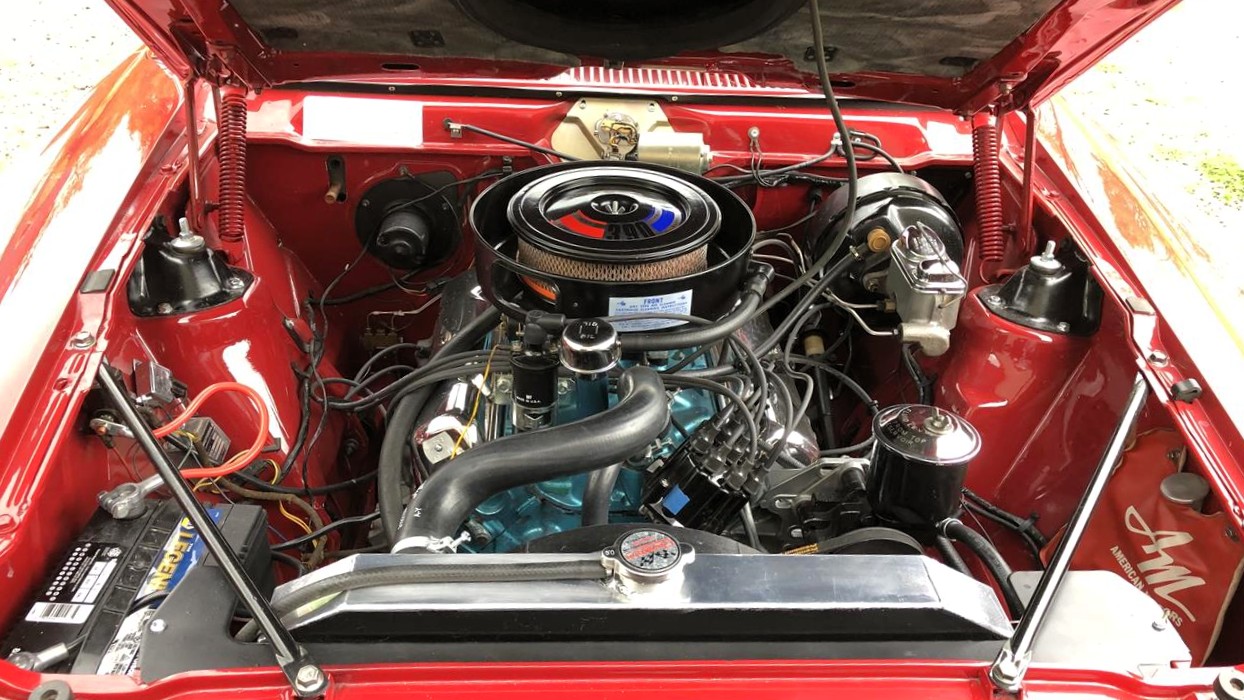
And then there was the Trans-Am Javelin. Yes, it has the name “Trans-Am” in it, but it was not used to homologate the race cars. Rather, it was a promotional model to hype AMC’s efforts in SCCA racing. Why bother when there was a true homologation Mark Donohue Javelin? That one was months away because AMC was required to re-homologate the pony car due to the restyle. In turn, the Trans-Am Javelin was the placeholder that announced AMC’s intention. Glance at this 1970 Trans-Am Javelin and you’ll notice the bold red/white/blue paint, special adjustable spoiler, standard 390 Go Package with four-speed manual and 3.91 gears, Magnum 500 wheels wrapped in Goodyear white-letter Polyglas F70x14s, and more. Documented in the T/A Registry, this particular example also features a new Legendary interior, rebuilt 390 and T10 transmission, rebuilt rear end with Moser axles, new springs and shocks, sandblasted chassis, re-chromed bumpers, and more.
Only 100 Trans-Am Javelins were built for 1970. Of those, only 36 are currently registered. How many Z/28s are out there? For the same amount of coin ($119,000), you can show the other Trans-Am contenders that you’re much more exclusive.
Click here to view this Pick of the Day on ClassicCars.com