Despite its short 24-episode original run, “The Jetsons” was influential in American society. The show’s elaborate robotic companions, video phones, and other seemingly unimaginable technology would inspire inventors for decades to come. For context, this article is being published 36 years before the show’s setting of 2062, and we are finally close to an affordable, electric flying car thanks to a San Mateo, California-based company called Alef.
According to Alef’s website, it was actually a different famous flying car that inspired the creation of the organization: Doc Brown’s DeLorean from “Back to the Future.” The company’s founders (Dr. Constantine Kisly, Pavel Markin, Oleg Petrov, and Jim Dukhovny) were inspired enough by one of Dukhovny’s lectures on science fiction to meet in a café for several weeks to discuss plans to build an electric car. The group’s original estimate was only about six months, which turned out to be a severe underestimation.
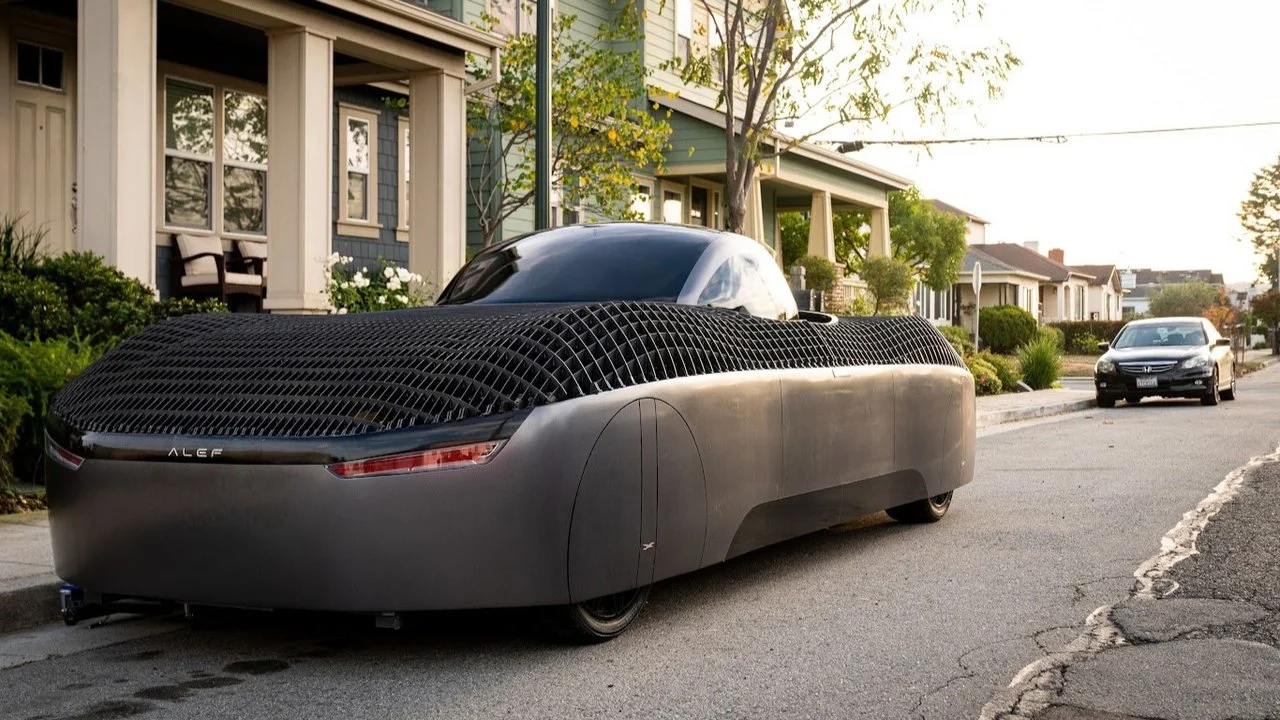 An Alef Model A parallel parked. Image courtesy of Alef.
The founders didn’t want to build just another car-shaped airplane that required a runway to take off and land. There were three constraints: The car had to be a real car (drivable on the street within local laws and regulations), it had to have a vertical takeoff, and it needed to be affordable. The team would create its first prototype in 2016; after years of rigorous testing, Alef has raked in about $1 billion worth of pre-orders.
Small electric motors placed inside the hub of each wheel take care of regular street driving; flying is performed by distributed electric propulsion (DEP). According to NASA, DEP cannot be explained without first talking about distributed propulsion (DP).
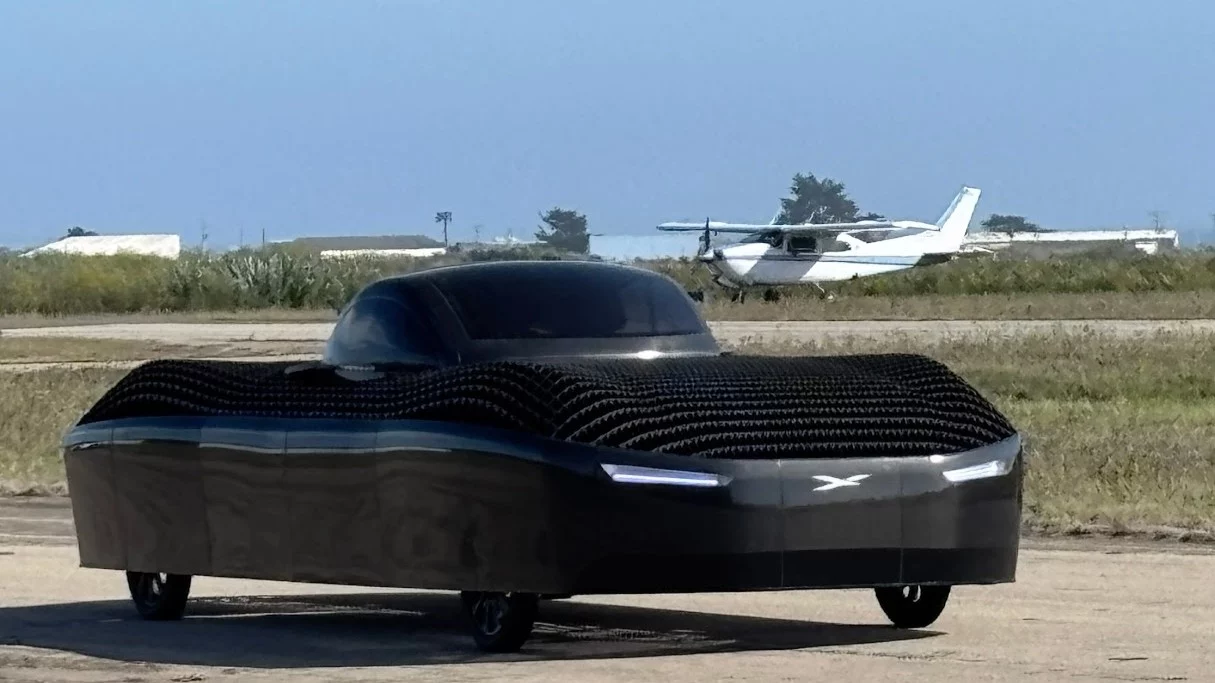 An Alef Model A at the airport. Image courtesy of Alef.
DP by NASA’s definition is “a propulsion system where the vehicle thrust is produced from an array of propulsors located across the air vehicle.” Notice DP requires an “array of propulsors” so, by this definition, a regular helicopter that can be seen flying around town does not fly by distributed propulsion. The reason for this is that helicopters have two rotors: one for lift and thrust, and one on the tail to counteract torque. For DP, the flying vehicle would need at least three strategically placed across the frame. This vehicle’s flying function being achieved with DEP means that each propulsion device must be electric. Therefore, Alef’s flying car has multiple electric propulsors that work together to help it go up, down, forwards, and so on.
Currently available for presale, Alef’s FAA-approved is offered at $300,000 a pop. According to a company spokesperson, people who pre-order will receive whatever the latest model is at the time deliveries go out. At the time of writing, it would be the Model Zero Ultralight. However, the source mentioned that by the time the company gets to the main deliveries, it expects it to be the Model A (Ultralight or LSA version, depending on customer selection). The Model A has a flying range of 110 miles and a driving range of 200 miles. It includes a gimbaled cabin design, DEP system, triple to octuple redundancy of all key components, real-time diagnosis, obstacle detection and avoidance, glide landing, and a full-vehicle ballistic parachute — just in case.
Alef’s next goal for 2035 is to introduce the Alef Model Z. The Model Z is anticipated to be a four-person sedan capable of flying 200 miles with a 400-mile driving range and a starting price under $30,000. Unfortunately for fans of “The Jetsons,” the Model Z is unable to fold into a briefcase like George’s vehicle in the show’s introduction.