Did you know that the first Pontiac vehicle officially unveiled to the public debuted 100 years ago? The date was January 3, 1926, and the venue was the New York Auto Show. The Pontiac brand would go on to become renowned as General Motors’ youth-oriented division, delivering affordable performance, bold styling, and confident handling.

One of the engineering innovations that put Pontiac at the leading edge of handling involved giving cars a wider stance. In 1959, Pontiac debuted the “Wide-Track” concept under the direction of designer Bill Mitchell and general manager Semon “Bunkie” Knudsen. The wheels were pushed out at each corner, widening track width and giving Pontiacs a more planted look and feel.
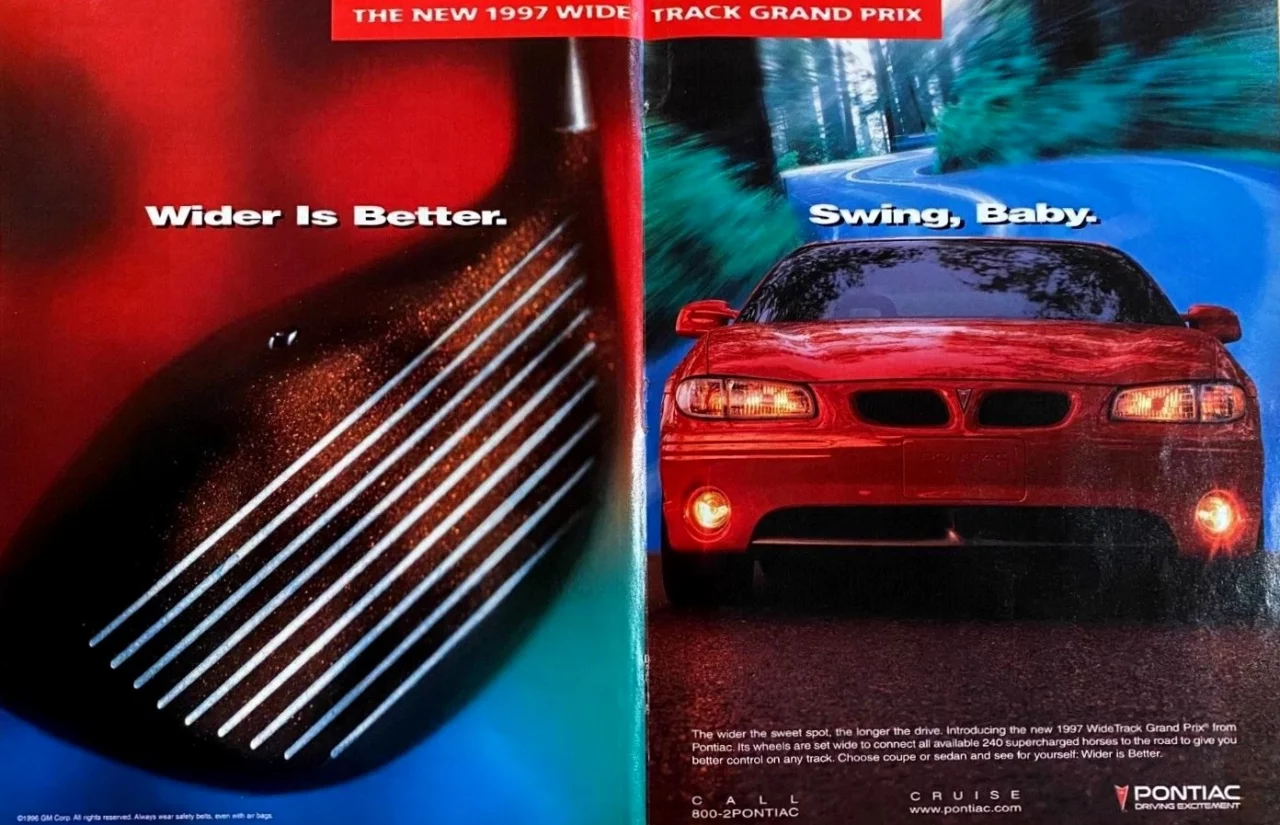
Decades later, in the mid-to-late 1990s, Pontiac resurrected that marketing theme with the seventh-generation (1997-2003) Grand Prix. That car rode on the General Motors front-wheel-drive W-body platform and was first unveiled at the 1995 Detroit Auto Show in concept form.
What defines a car’s track, anyway? Track width is the distance (measured on the ground) between the centerlines of the two tires on the same axle. The front track width of the 1997 Grand Prix was 61.4 inches and the rear was 61.1 inches. These figures reflected a bump from the prior-generation model, which had dimensions of 59.5 inches and 58.0 inches, respectively.
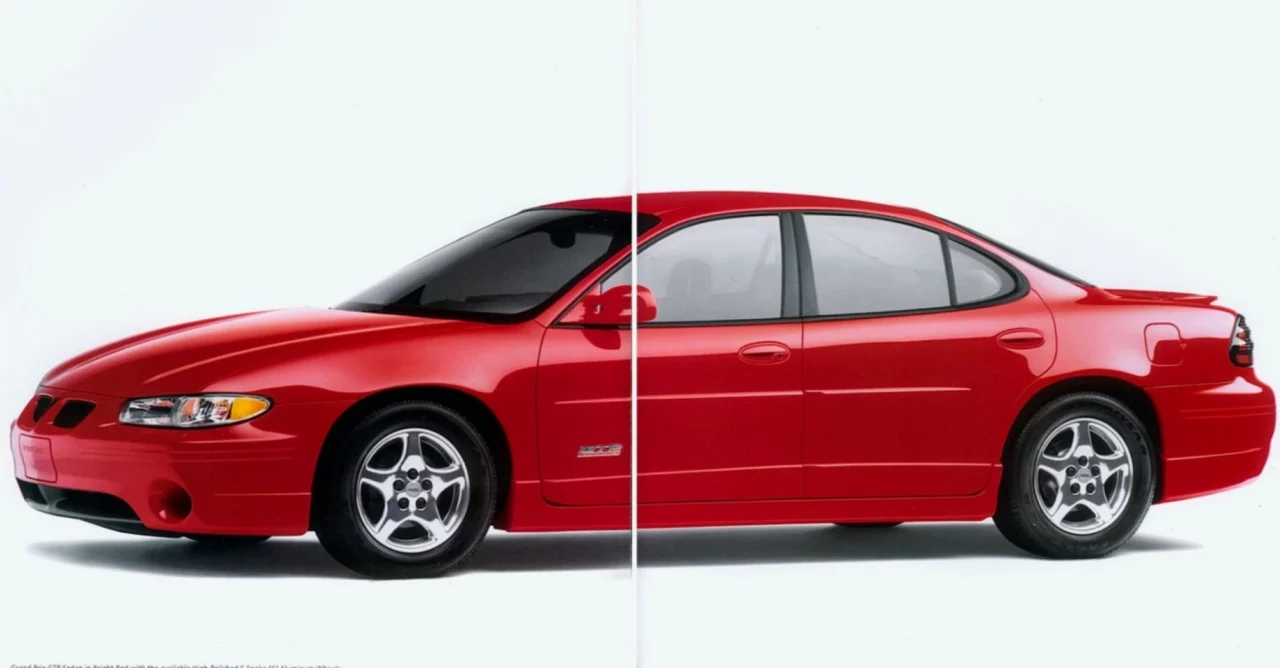
The brochure for the 1997 Grand Prix used the word “wide” 17 times, aligning with the messaging that was going out on television commercials. The NASCAR Winston Cup WideTrack Grand Prix debuted at Daytona in February 1996, giving the new Grand Prix even more visibility in the public eye. One magazine ad said, “We went to great widths to bring you the new 1997 Grand Prix.” Pontiac even opened up a toll-free phone line under 800-BE-WIDER.
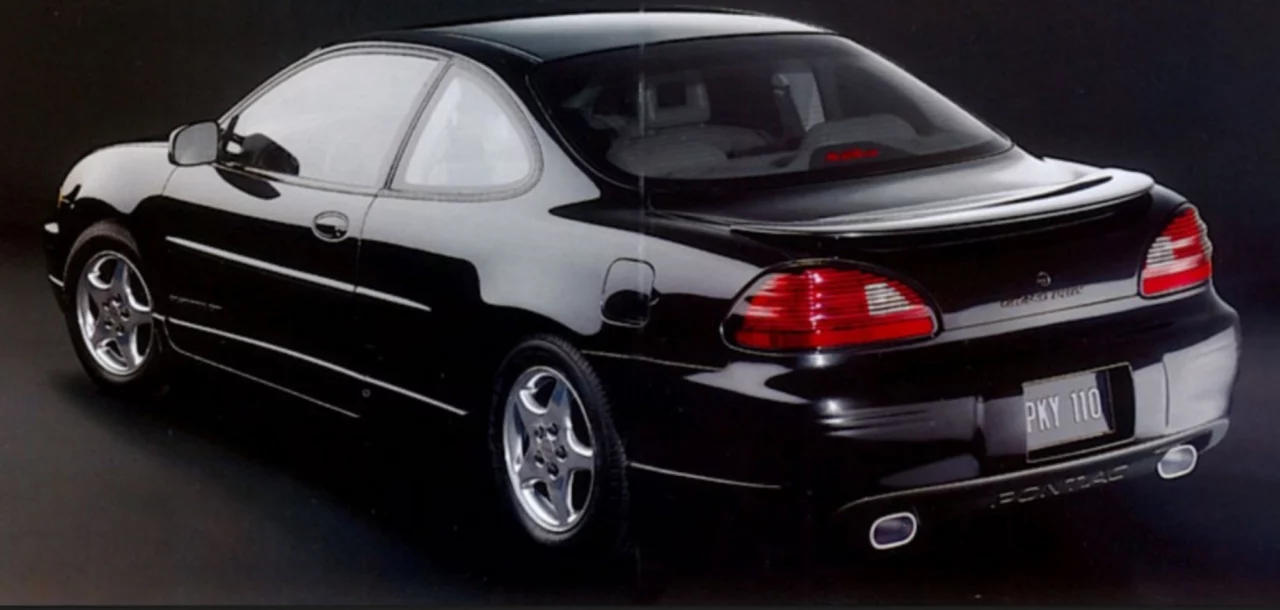
A promotional video (embedded below) said, “Shoulder to shoulder, the WideTrack Grand Prix hits the road with a totally new design, and it’s got the performance to prove the Grand Prix engineers were right: wider is better. By placing the wheels out at the far corners, less weight is transferred side-to-side in cornering. Flatter turns and better grip result.”
Anyway, I’m curious to hear everyone’s thoughts on Pontiac’s apparent obsession with track width in the 1990s. Did Pontiac have an important engineering achievement on its hands, or was the marketing just another way to pull attention back to a brand that had lost some momentum?