My first car was a 1970 Oldsmobile 4-4-2, though I wouldn’t say I am an Oldsmobile guy. Nonetheless, it was a spectacular-looking car, something I’d put against most muscle cars from the era. While using the 1970 Oldsmobile brochure for research, I made several observations that may be beyond my familiarity (due to my age) yet may have been remarkable for 1970.
The marketing theme for 1970 was the brand’s vehicles being “Escape Machines” to escape from the ordinary. In some respects, it seemed like an evolution of “Youngmobile Thinking 1969,” which showed different models with backdrops from recreated classic movie scenes — imagination is an escape too, is it not? But what is ordinary? Restaurant orders and complaints. The 9-to-5 grind (or 13-hour days). Being hurried and harried. Lending an ear to everyone. Impersonal facts and figures. Would you believe Oldsmobile’s roster for 1970 models is your escape?
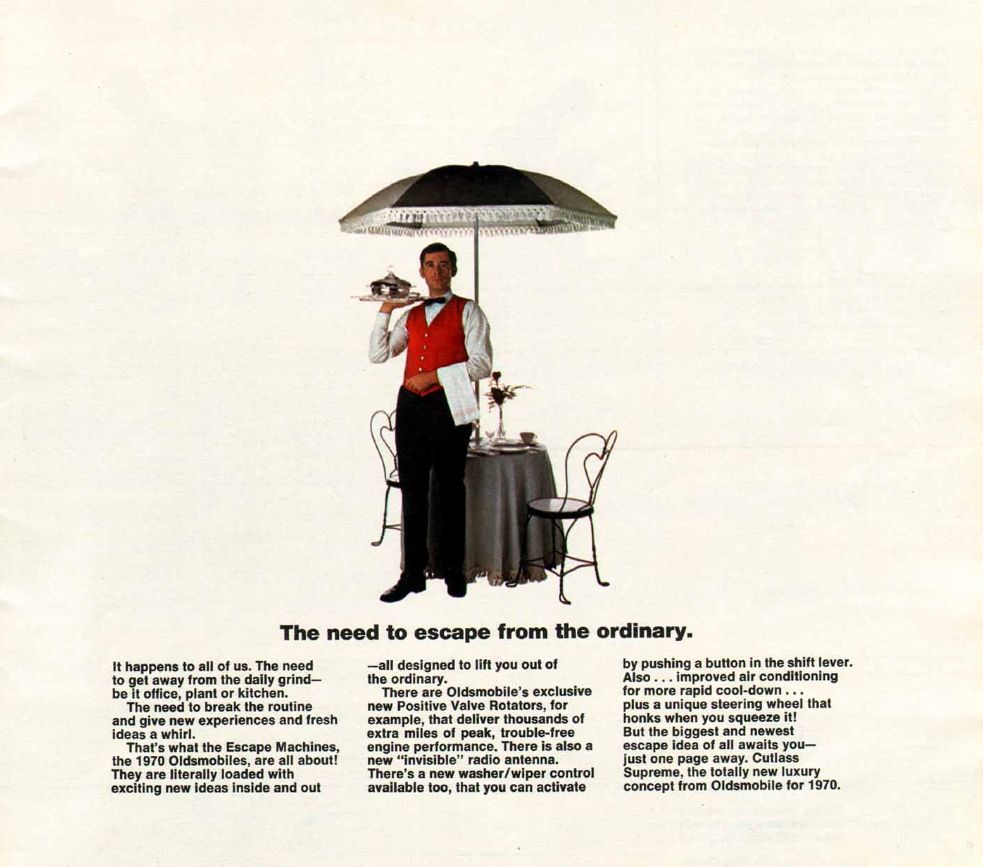
Oldsmobile offered four series for 1970. The F-85 series (A-body) included the revamped Cutlass Supreme, which now offered a unique notchback coupe to play a personal luxury role in a way that was a clever Plan B to the special G-bodies that Chevrolet (Monte Carlo) and Pontiac (Grand Prix) were using. In addition, the 4-4-2 came into its own, ditching the 400 Rocket V-8 for a 455 that previously was only available on the Hurst/Olds.
The Delta 88 series (B-body) was Oldsmobile’s full-size bread and butter. After years of 88 variations, the Delta 88 rose to the top and now featured variations within, including base, Custom, and Royale. Stretch the wheelbase and add a dose of luxury and you’d have the Ninety-Eight, which rode on General Motors’ prestigious C-body platform and had done so since 1940.
And then there was the Toronado, which still was one of two front-wheel-drive cars available from Detroit (the other being, of course, the Cadillac Eldorado). A front end restyle ditched the hidden headlights (and the grin from its face), and a new GT package illuminated the availability of the W34 engine that had been available since 1968.
It’s easy to miss what may have been remarkable for 1970, such as cultural issues that were evolving in society and the profundity attached to them, because the things portrayed in this brochure were mainstream when I came of age.
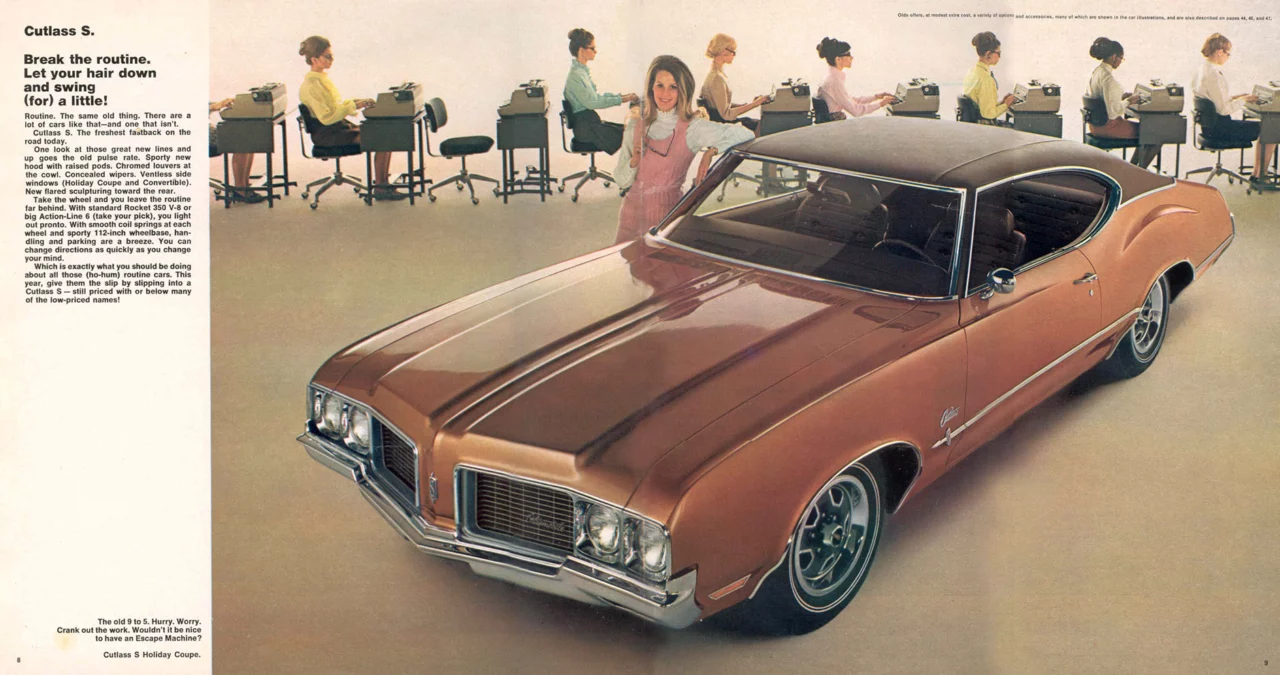
I find this Cutlass S Holiday Coupe interesting in several ways. For one, this is a car that’s been recycled by many a young man in the used-car market, but here it’s being marketed to a woman — y’know, because one can’t think of 1970 without thinking about the impact of feminism in the workplace and all other parts of society. A nice sporty coupe for the independent lady? “You can change directions as quickly as you change your mind,” says the brochure. Maybe smile harder too? Additionally, note the African-American stenographer in the background, a reflection of the Civil Rights Movement, desegregation, and changing public attitudes that pushed advertisers to rethink representation.
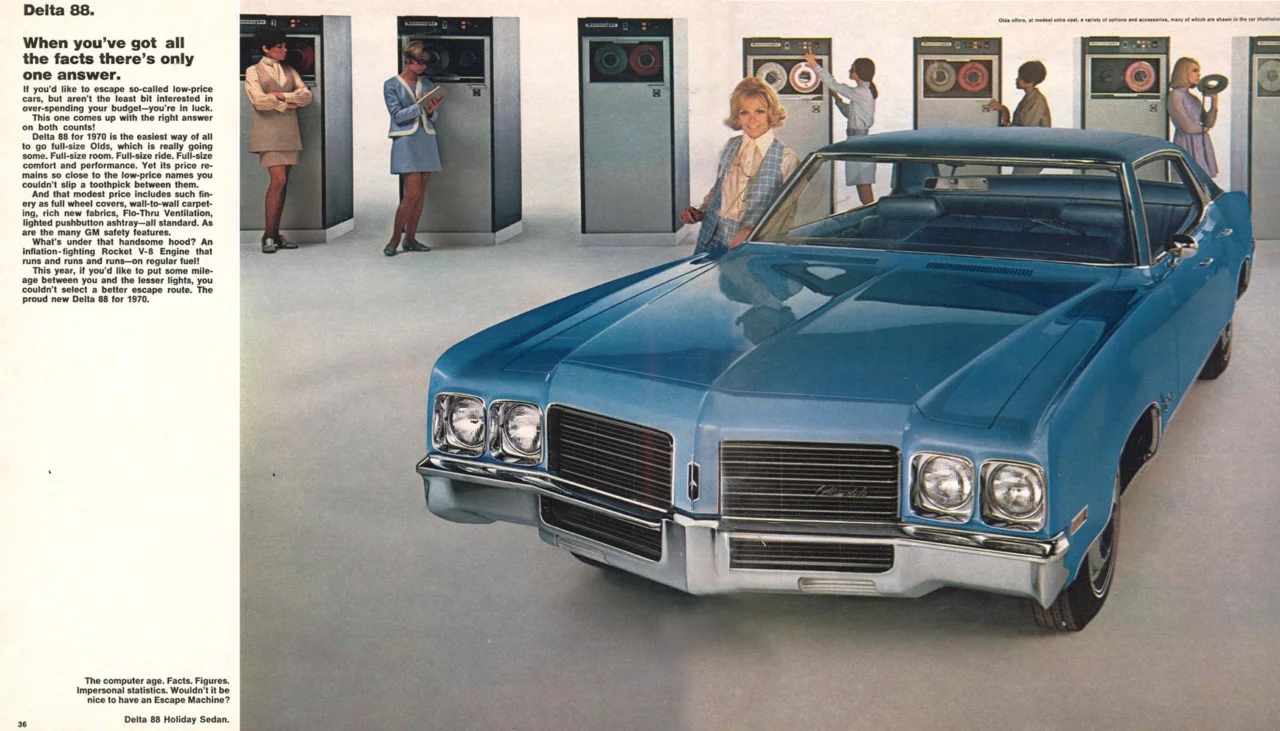
Here is the base Delta 88, again with the focus on women. Here they are as actual smart people and not just a supporting cast for men. Mainframe computers? Given the chance, anything a boy can do, a girl can do better, right? And this Delta 88 Holiday Sedan “runs and runs and runs — on regular fuel!” says the brochure, appealing to the more practical side of women because, by golly, the fairer sex is the practical sex.
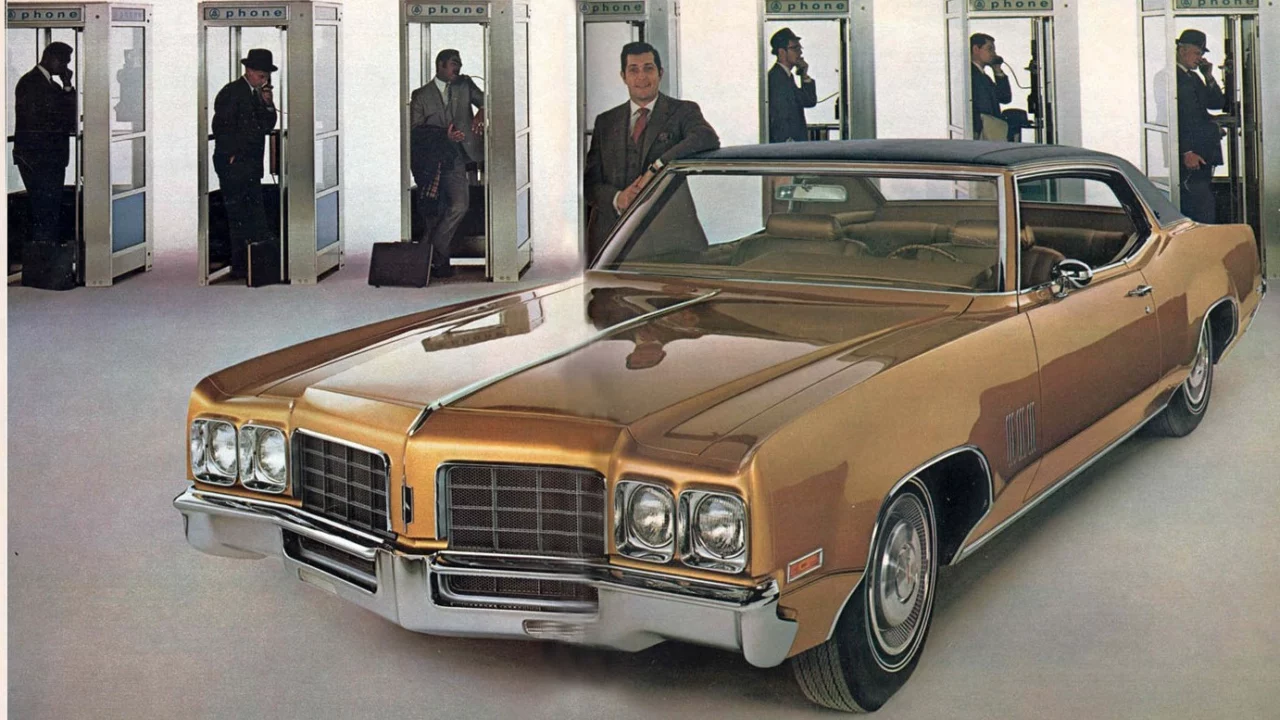
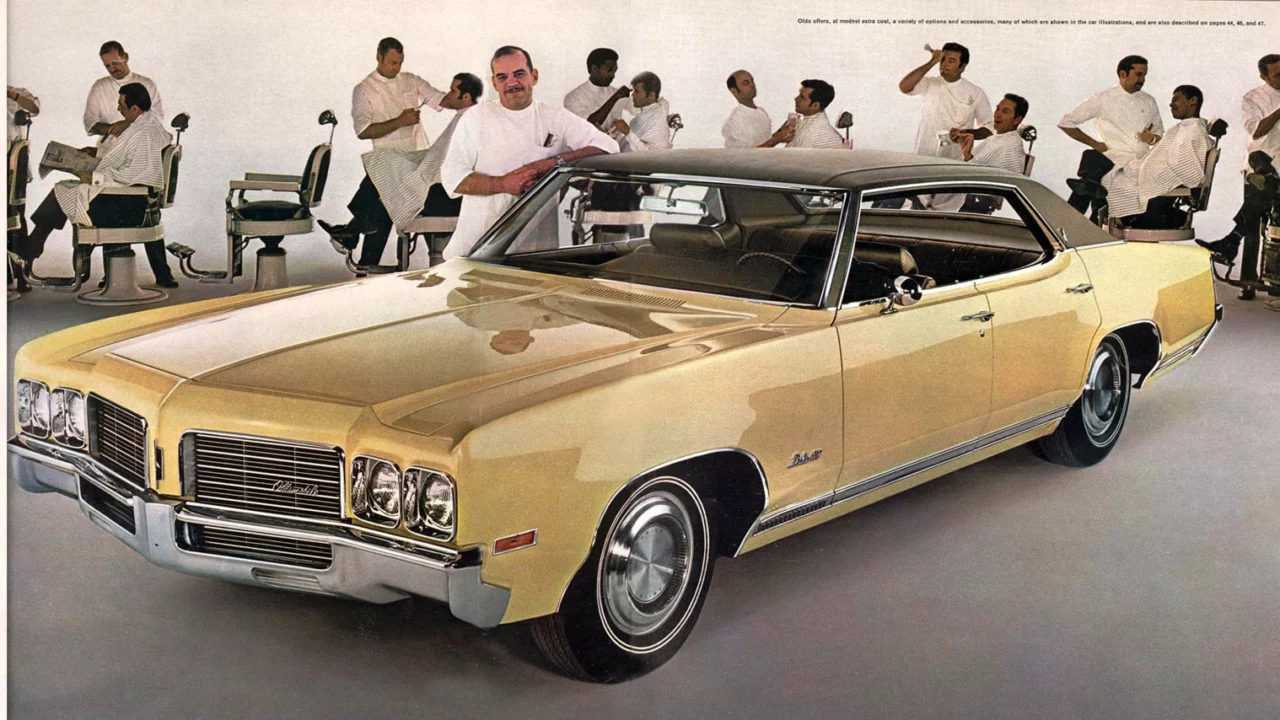
Men were targets of the more upscale Delta 88s, the Delta 88 Royale (the fanciest and sportiest of the 88s) and 88 Custom (mid-range but not spartan). However, it is easy to infer class plays a role in how the two are targeted: young businessman and 40-something barber, respectively.
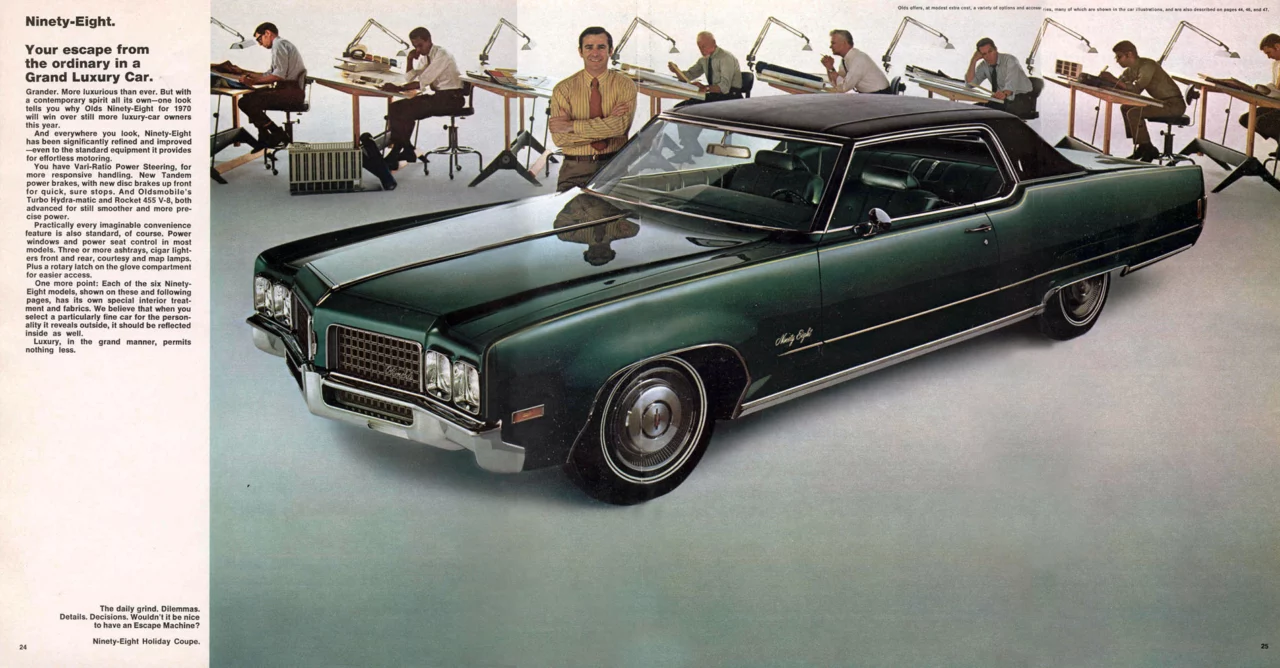
While Oldsmobile wasn’t quite a luxury brand, it certainly thought the 98 was a “Grand Luxury Car.” There were six Ninety-Eight models, each having its own special interior treatment and fabrics. “We believe that when you select a particularly fine car for the personality it reveals outside, it should be reflected inside as well,” says the brochure as an architect stands by the most personal of Ninety-Eights, the Holiday Coupe. It should be no surprise that three of five interior colors were Earthtones. And, unlike Buick, Oldsmobile offered a convertible in its top series.
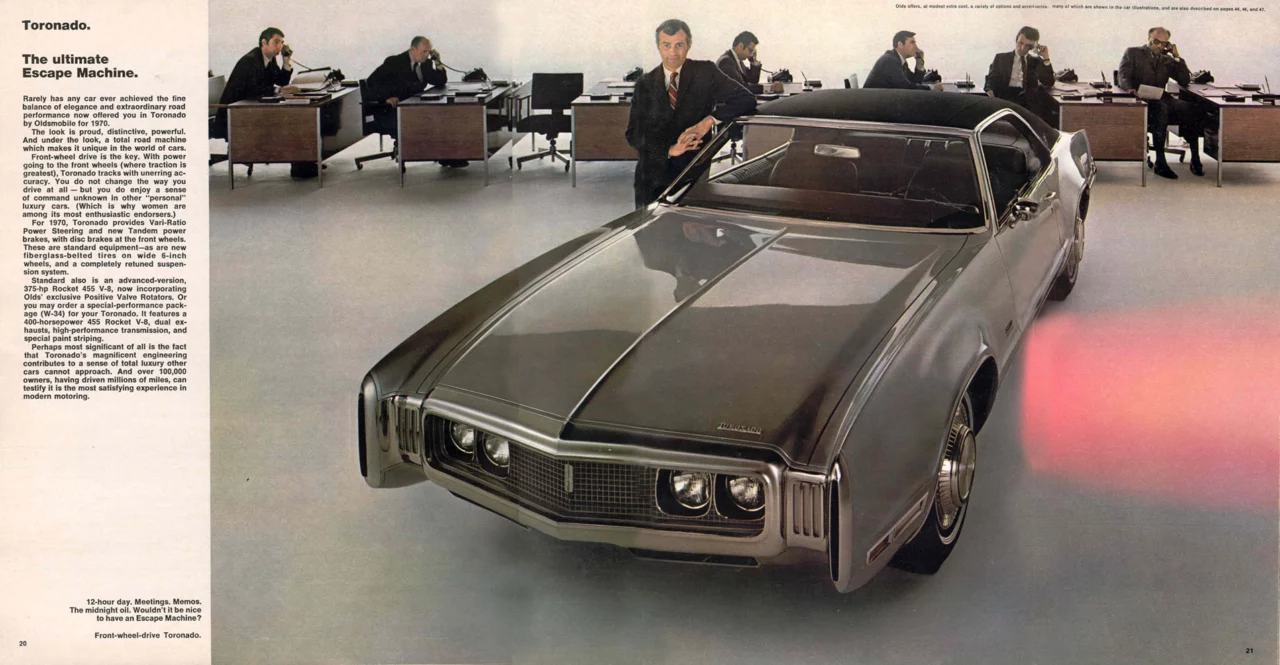
I also have insight on who the Toronado targeted. It was just a used gas guzzler when I was a kid, but back in the day, it was an upscale personal car for the successful, individual male. In fact, Oldsmobile couldn’t help itself with more sexist commentary, stating, “… you do enjoy a sense of command unknown in other ‘personal’ luxury cars … which is why women are among its most enthusiastic endorsers.” Nonetheless, a dynamic of power seems like a natural for such an engineering marvel.
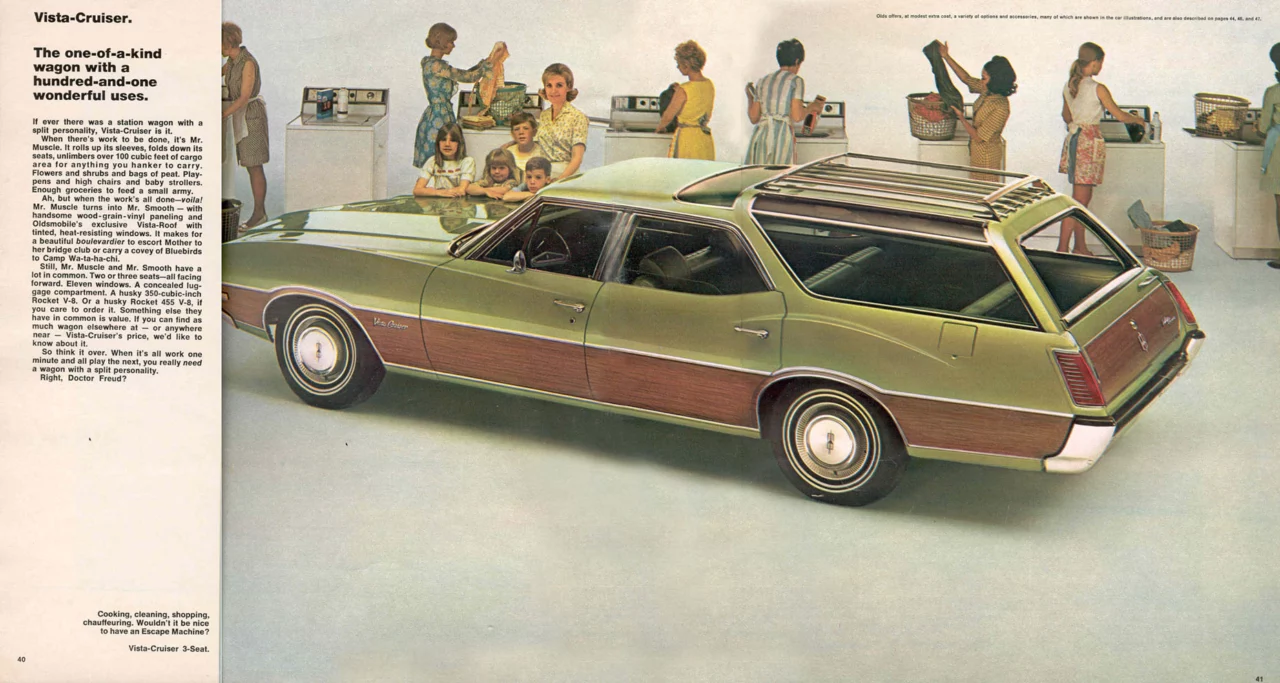
But let’s not forget about the place that women belong: home. Yes, it’s been 10 years since the introduction of the birth control pill, but progress can’t happen without knowing where you came from! And guess what? Oldsmobile has a car for that!
Virginia Slims cigarettes used marketing to cater to women smokers. The result from the ad agency was the tagline, “You’ve come a long way, baby.” This brought attention to the newly found independence that woman had in society. Though it comes off as somewhat quaint today — maybe even sexism fighting sexism —it seems Oldsmobile recognized (for better or worse) the changes that were happening. Today, we can claim we have mostly escaped from the roles we were forced to play.