The Nevada Test Site, now officially called the Nevada National Security Site (NNSS) is a federal facility located about 65 miles northwest of Las Vegas. It was established in 1951 and consists of a 1,300-square-mile proving ground for nuclear weapons. Over about a 40-year span of time between 1951 and 1992, the United States government conducted over 900 tests there. Approximately 100 of them were atmospheric in nature, sometimes creating mushroom clouds that were visible from Las Vegas.
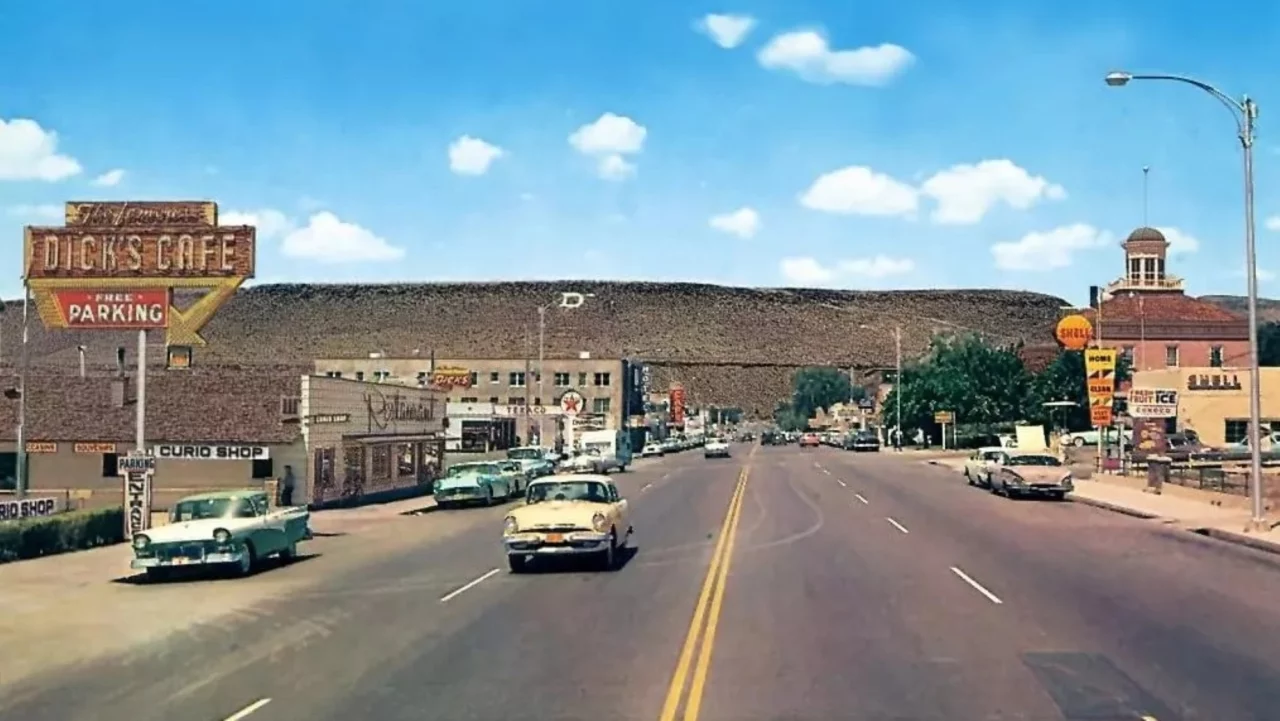 Credit Gary Humphrey
The impact of all this was a great deal of radioactive fallout that would drift over the communities downwind of the test sites. For that reason, the people in those areas were called “Downwinders.” The residents of my own hometown (St. George, Utah), in particular, were heavily impacted by the exposure to radioactive materials between about 1951 and 1962.
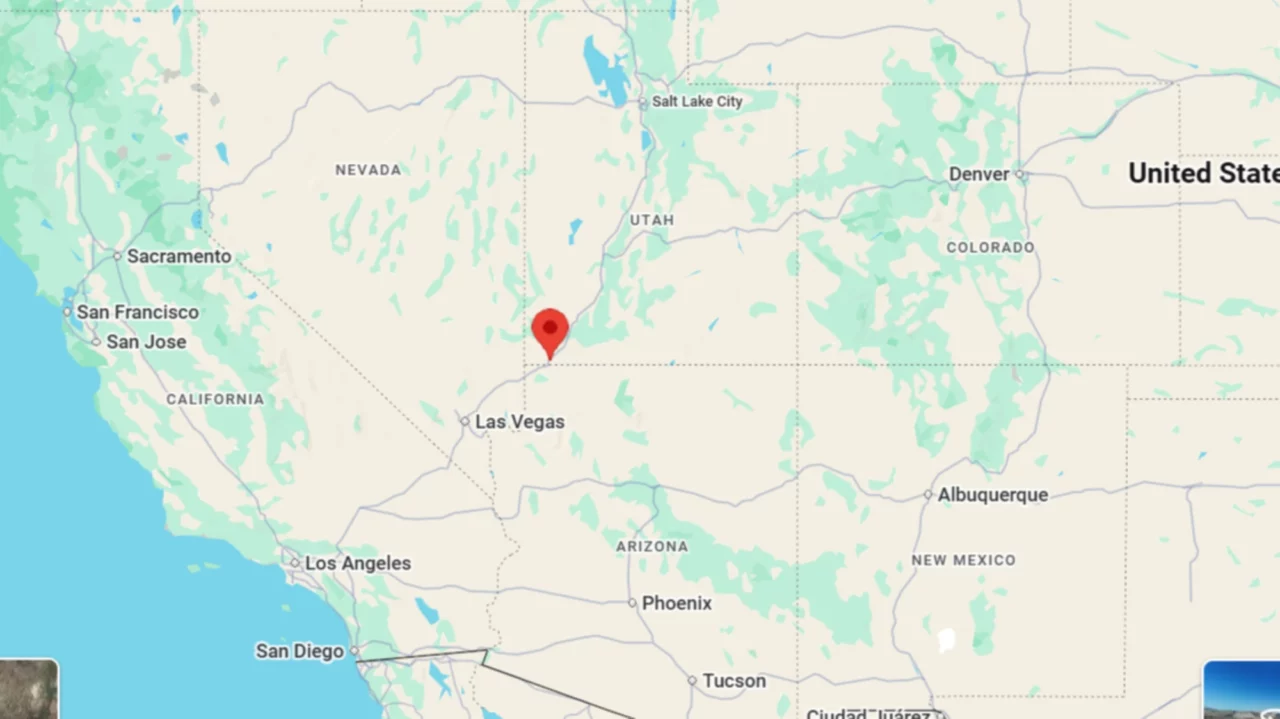
In 1953, one particular blast, named “Dirty Harry,” left radioactive debris hovering over St. George for over two hours.
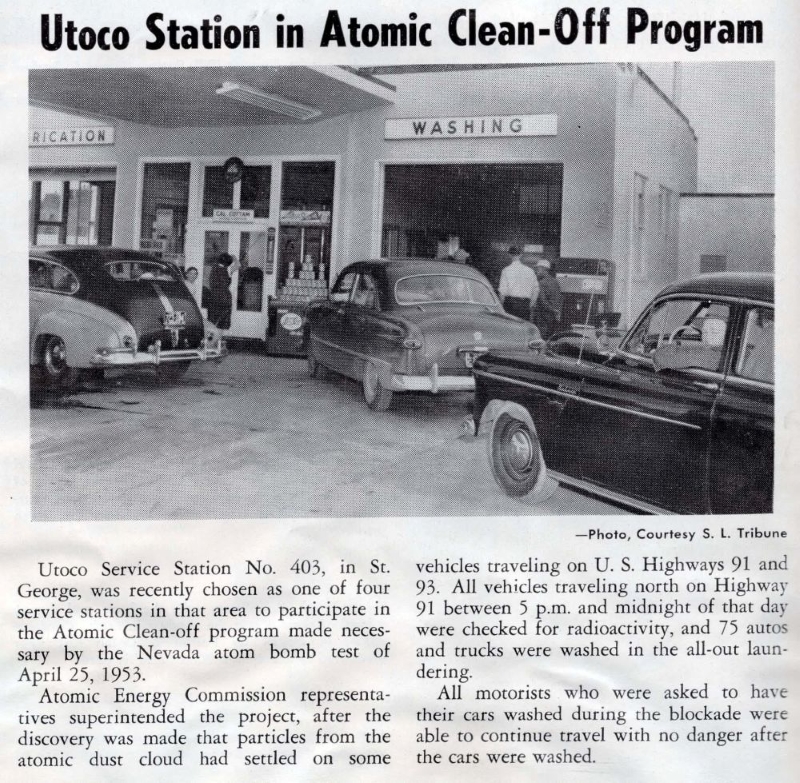 Credit Salt Lake Tribune
Highway 91, as mentioned in the above article, was the main east-west thoroughfare shown in this 1954 map of the region. Today, Interstate 15 is the primary artery through the area.
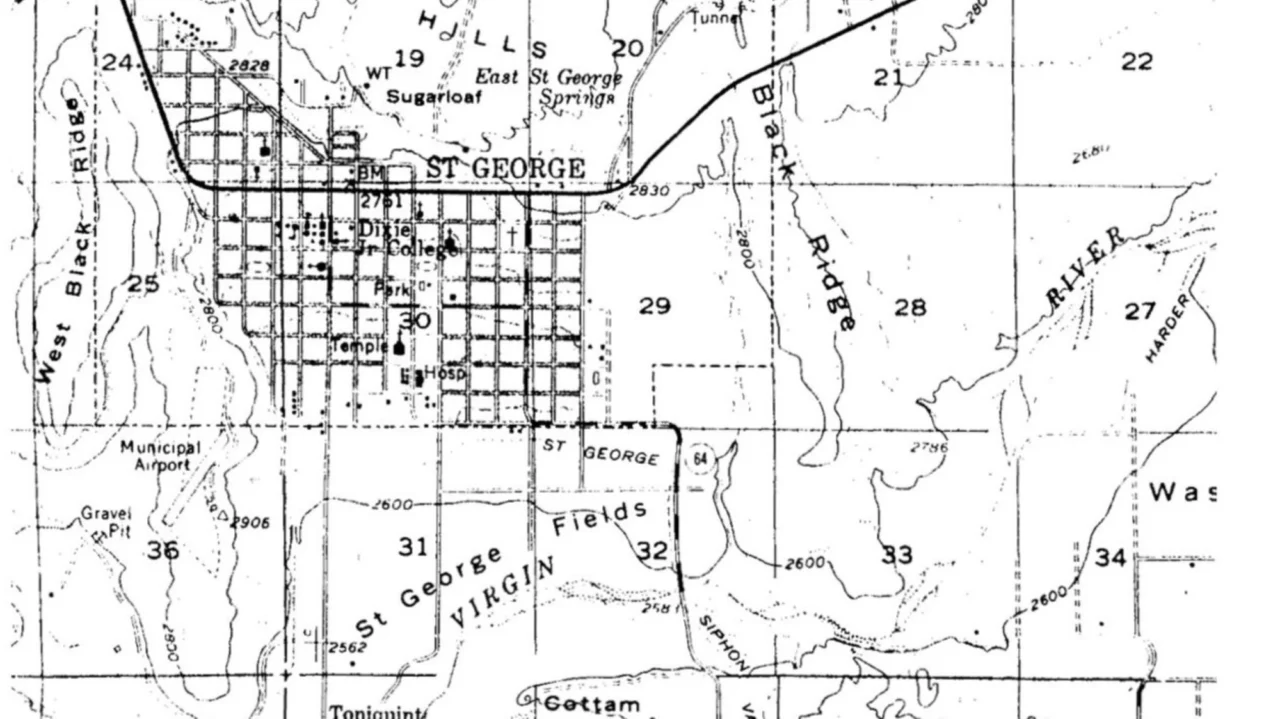
Long-lasting health impacts like cancers and thyroid issues were (and continue to be) challenges for people who were in the area at that time. The government recognized this, creating what became known as the Radiation Exposure Compensation Act (RECA), and continues to offer resources for screenings, education, and financial assistance.
At the time the testing was going on, there were specific checkpoints established in some of the cities like St. George in “downwind” areas. Citizens were advised to rinse their vehicles, roofs, and patios with water to wash the atomic dust away. Even though this practice removed the visible threat, it actually only contributed of the spread of radioactive isotopes to the soil and water supply. False sense of security? Perhaps!
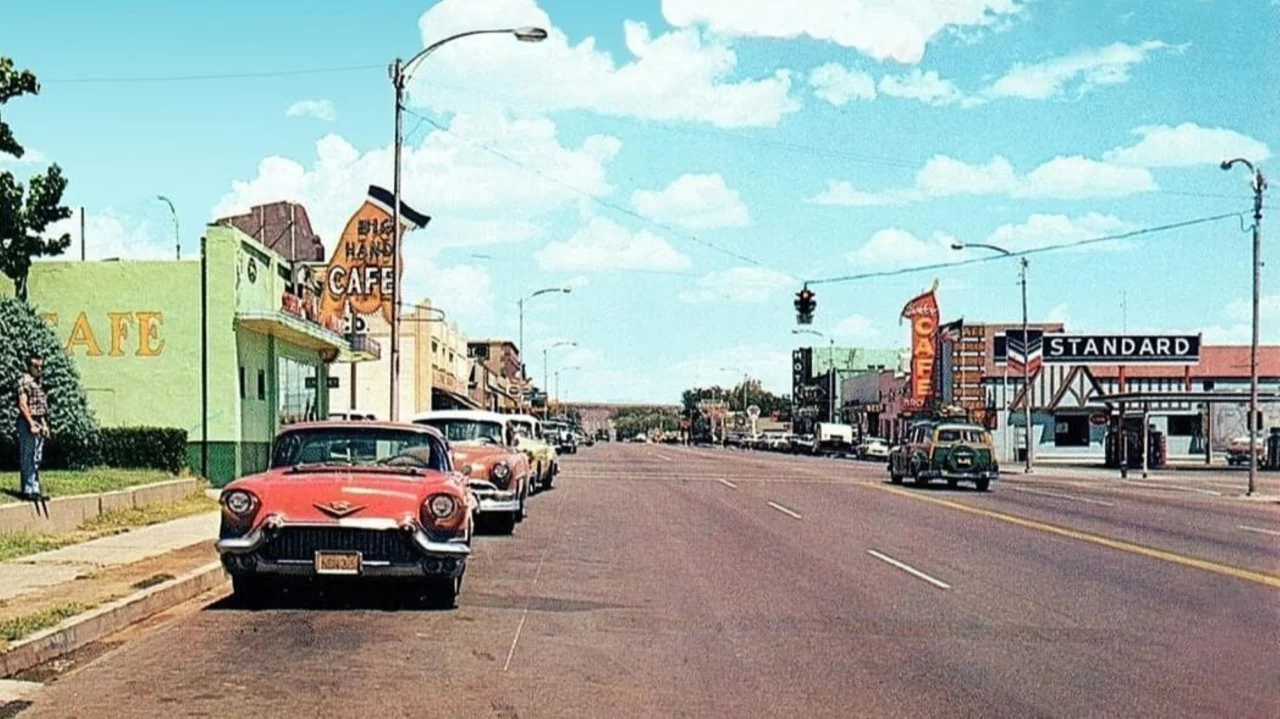 Credit Gary Humphrey
The University of Utah has an archive of interviews and resources about the whole scenario, including maps of impacted areas, population statistics, lists of the specific detonations carried out in Nevada, and even details on anti-nuclear-testing demonstrations that took place. It’s interesting to see how every aspect of life, including car culture, was impacted by some of the testing that took place in Nevada about 60 to 70 years ago.